Right. You've had a look at my PhD Survival Guides, and now you're wondering which one is actually right for you.
Fair question!
There are four of them, covering different parts of qualitative PhD research, and although they're designed to work together, you don't necessarily need all four.
I don't want you spending your hard-earned money on something that isn't going to help with the particular PhD pickle you're currently in.
So, let's work out what’s best for you.
Which PhD Survival Guide do I need?
The easiest way to choose is to ask yourself:
What's the thing I'm struggling to get my head around RIGHT NOW?

As you’ve probably figured out by now, PhD research doesn't happen in a lovely, neat sequence.
How we wish it would though, right?!
It’s a topsy-turvey, write-it-backwards, “Oh, back to the literature I go” kind of thing. Those published PhD theses you’ve read do an incredibly good job of NOT showing you the chaotic process behind that nice, neat, orderly thesis. The finished thesis is linear and logical - the creation of it almost certainly wasn’t!
You can be three years in and still trying to clarify your research questions. You can be drafting your discussion chapter and realising that your methodology doesn't quite match up to what you actually ended up doing.
Welcome to doctoral research. 😂
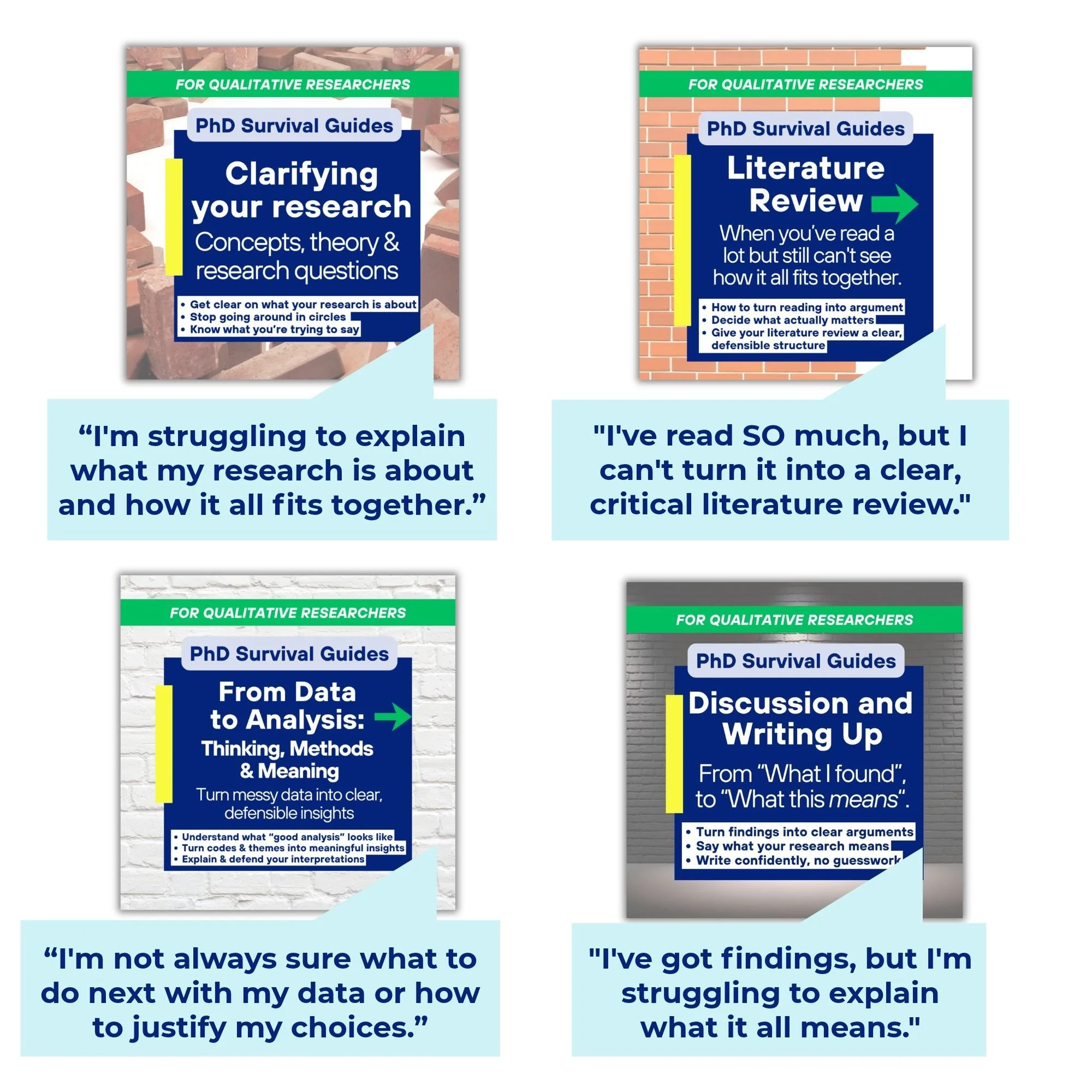
Here's how I'd think about the four PhD Survival Guides.
1. "I know what doing (kind of!), but I'm struggling to explain what my research is really about."
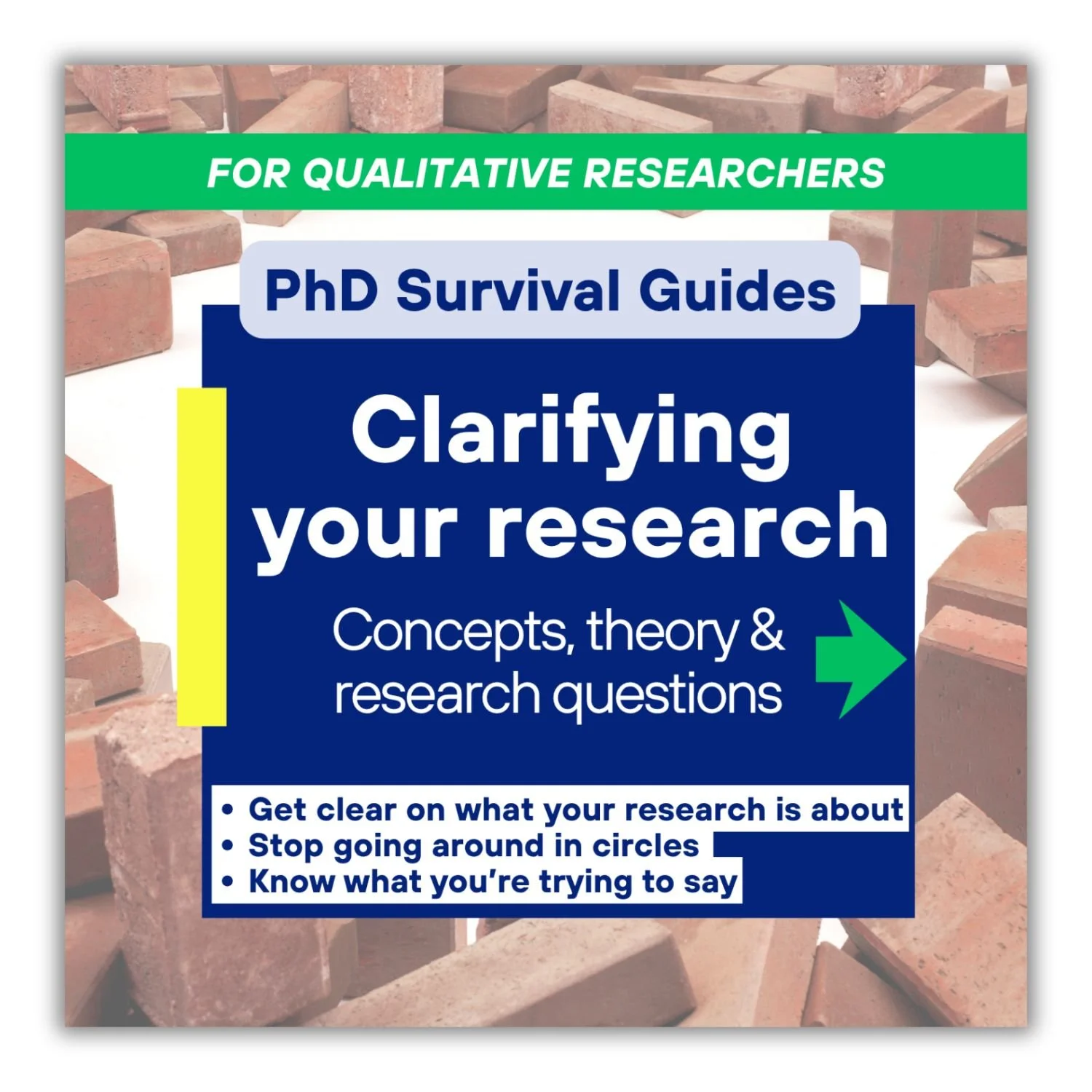
You probably need: Clarifying Your Research
This is for you if you're wrestling with things like your research focus, questions, paradigm, conceptual and theoretical frameworks, and how they all relate to one another.
Perhaps you've got lots of interesting ideas, but you're finding it difficult to turn them into a coherent research project.
Or your supervisor keeps asking you to explain why you're doing something, and you're thinking, "Well, it made sense in my head! Why can’t I communicate this to another human?! Am I broken?!” 😂
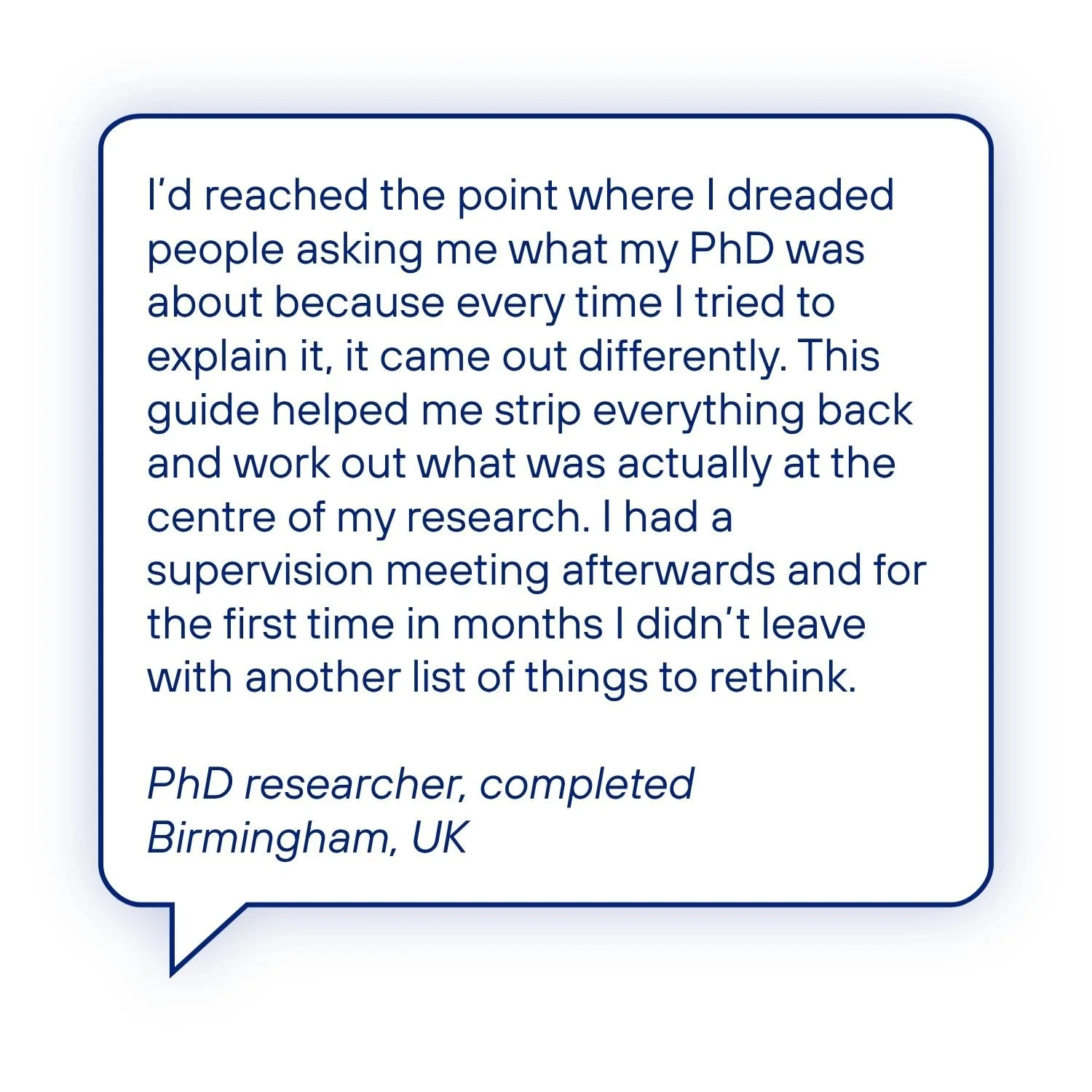
This guide helps you understand the thinking behind what you’ve done - or plan to do - and explain how the different parts of your research connect.
2. "I've read a lot of articles, and still have more in my ‘To Read’ folder, but I don't have a literature review yet."
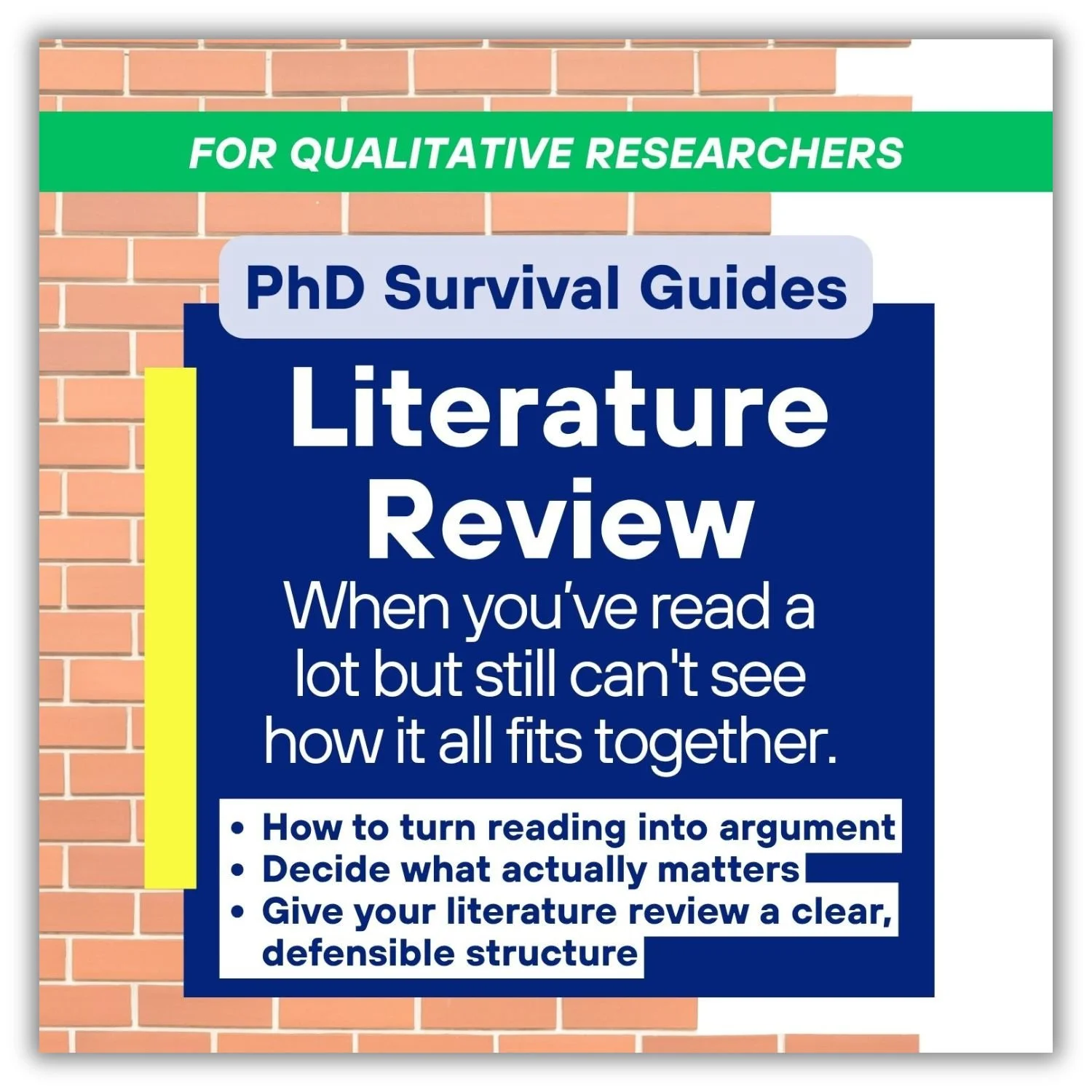
You probably need: Literature Review PhD Survival Guide
You’ve read a lot of stuff, and you’ve made a lot of notes, which may or may not be particularly organised. No judgement here.
What you haven't got is a clear argument.
Perhaps your literature review feels like a collection of summaries. Or you're struggling to organise the literature into themes that genuinely make sense. Maybe you’re stuck at trying to critically engage with different arguments or work out what your own position is, because you’re thinking, “Well, who am I to criticise all these clever scholars? I’m just a PhD researcher. Can I really say that?!”
The Literature Review Guide helps you move beyond collecting and describing research towards developing a review with a proper argument that actually does something useful for your PhD.
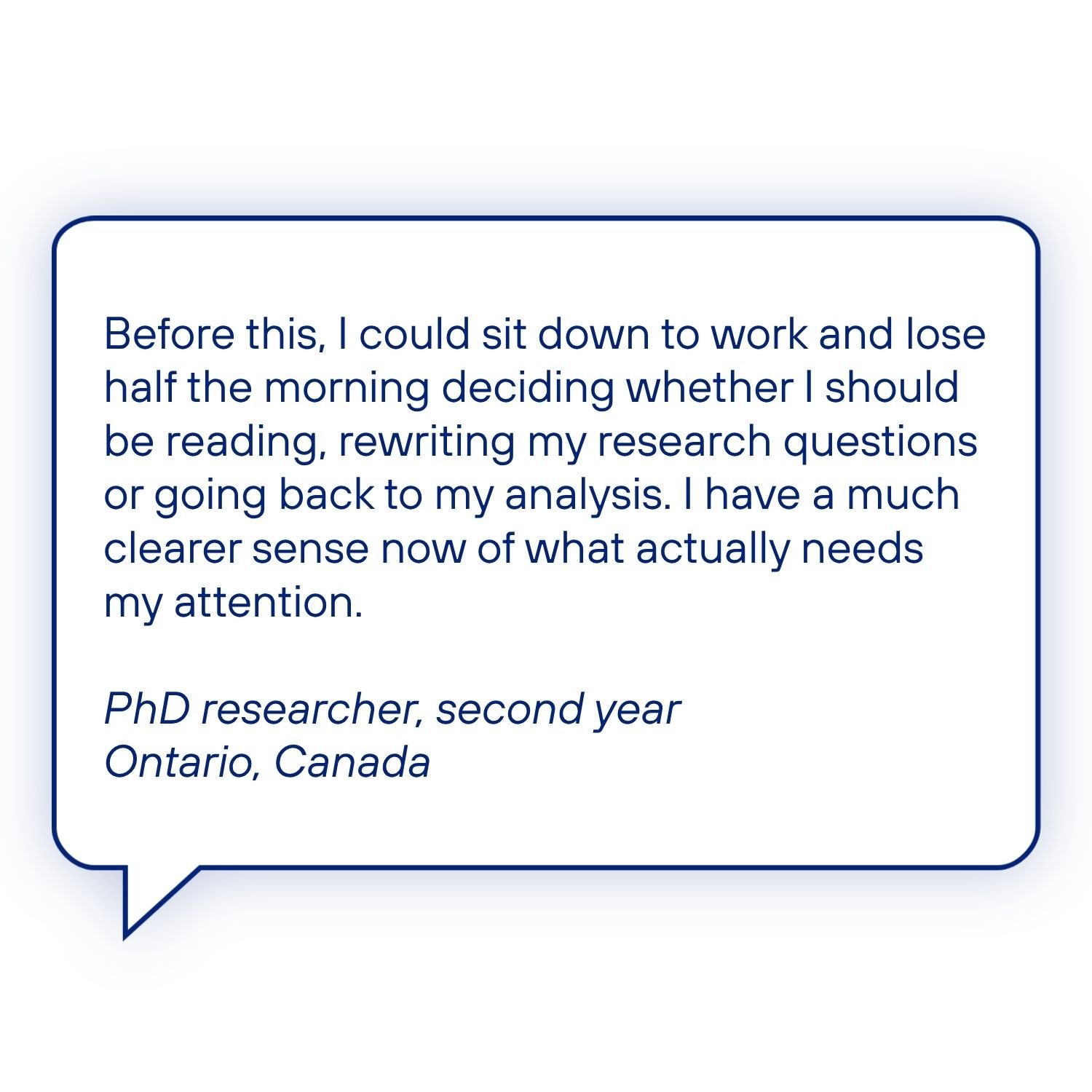
3. "I'm making research decisions, collecting data or analysing it, and I'm not entirely sure what I'm doing."
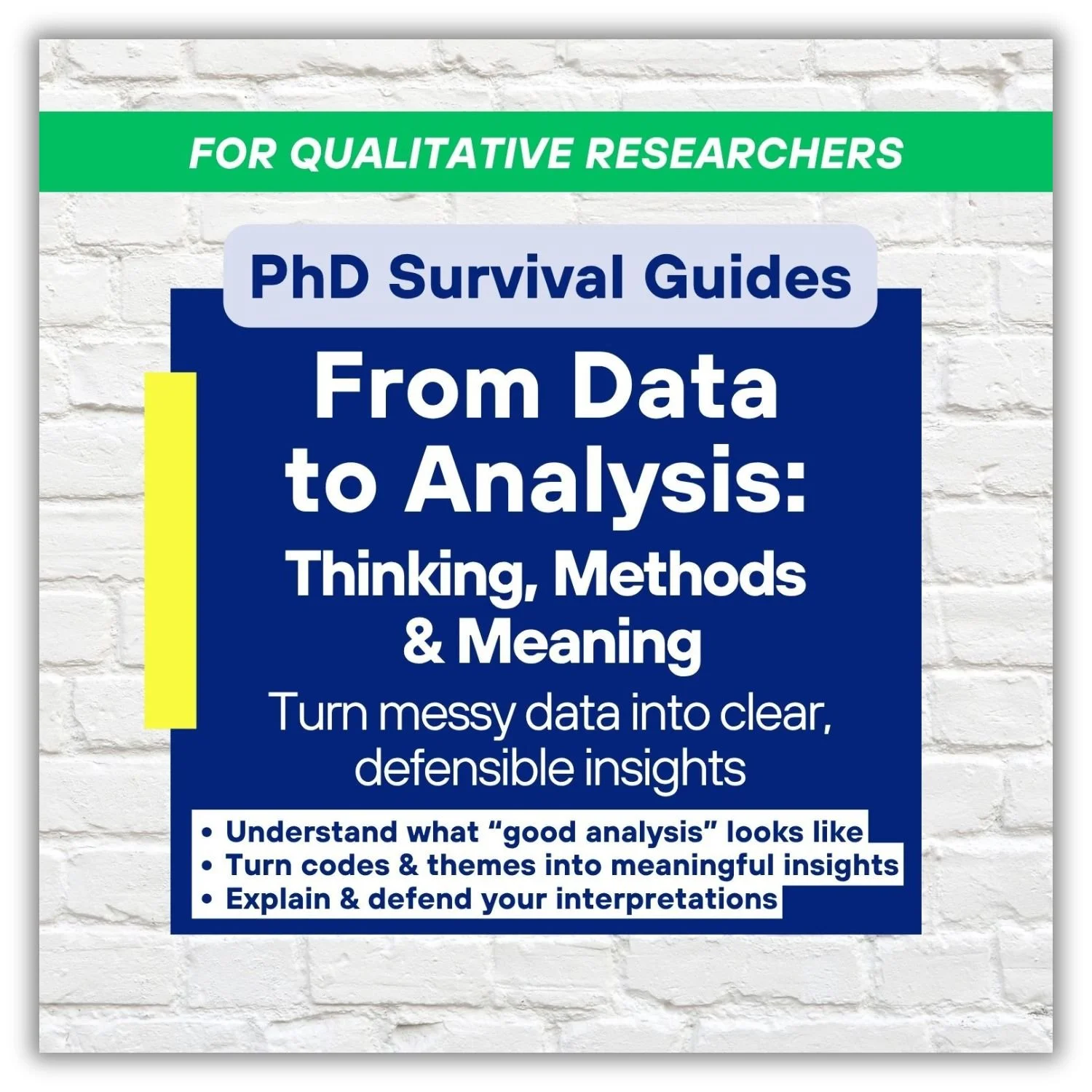
You probably need: Data to Analysis: Thinking, Methods and Meaning
This is for the parts of your PhD where you have to make decisions about how you're going to investigate your research questions, explain why those decisions make sense and then work out what to do with your data.
This guide can help if you're trying to understand how your methodology, methods and analysis fit together.
It’s also a good choice if you've collected your data and you're staring at it thinking, "Right. Now what?"
It helps you work through the thinking involved in designing, carrying out and making sense of qualitative research, including how to stand behind them your choices and say, “Yes, I did that, here’s why…”
4. "I've got findings and chapters, but I can't work out how to pull everything together."
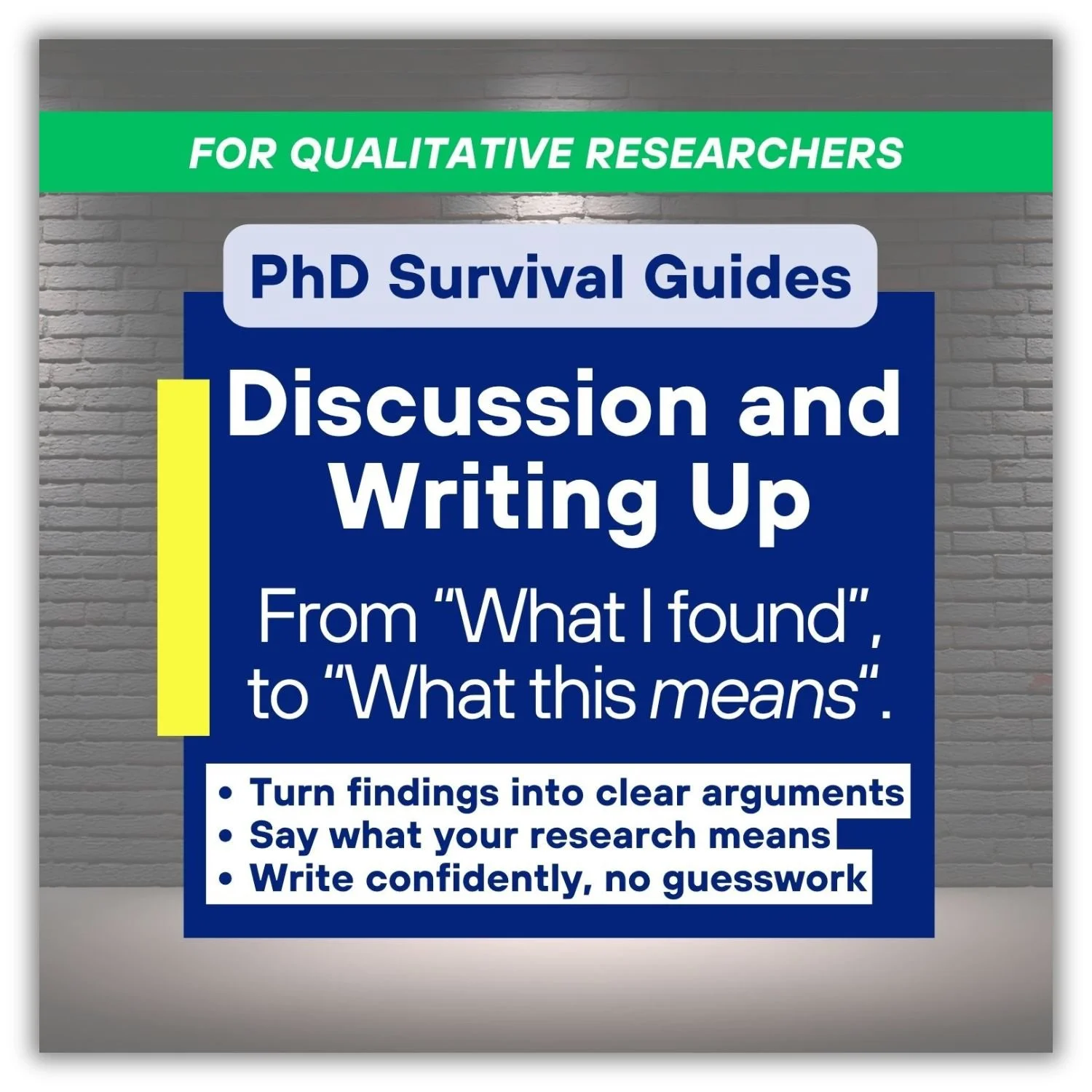
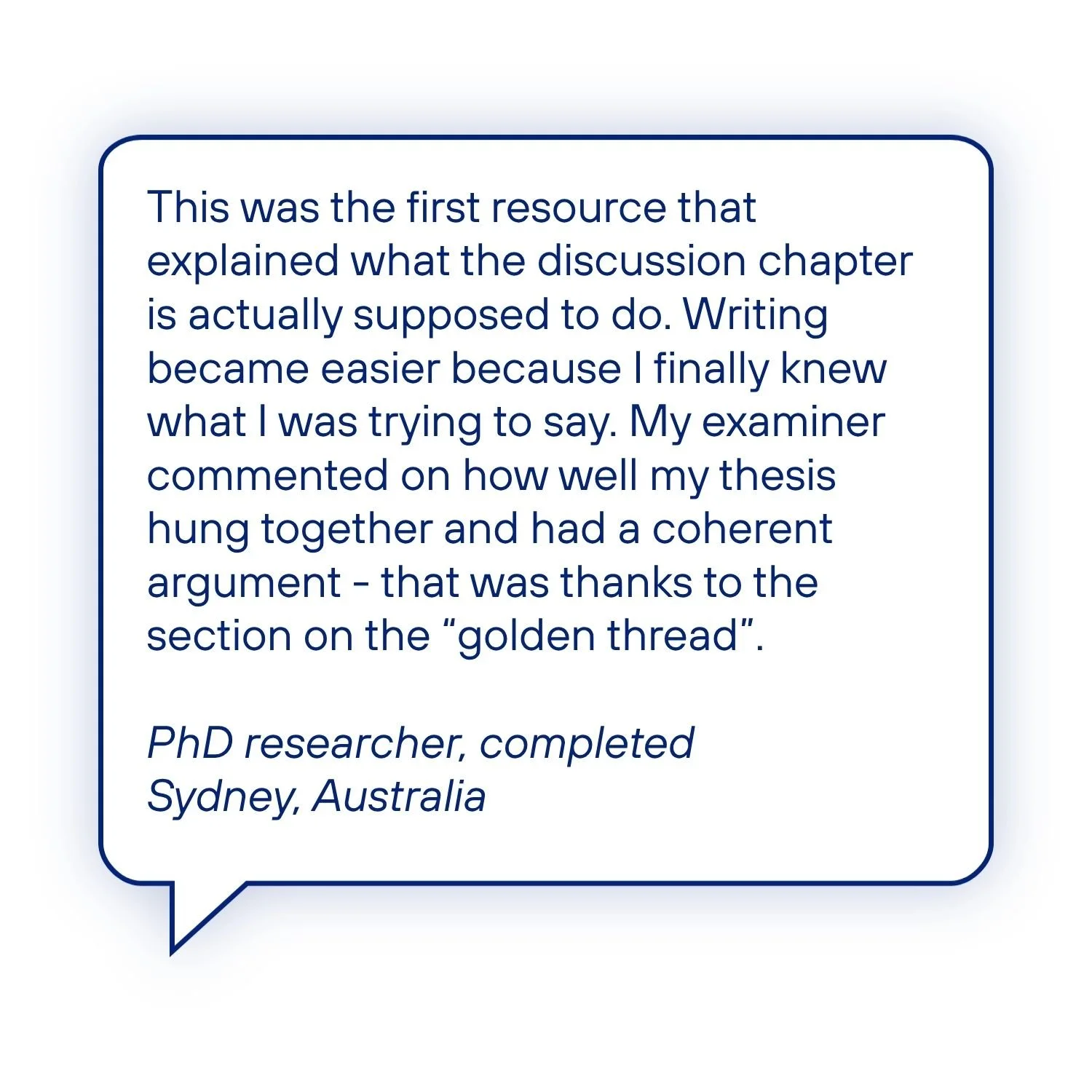
You probably need: Discussion & Writing Up
Ah, the stage where you discover that having written lots of words doesn't automatically mean you've finished writing your thesis.
Fiddlesticks.
Perhaps you're struggling to connect your findings with the literature and theory or you're finding it difficult to move beyond describing what you've found and explain what it actually means. You might also be wondering what your research contributes and what a ‘contribution’ really is - and have you got enough here for a doctorate?
When the thesis just isn’t thesis-ing, it can feel very frustrating, because by this stage of your doctorate, you’re probably pretty exhausted. 🙄
That's what Discussion & Writing Up is designed to help with.
What if I think I need more than one guide?
That's entirely possible. These parts of your research are connected, after all.
Sometimes two guides sound like they might help with the same problem. Here's how I'd choose between them.
Clarifying Your Research or Literature Review?
If you're struggling to explain your research focus, questions or conceptual foundations, start with Clarifying Your Research.
If you know what you're investigating but can't turn your reading into a critical, coherent review, start with Literature Review.
Literature Review or Discussion & Writing Up?
If you're working out what existing research tells us about your topic, Literature Review is probably the better starting point.
If you're trying to explain what YOUR findings mean in relation to that existing research, look at Discussion & Writing Up.
Data to Analysis or Discussion & Writing Up?
If you're wrestling with methodological decisions, data collection or developing your analysis, start with Data to Analysis.
If you've developed your findings and now need to interpret, connect and communicate their significance, Discussion & Writing Up is likely to be more useful.
Remember, you can always revisit earlier parts of your research. Your PhD isn't a conveyor belt.
Should I buy one guide or the Complete PhD Survival Guide System?
That depends on what you need.
If there's one particular aspect of your research that's causing you grief, start with the individual guide that addresses it.
You don't need to buy the whole collection just because it exists.
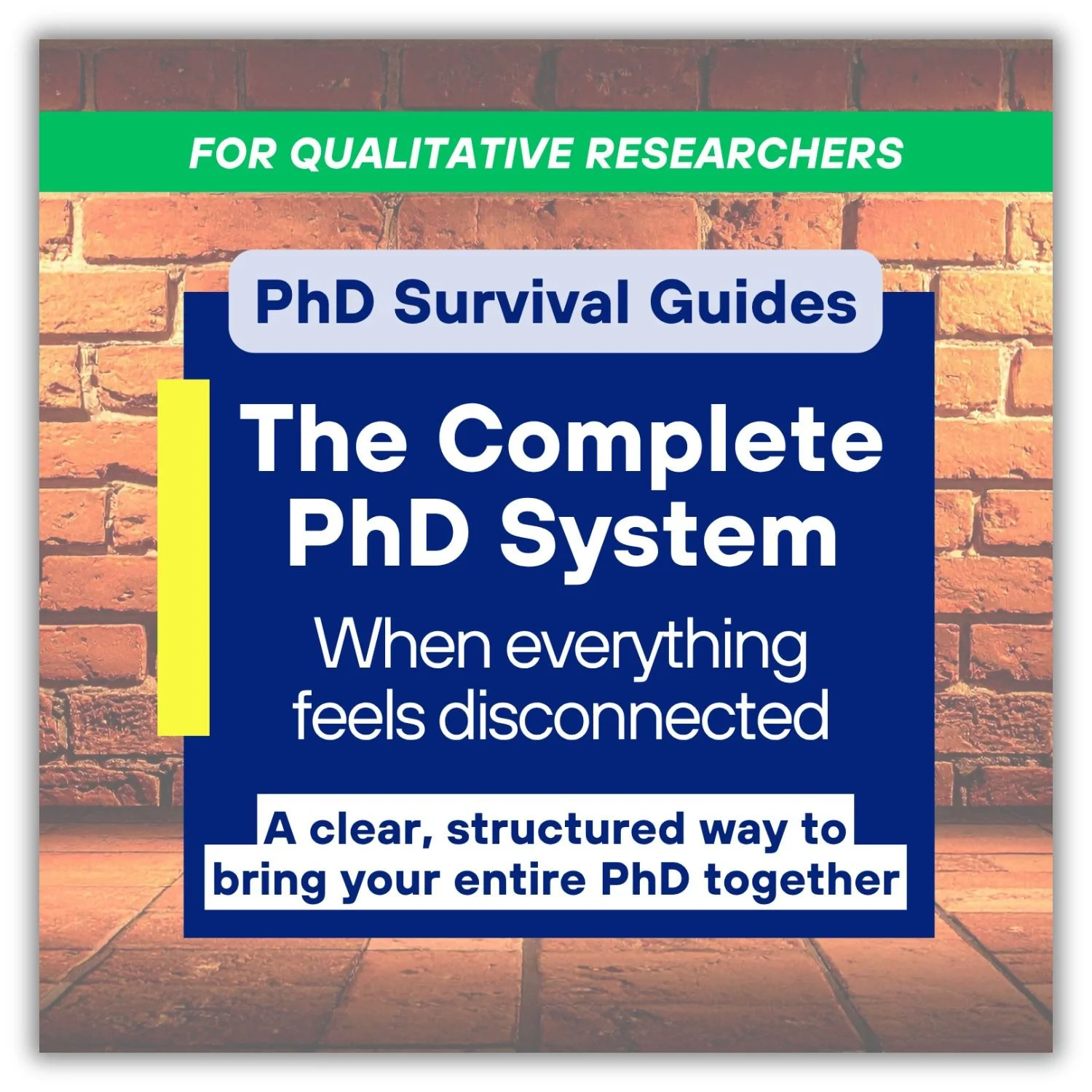
But if you're finding that several parts of your research are difficult to connect, or you want structured support across the wider PhD journey, the Complete PhD Survival Guide System brings all four guides together.
It's particularly useful if your difficulties aren't confined to one chapter or one stage of your research.
Each guide includes explanations, examples and practical activities to help you think through your OWN research, rather than simply reading about how somebody else did theirs.
Plus - they're all digital, so you can start working with them straight away.
One last thing...
You don't need to be at a particular stage of your PhD to use these guides.
What matters is the problem you're trying to solve.
If you're still unsure, ask yourself one final question:
"If I could make ONE part of my PhD feel less confusing this week, what would it be?"
Start there.
You've got enough decisions to make in a PhD without turning the purchase of a guide into another research project. 😂