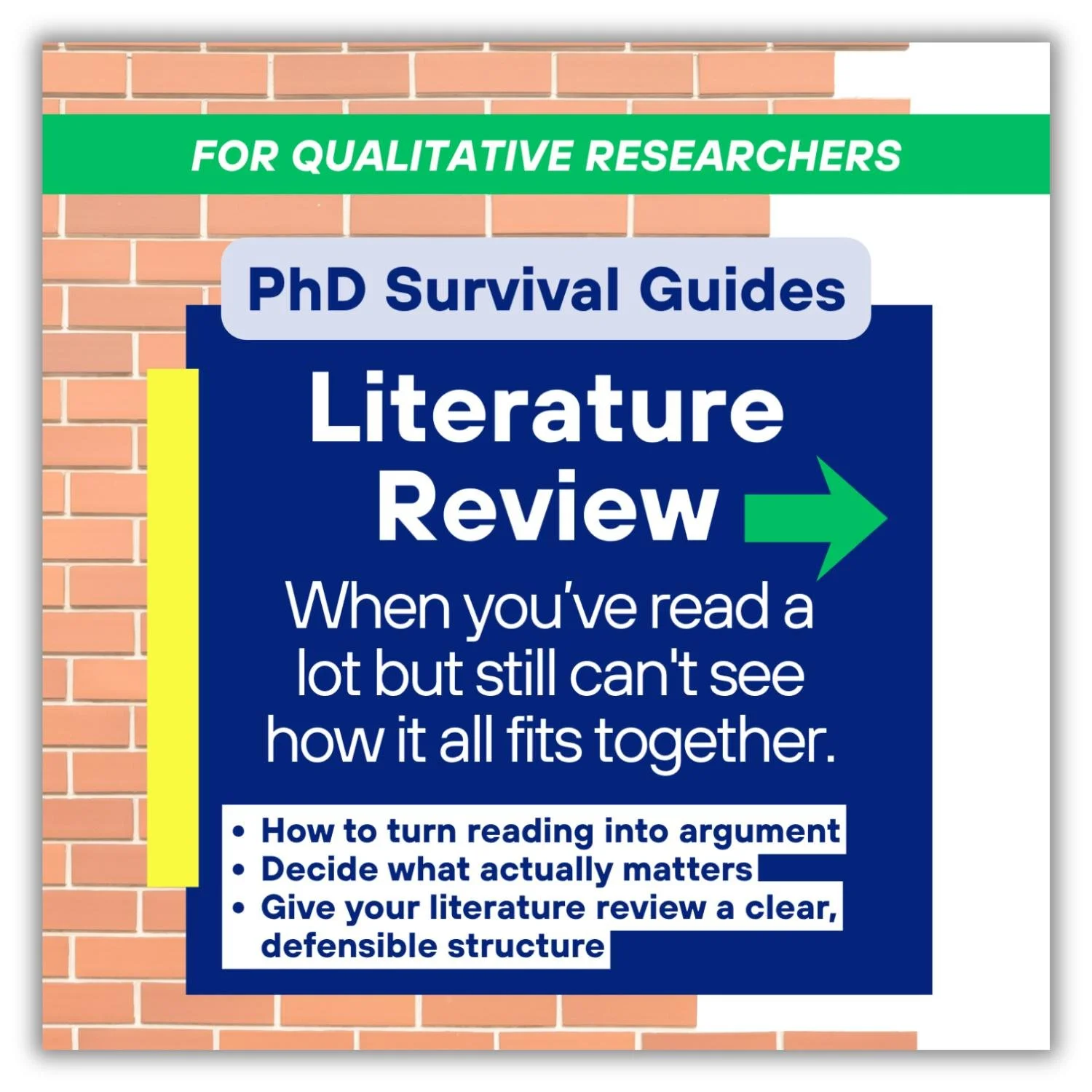
Literature Review
You've read so much. Now how do you turn it into an argument?
£85
Stop collecting papers without knowing what to do with them. Seriously, I see you, stop that. 😉
More reading isn't always the answer.
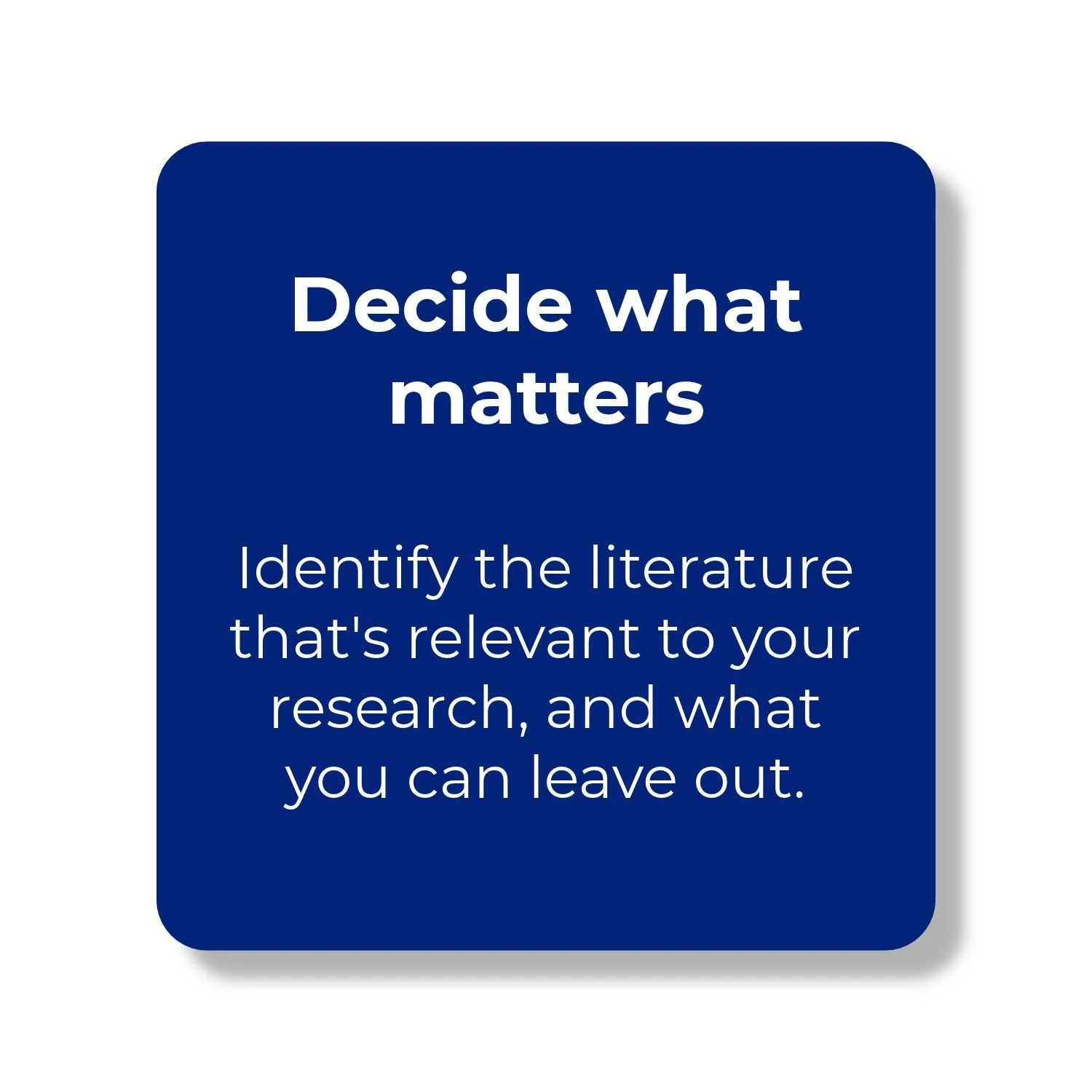
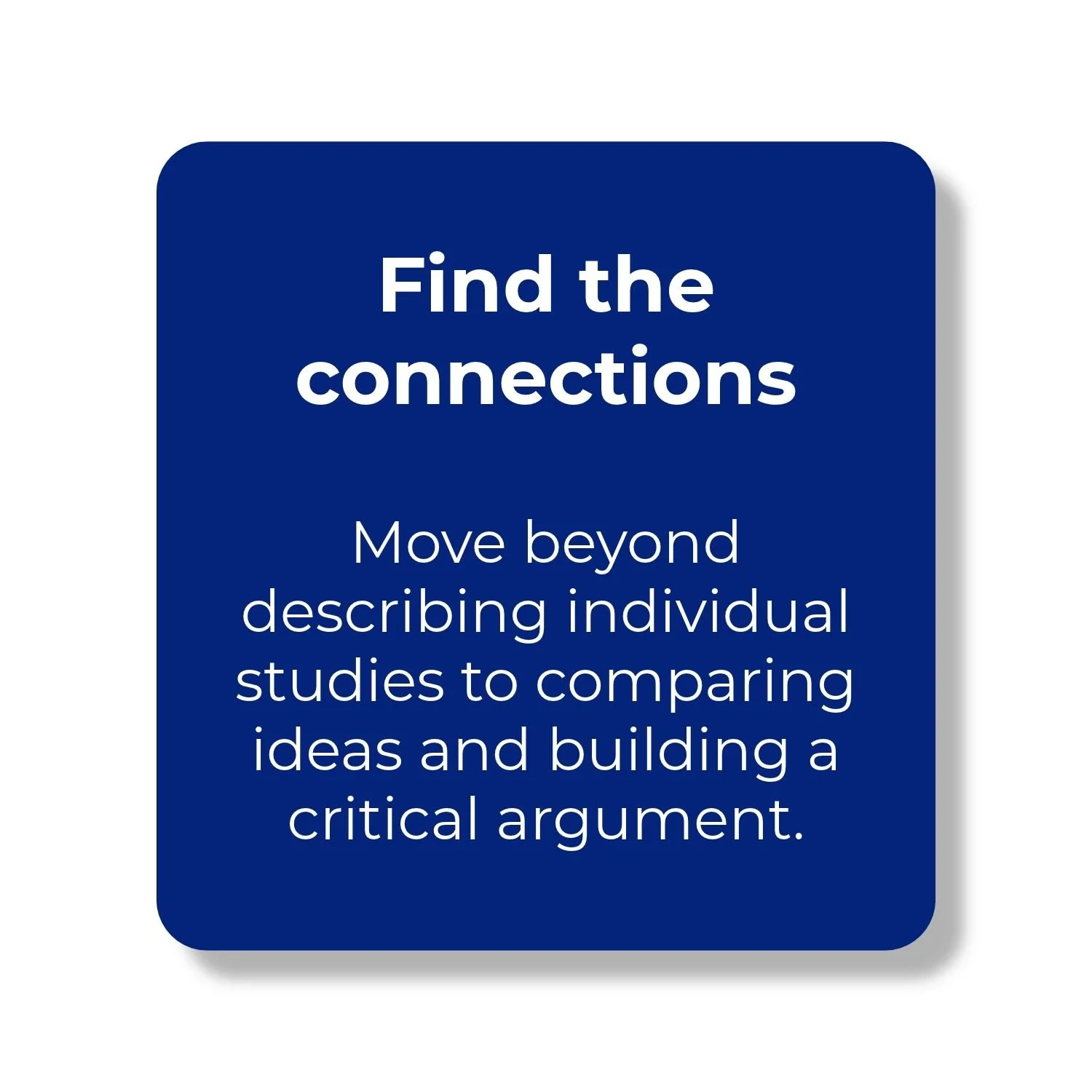
The Literature Review Guide helps you work with the reading and notes you've already got. You’ll decide what actually matters, find connections between studies and start building a clear, critical argument.
You'll follow a structured process, developed from my 20+ years supporting PhD researchers to completion. You’ll do practical activities, explore worked examples and complete editable worksheets to help you apply each step to your own research. Yes - this helps you actually do the work, not just read about it.
Instant digital access after purchase. International payments are converted by your bank or card provider. Purchase subject to Terms & Conditions.
Here's what this guide helps you do
“I feel like I've lost the plot with what I'm trying to achieve!” 😖
Sound familiar?
When you've read so much that you can no longer see the point of it all, urgh.
Rather than just losing yourself in more reading, let’s take a look at what you already have and get that all working for you - because a lot of the answers are in there, we just need a way of drawing them out.
My guide will help you do that.
A structured process, not another pile of reading
The guide takes you through the decisions involved in developing a literature review - from identifying relevant areas of literature to organising your ideas and developing your writing.
The sections build on one another, so you have a clear route to follow when you're starting out.
And because your literature review will change as your research develops, you can return to relevant activities when you need to revisit your thinking.
You're not just reading about how to write a literature review, because YAWN, right?! 😴 You know how to write it, you just need help getting your stuff into it and making the smart decisions that will get you there.
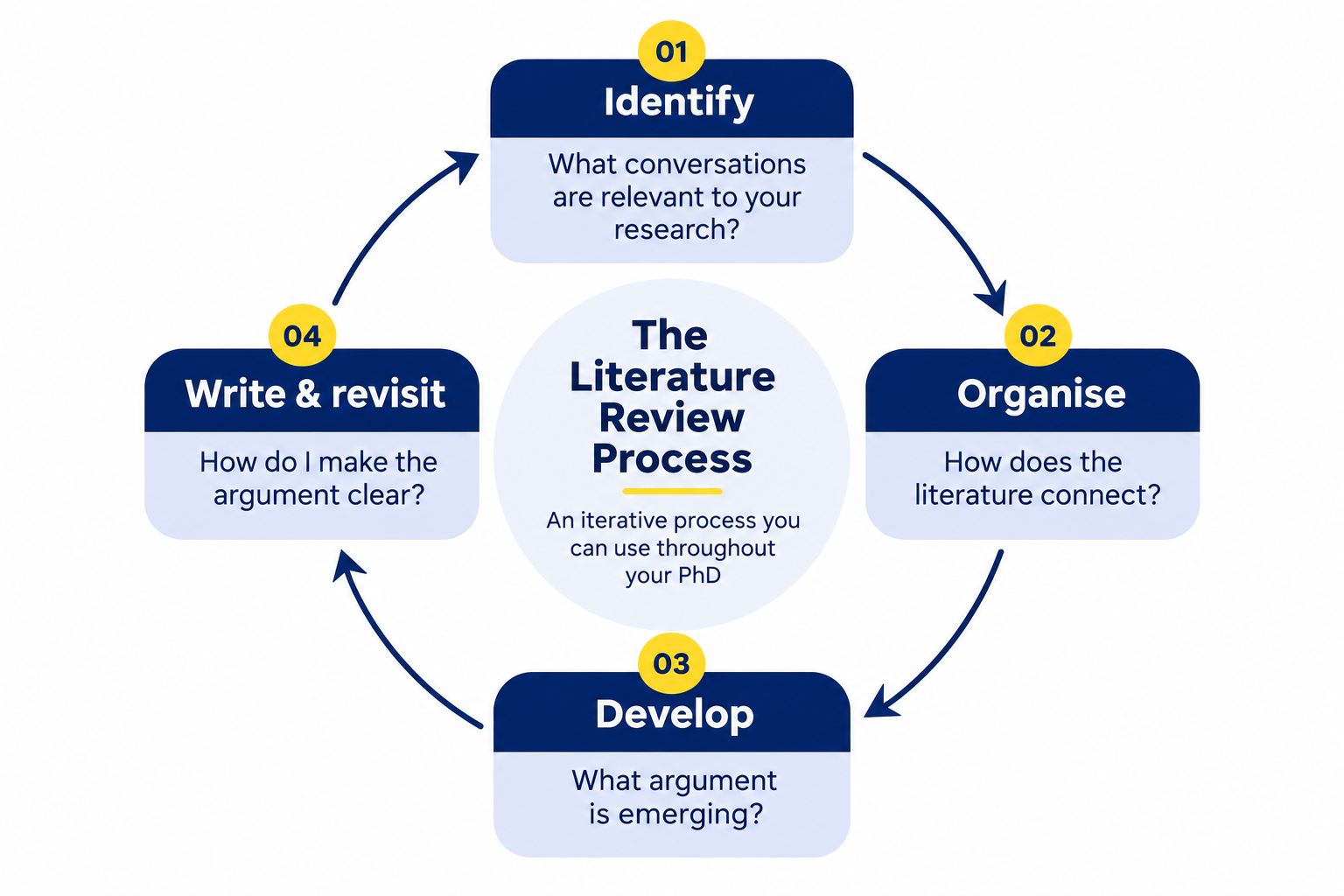
Your literature review develops alongside your research. As you read, write, collect data and refine your thinking, you'll revisit earlier decisions with fresh insights. This guide gives you a structured process to work through and return to as your research evolves.
Work with your own literature as you go
You know that moment when you can explain what everyone else has written, but someone asks, “So what's your argument?” and your brain goes blank? Apart from the odd tumbleweed.
That's what we're working on here.
The worksheets help you move from collecting and describing literature to making decisions about what it means for your own research.
You don't need to complete every worksheet just for the sake of it.
You've already got enough to do!
Use the activities that help you tackle the problem you're facing, whether that's working out what matters, finding connections or getting words onto the page.
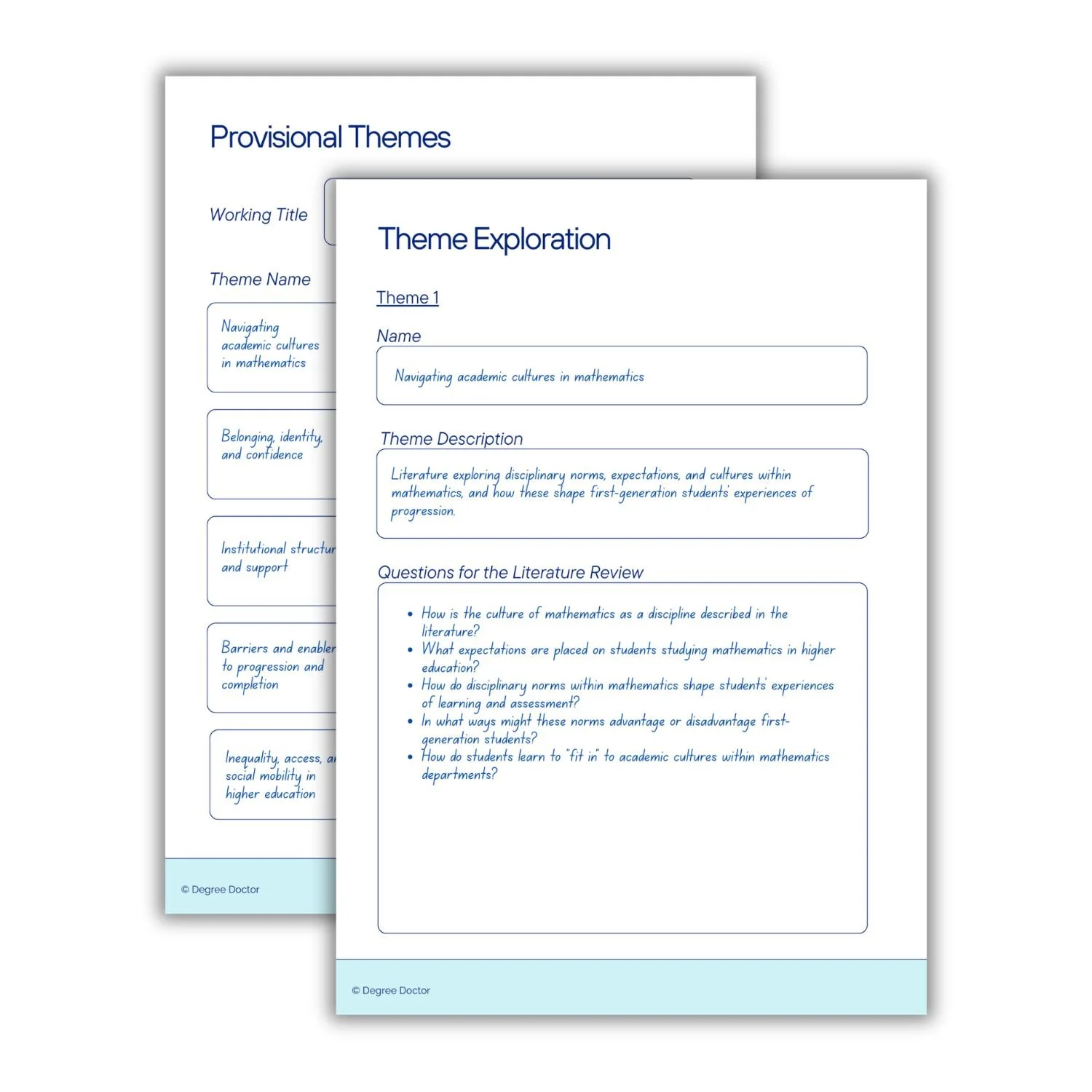
From initial ideas to focused questions
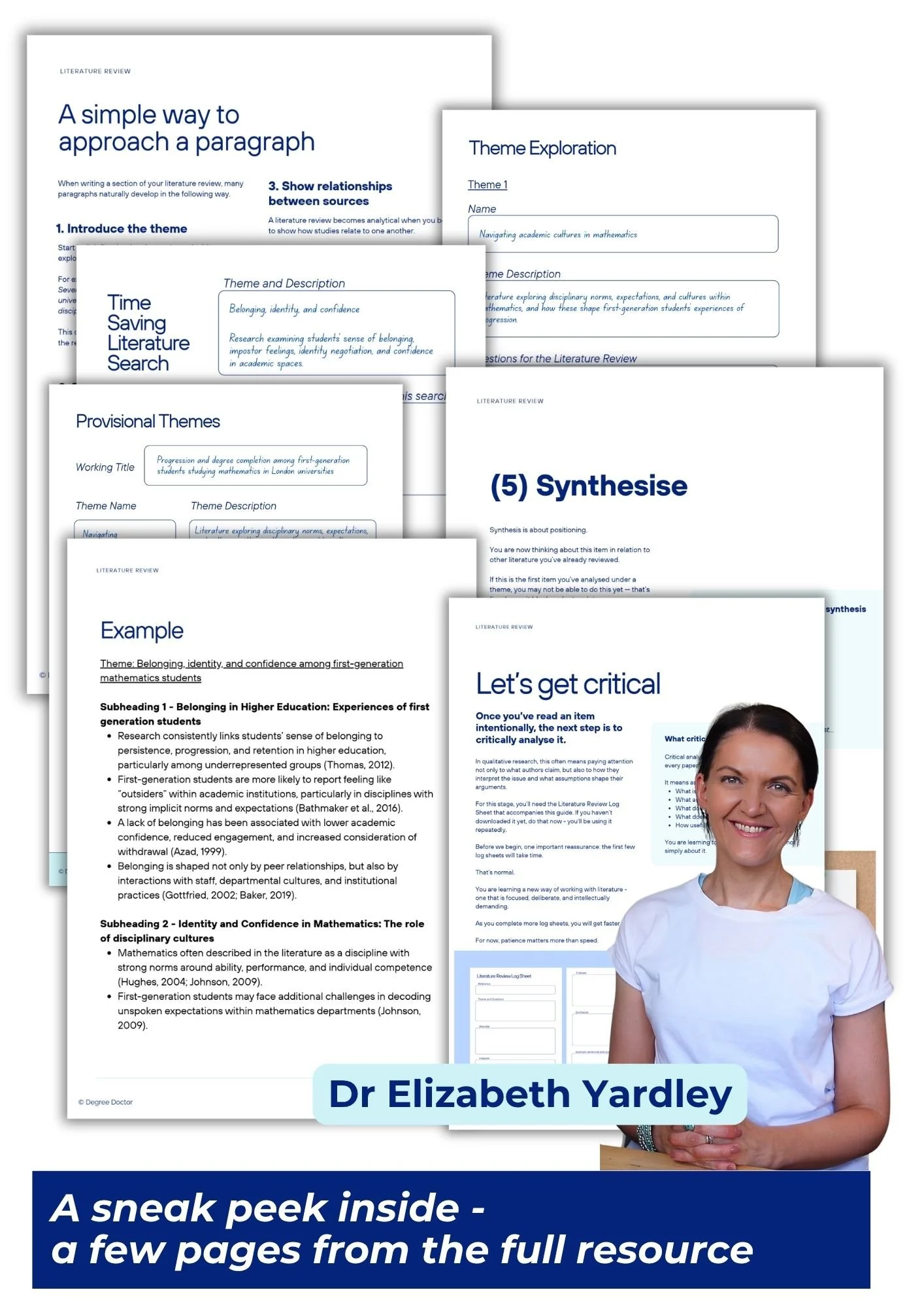
See how the guide helps you identify provisional themes, explore what they mean for your research and develop questions that give your literature review direction.
These are examples of the practical activities you'll work through using your own research.
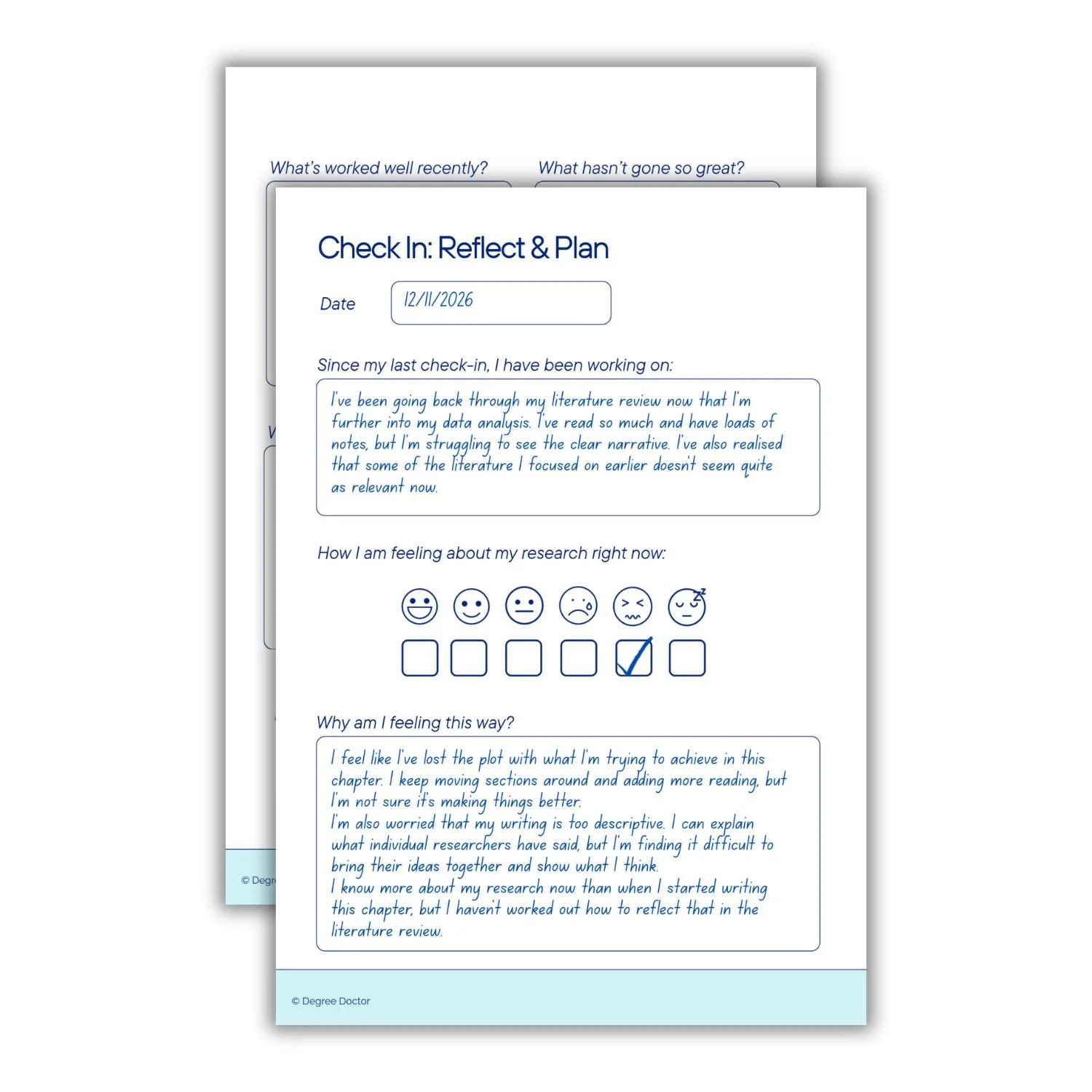
Your research has moved on. Has your literature review?
Remember that literature review you started when you were still figuring out what your research was actually about?
Well, you've learned a thing or two since then. 😉
Use the Check In worksheet to take stock of what's changed and work out what needs attention next.
Already written a literature review?
You might not be finished with it yet.
Sorry.
“I wouldn't write it like this now…”
Of course you wouldn't. You're not the same researcher you were when you started.
As your research develops, you may need to reconsider which studies matter, revisit earlier arguments and strengthen the connections between your literature and the rest of your thesis.
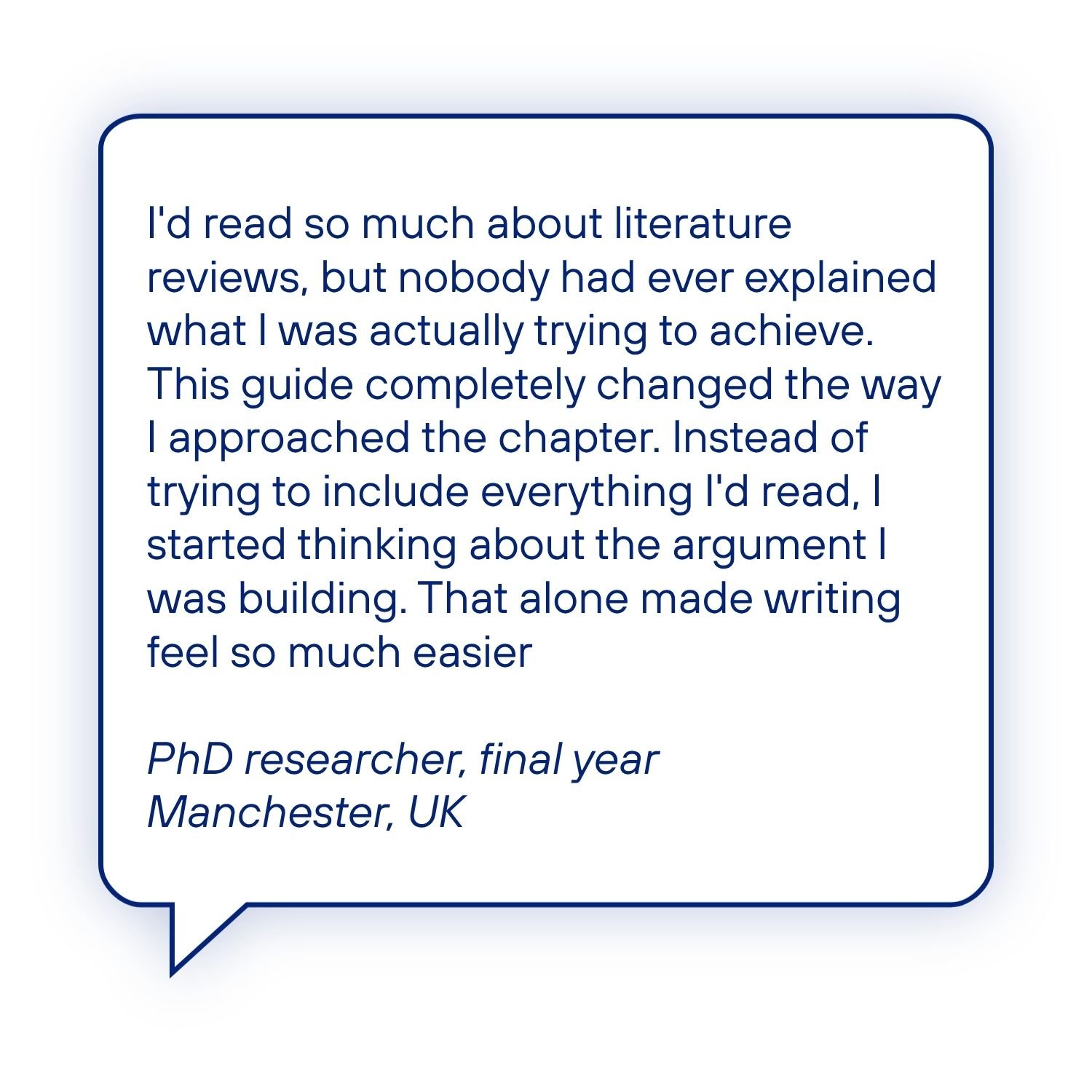
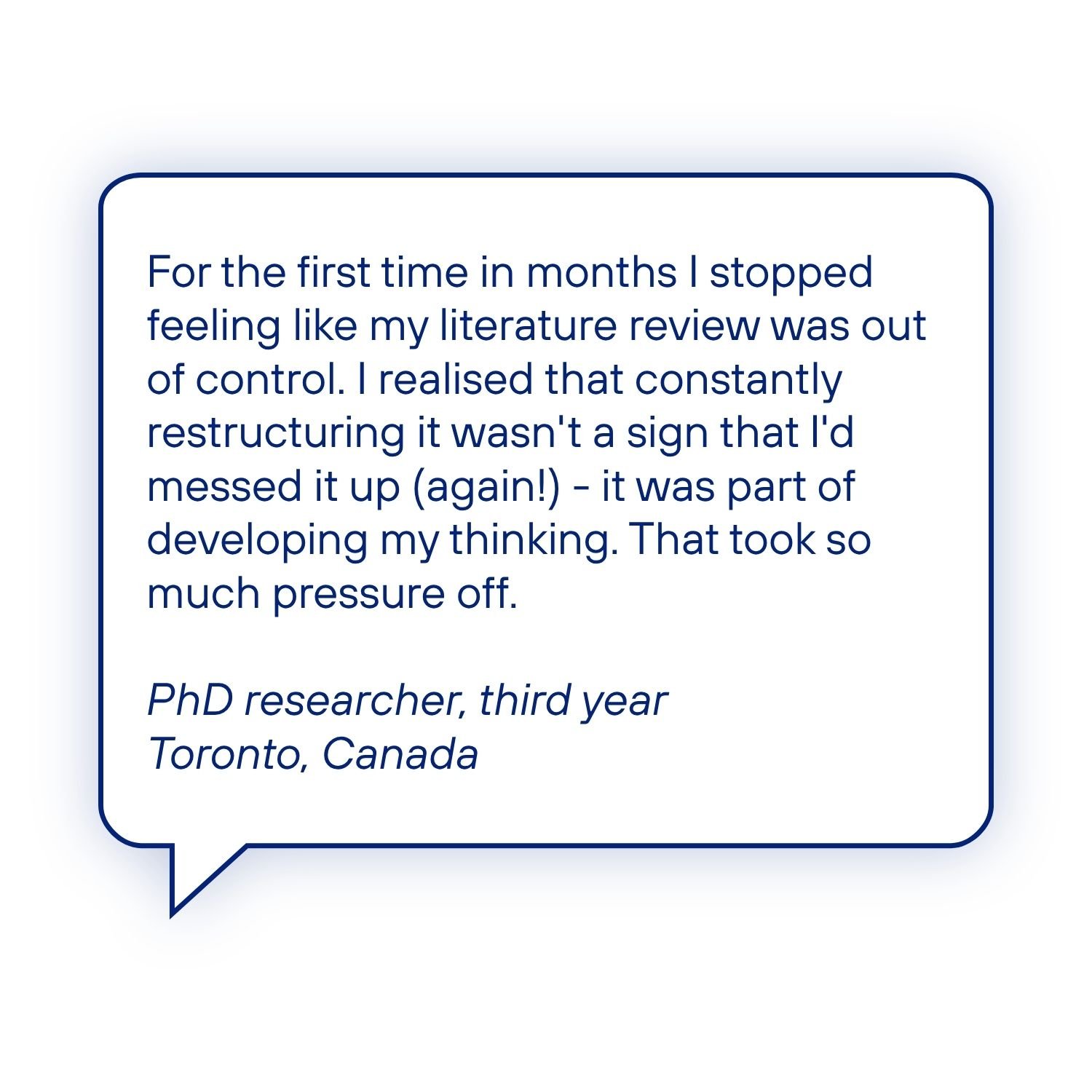
What changed after using the guide

Ready to make sense of your literature?

You've already done a lot of reading. Now it's time to do something with it.
Use my structured guidance, practical activities and worked examples to work through the decisions involved in developing your own literature review, from deciding what matters to building a clear, critical argument.
The Literature Review Guide — £85 GBP
Includes 12 guide sections, six printable and editable worksheets, and worked examples.
Digital delivery: you'll receive an email with a secure access link after purchase.
By purchasing, you agree to our Terms & Conditions. International customers' banks or card providers will convert the £GBP payment into their local currency.
Have a question? Contact me.