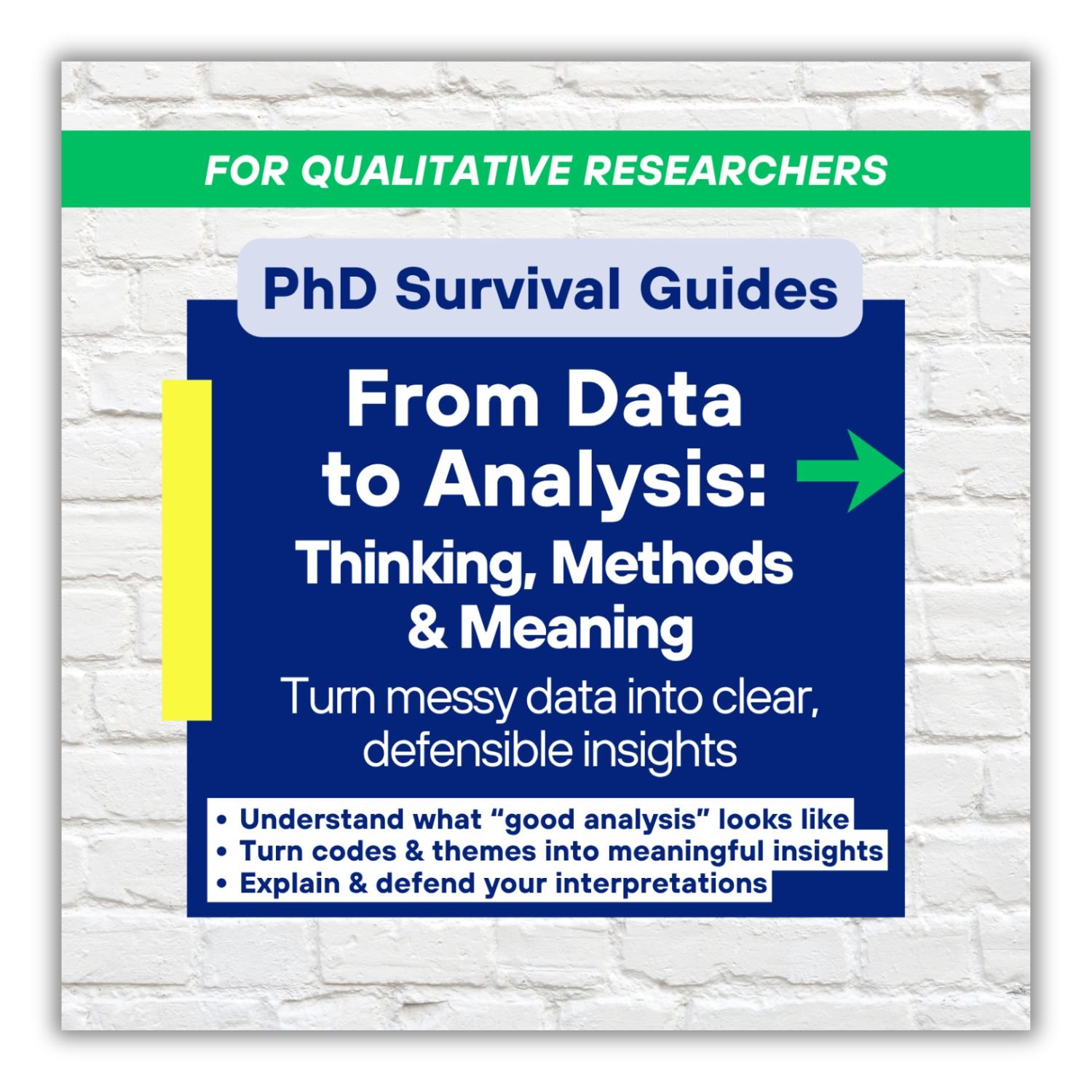
Data to Analysis
Do your data justice with strong analysis
£95 GBP
International customers -your bank / card provider will convert the payment to your local currency.
You've collected the data. You've read the transcripts. Now you're wondering:
"What am I actually supposed to do with all of this?"
This guide helps qualitative PhD researchers move from uncertainty and overwhelm to clear, confident and defensible analysis.
This is a digital download. As soon as you purchase, you’ll receive an email with a secure link to access the full guide and worksheets, so you can start making progress straight away.
By purchasing this product, you agree to our Terms & Conditions.
Here's what this guide helps you do
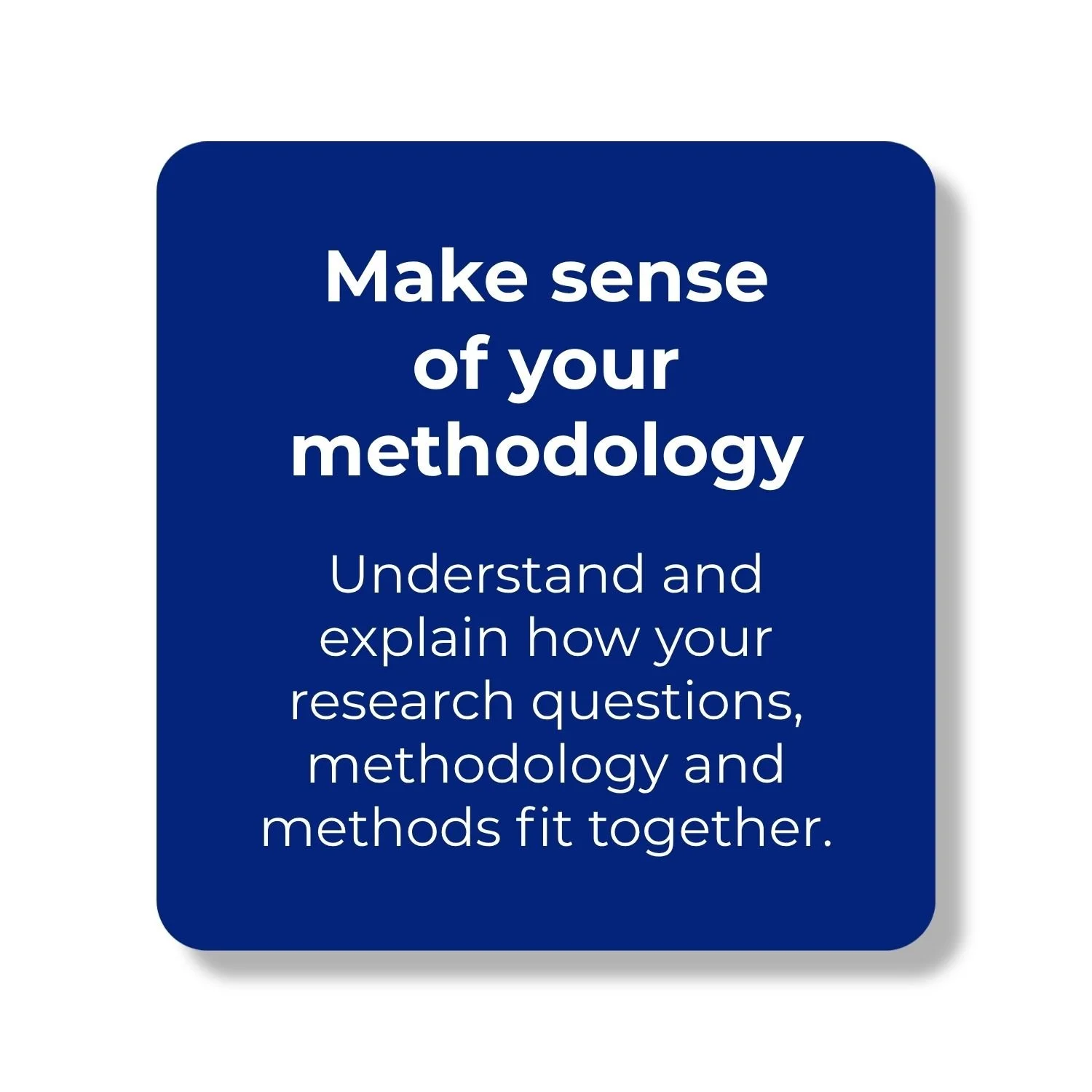
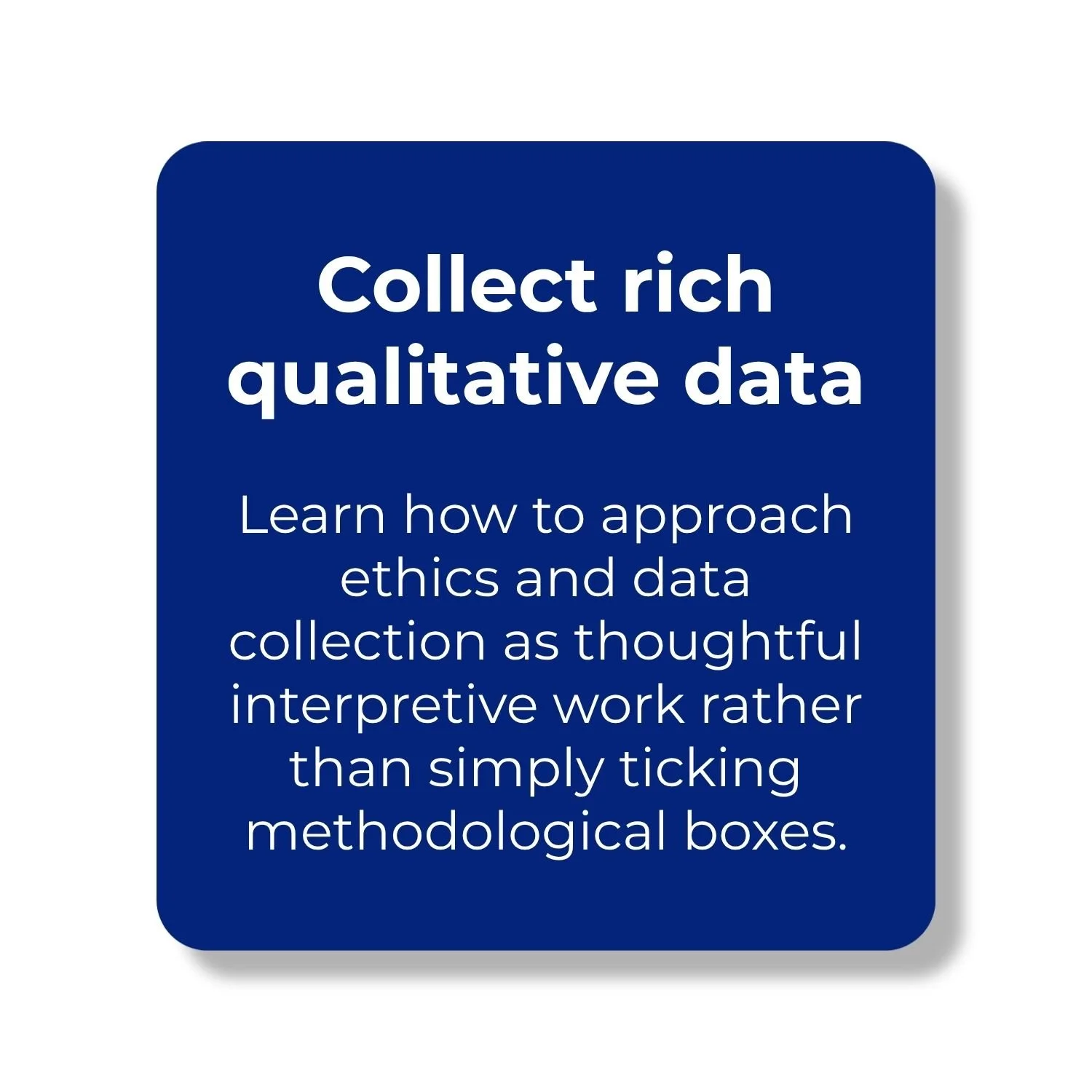
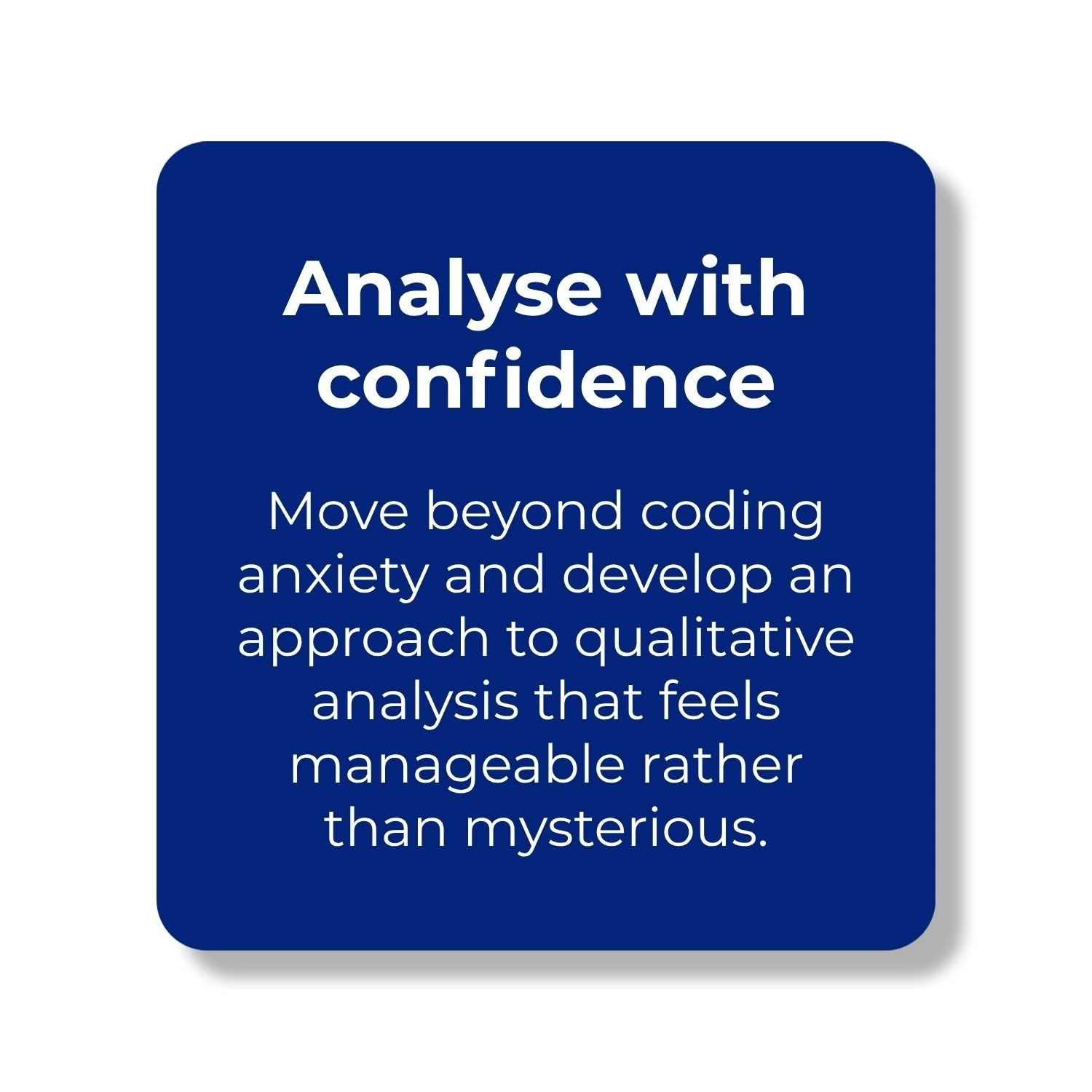
What’s included?
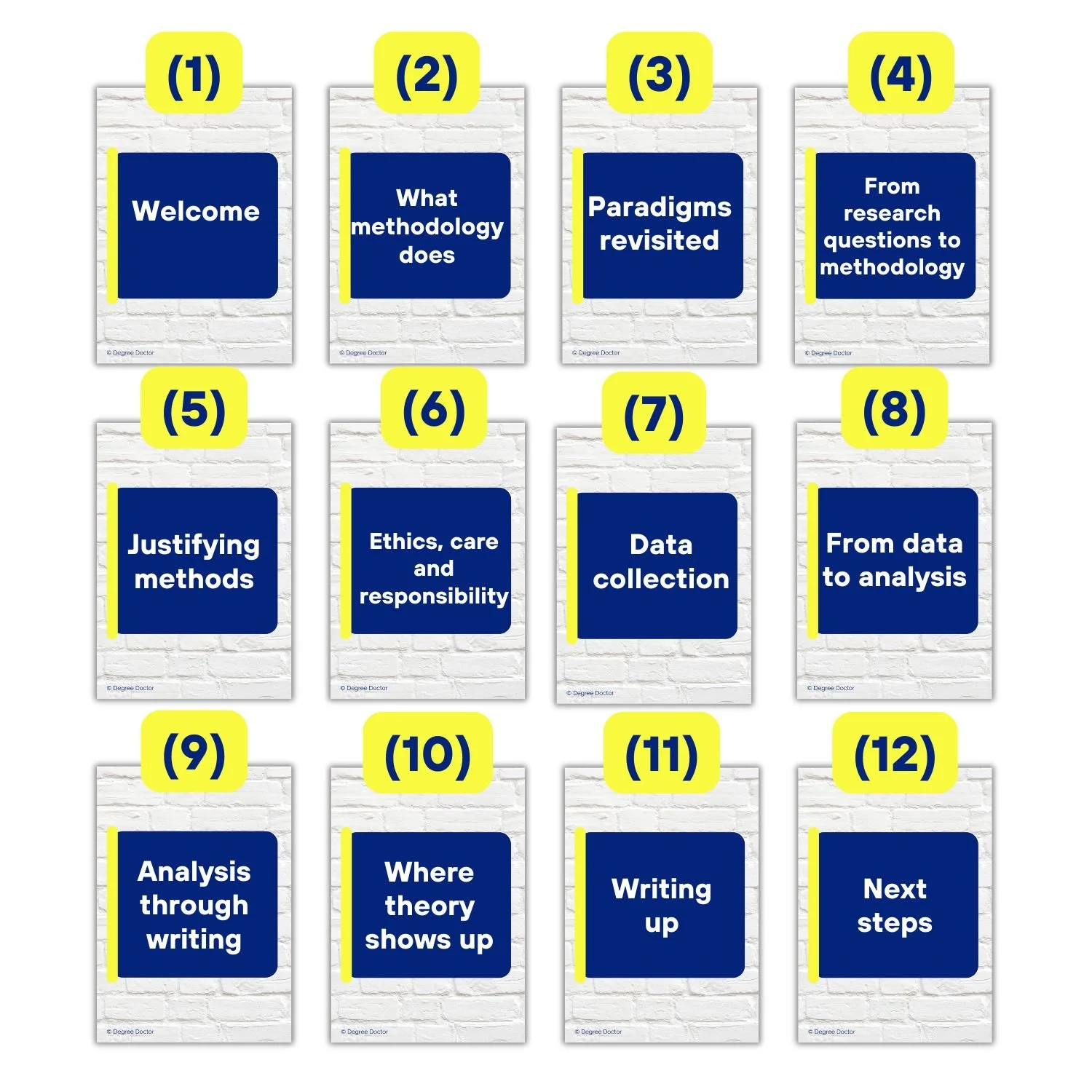
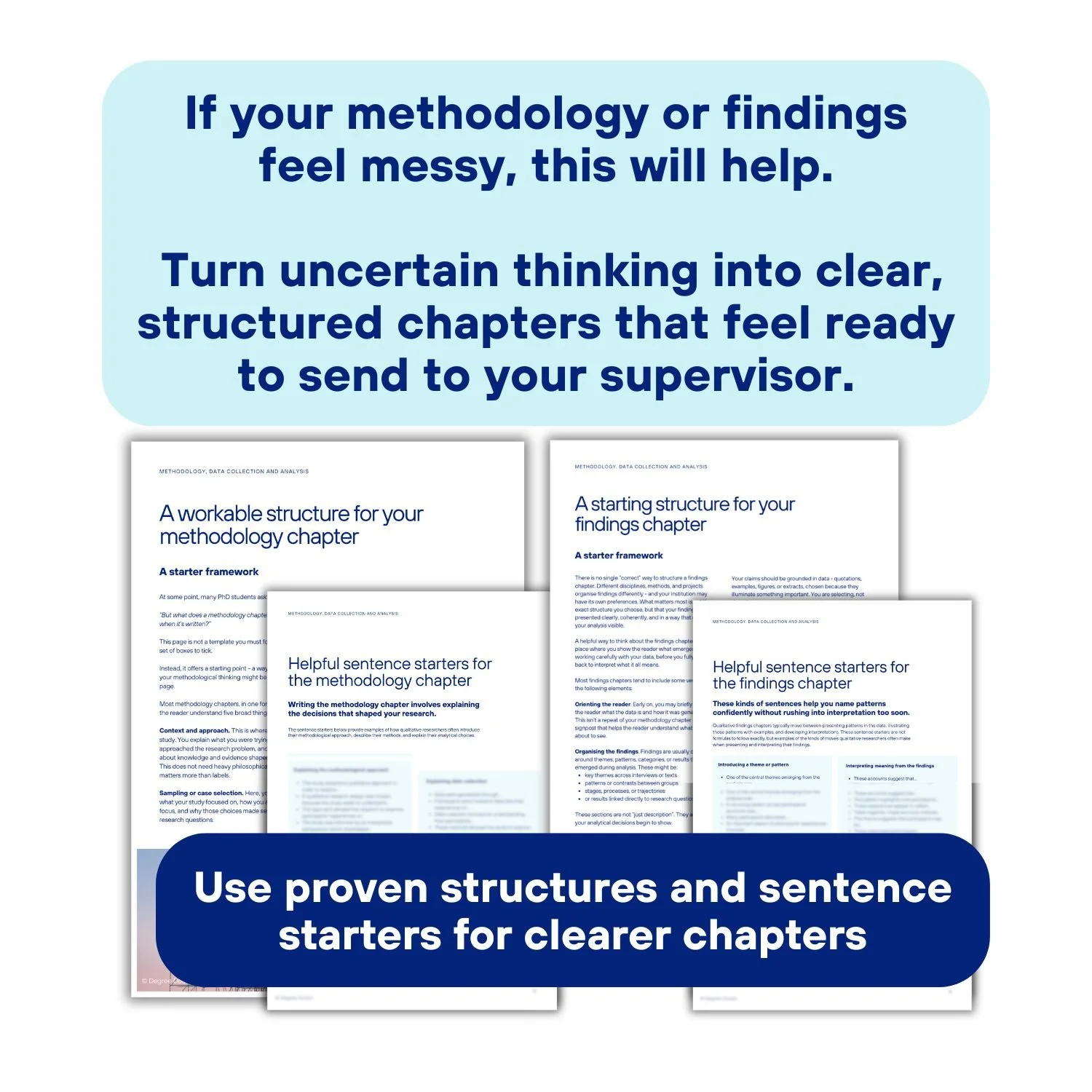
12 structured guides
Each guide tackles one specific part of your methodology, data collection, or analysis - helping you make clear, defensible decisions.
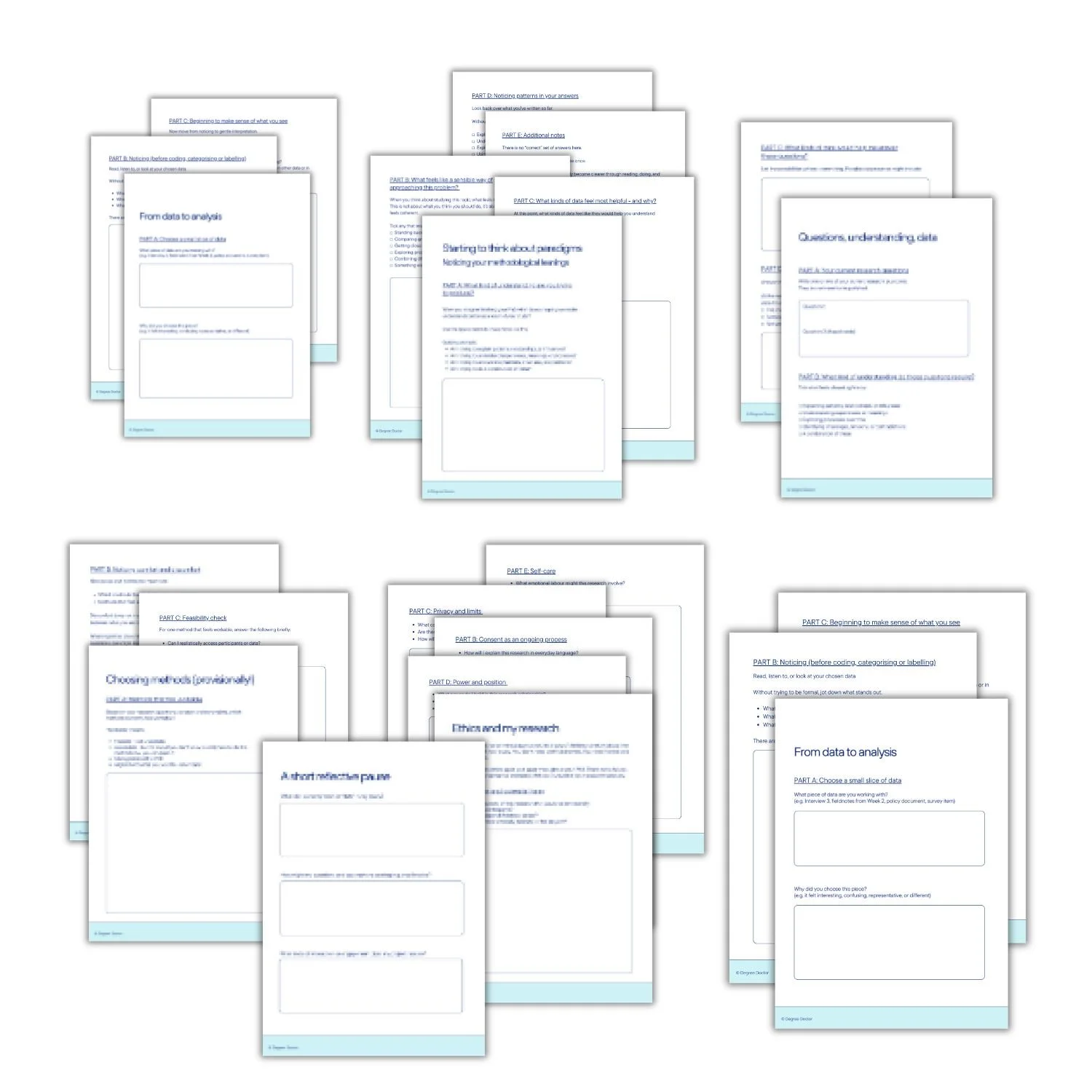
7 PDF printable and editable worksheets
Structured worksheets to help you clarify your research design, align your methods with your questions, and make sense of your data with confidence.
Qualitative analysis rarely feels neat
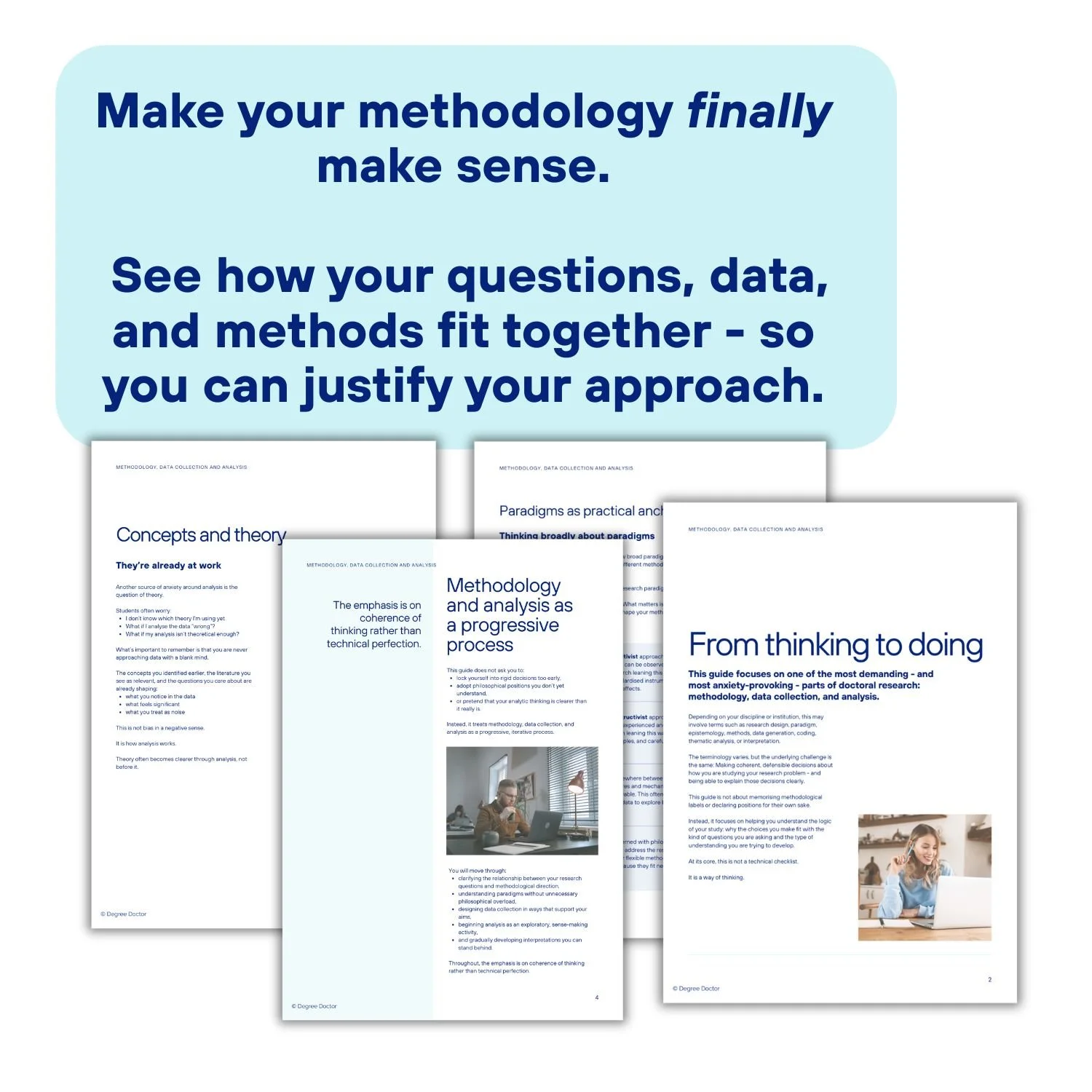
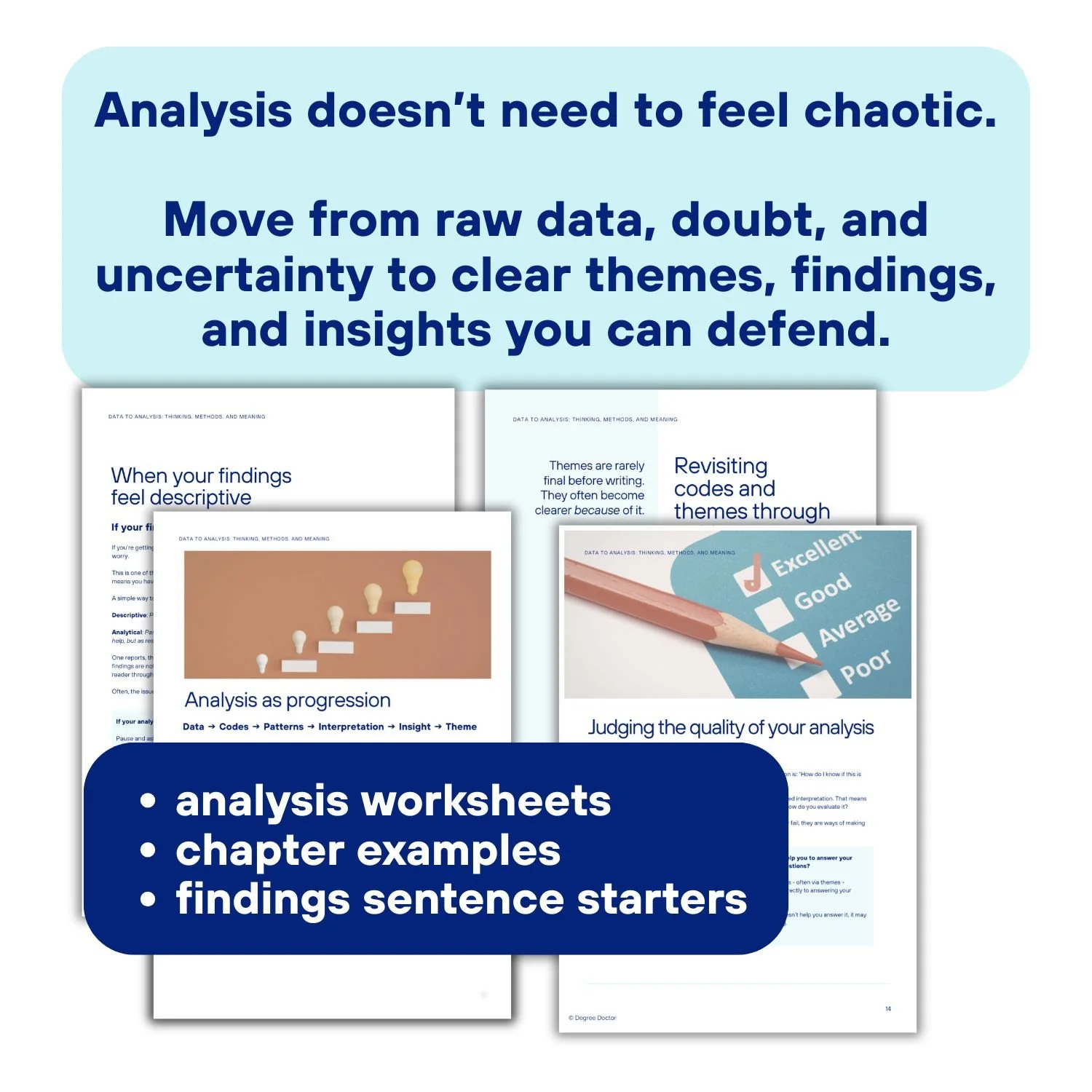
Analysing qualitative data is supposed to be a messy process.
However, no one ever really tells you this.
That's why you can end up tying yourself in knots trying to come up with names for codes, work out how they fit together, and convince yourself you're making sense rather than making it all up.
Then you step back, look at your themes and wonder:
"Did I just invent all of this?"
This is normal. It's often a sign that you're doing the kind of deep thinking qualitative research demands. You're trying to make sense of complex human experiences, not simply sorting information into neat boxes.
It's also completely normal to wonder whether your interpretations are "right", whether your themes are "correct", or whether you're analysing your data properly at all.
Qualitative research asks you to develop an interpretation that is thoughtful, well-supported by your data, and grounded in your methodological approach.
That's a very different standard than trying to seek an objectively “right” answer.
This guide helps you understand what qualitative analysis is actually trying to achieve, so you can stop chasing certainty and start building interpretations you can explain, justify and have confidence in.
Inside, you'll learn how to move from raw data to meaningful themes, understand what makes an interpretation convincing, write up your findings clearly, and connect your analysis back to your research questions, literature and methodology.
Before
Your methodology and analysis feel confusing.
❌ "I don't know if I've chosen the right methodology."
❌ "My data feels like a monster."
❌ "I'm terrified I'm doing qualitative analysis wrong."
❌ "I don't know what examiners are actually looking for."
After
Your methodology and analysis start to make sense.
✅ "I understand why my methodological choices fit my research."
✅ "I can organise my thinking instead of trying to hold everything in my head."
✅ "I understand what strong analysis actually looks like."
✅ "I can justify my decisions with confidence."
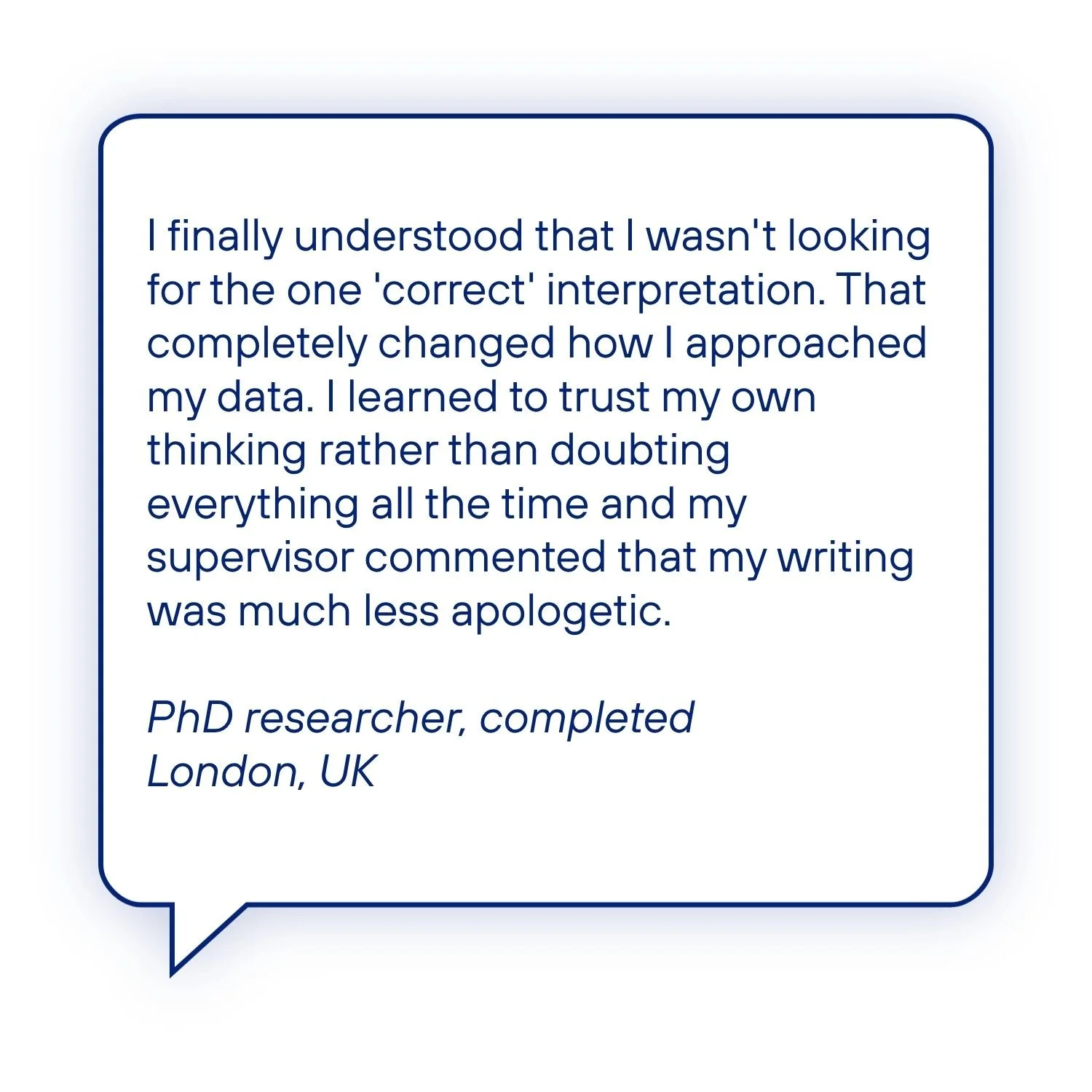
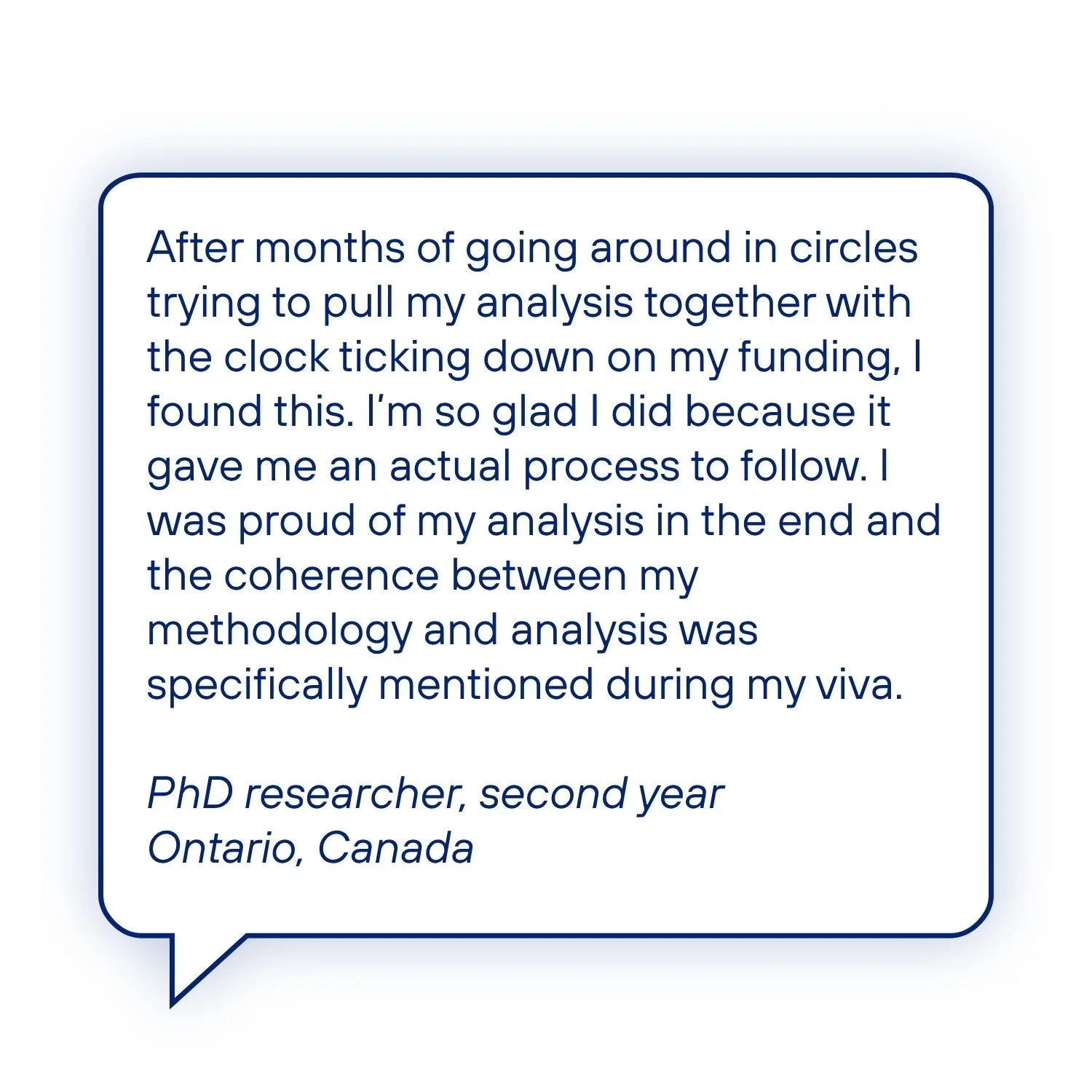
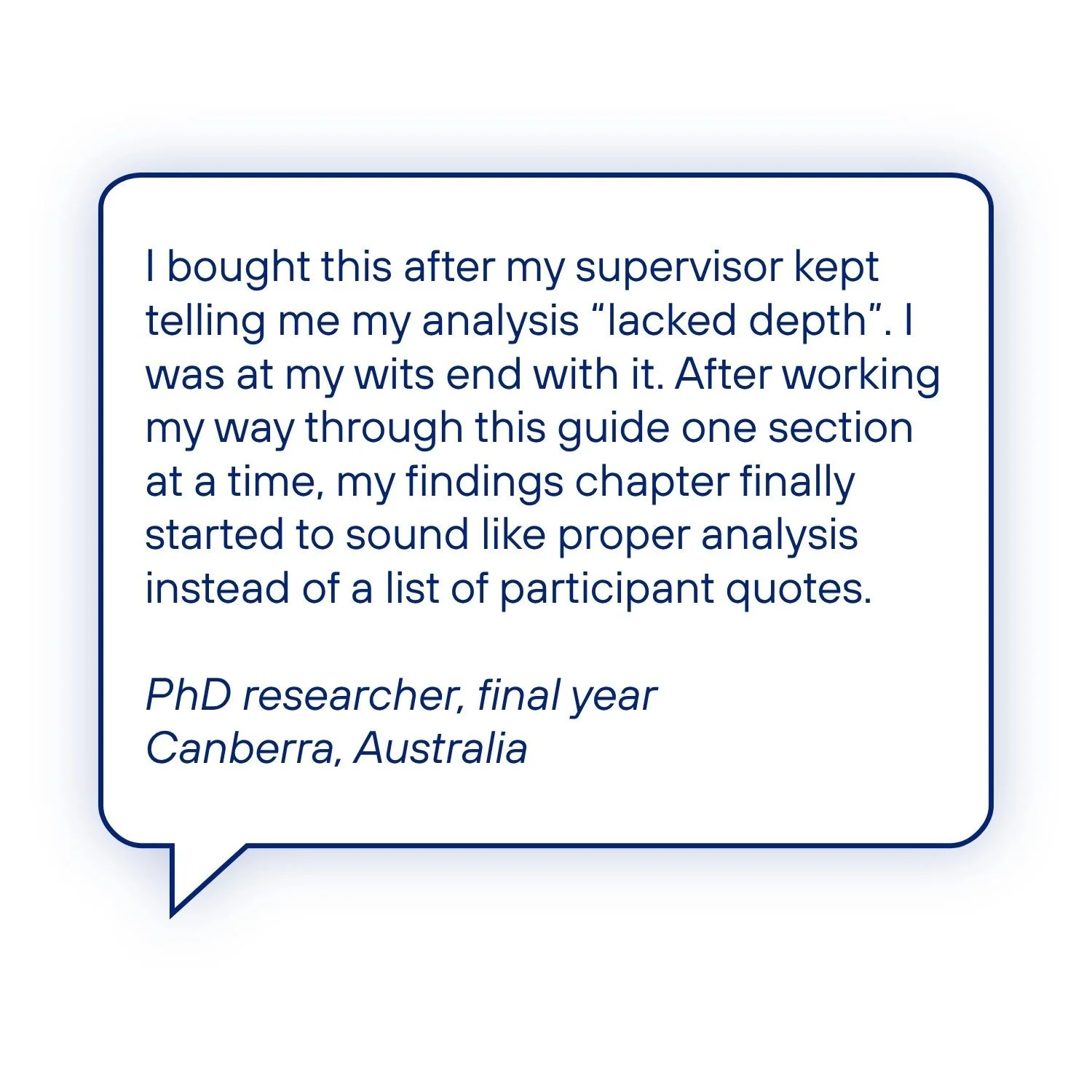
What changed after using the guide
Looking for support beyond your analysis?