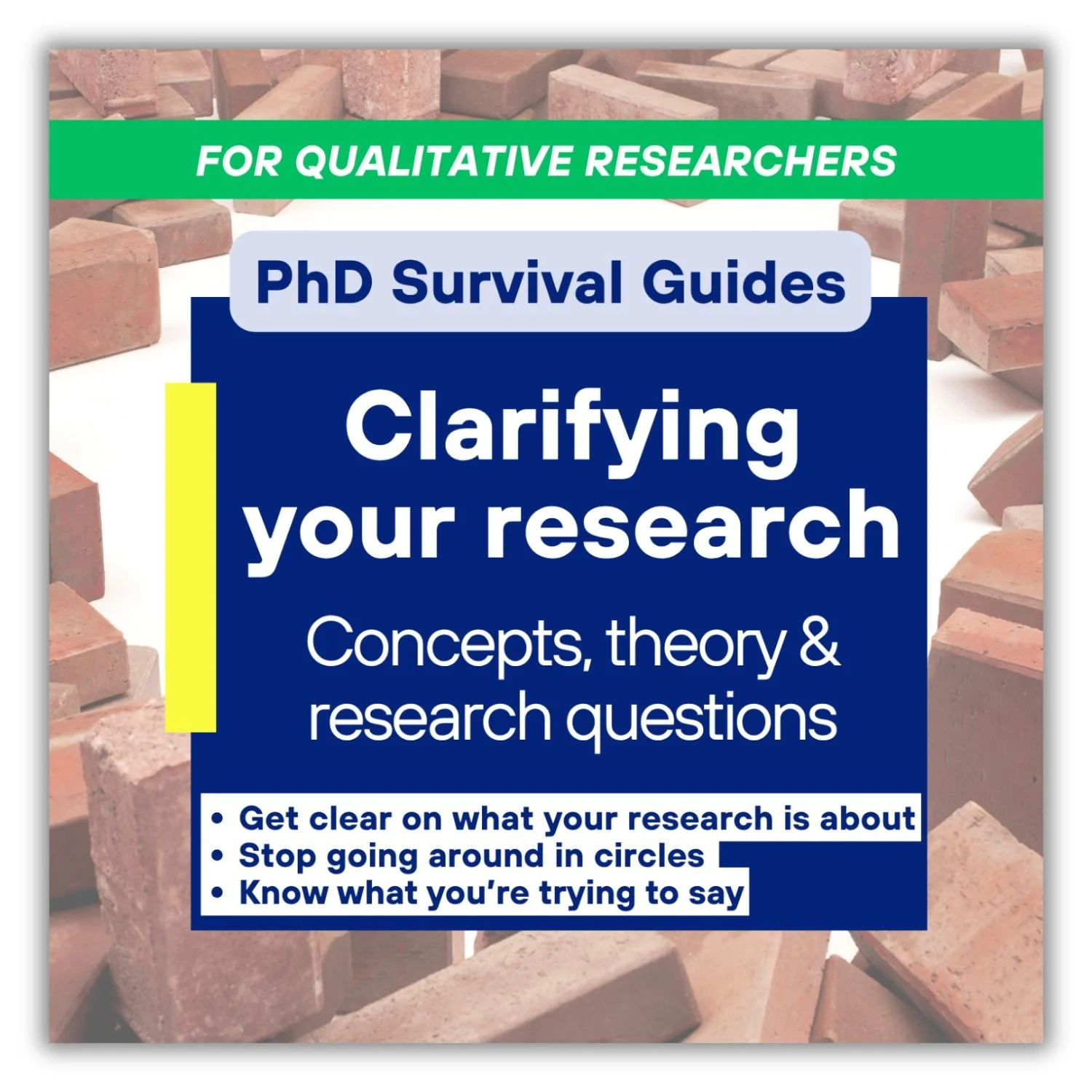
Clarifying Your Research
When you know your research, but struggle to explain what it’s actually about.
£65 GBP
International customers -your bank / card provider will convert the payment to your local currency.
The deeper you get into your PhD, the easier it is to lose sight of the research underneath all the reading, theory, data and decisions.
You can end up with research questions that no longer quite fit, concepts and theories you’re not sure what to do with, and a PhD that’s becoming tricky to explain.
This guide helps you get clear on what you’re actually researching and how the main pieces fit together - so you can move forward with a PhD that makes sense again.
Scroll down for more details of what’s included, previews of the guide, and reviews from our customers.
This is a digital download. As soon as you purchase, you’ll receive an email with a secure link to access the full guide and worksheets, so you can start making progress straight away.
By purchasing this product, you agree to our Terms & Conditions.
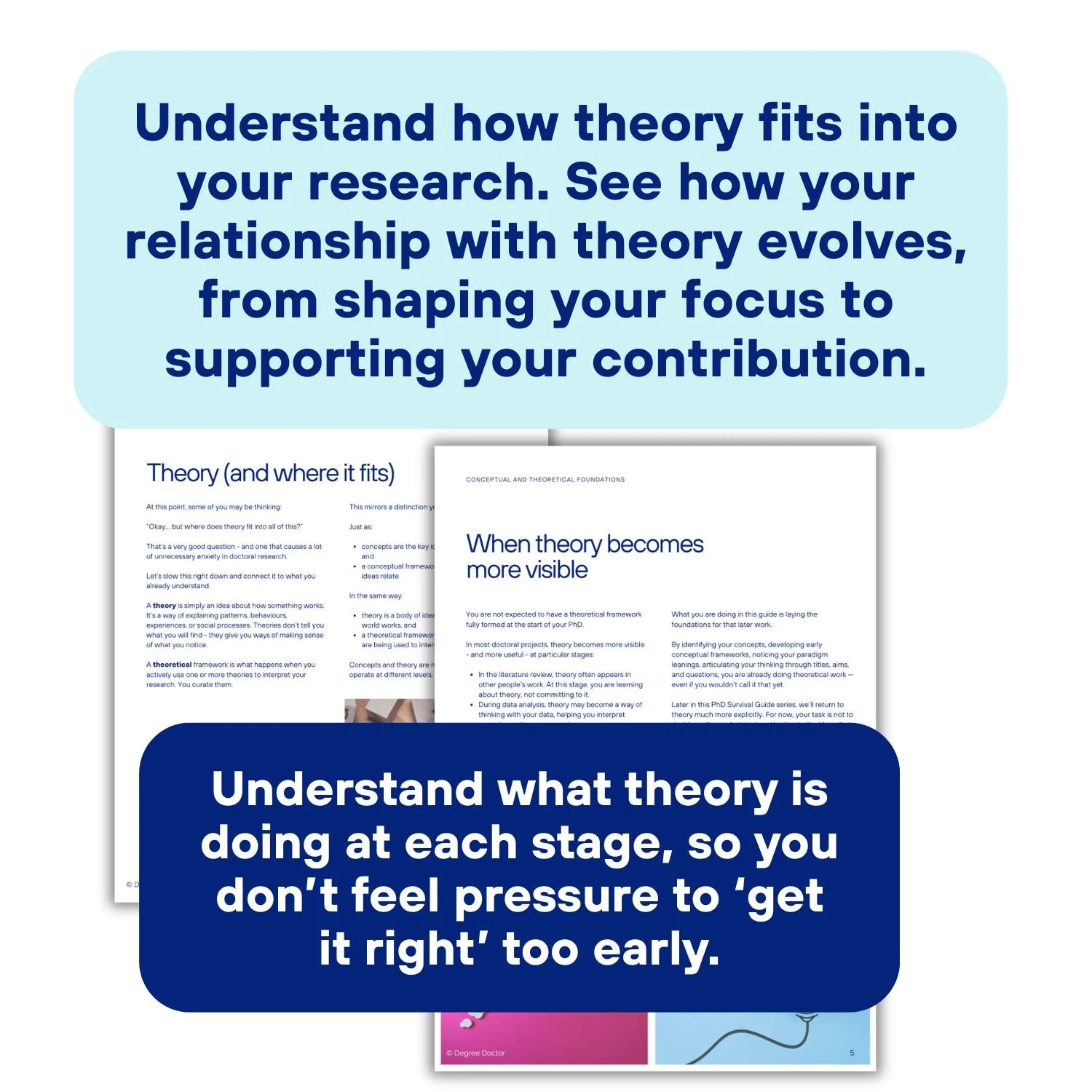
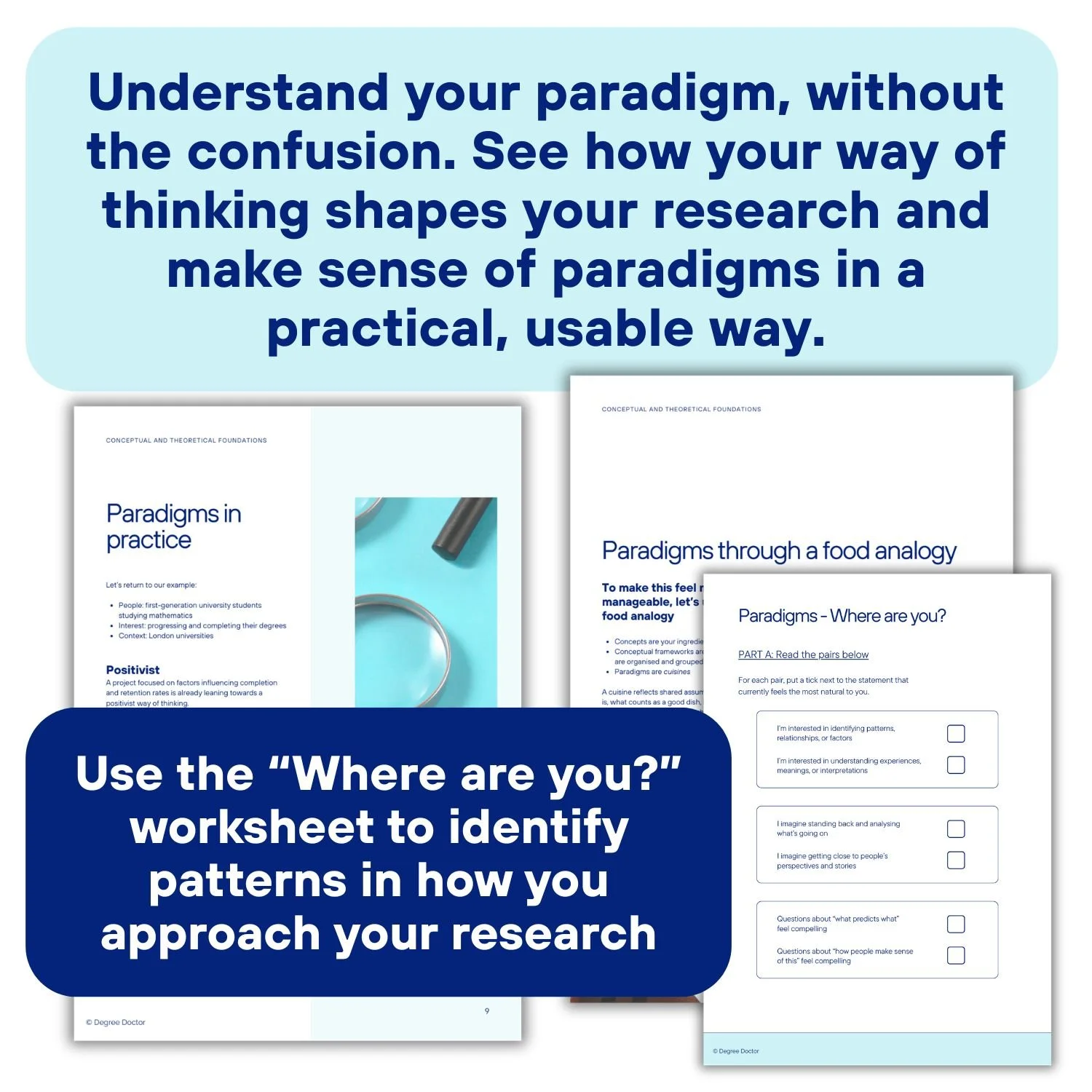
Here's what this guide helps you do
What’s included?
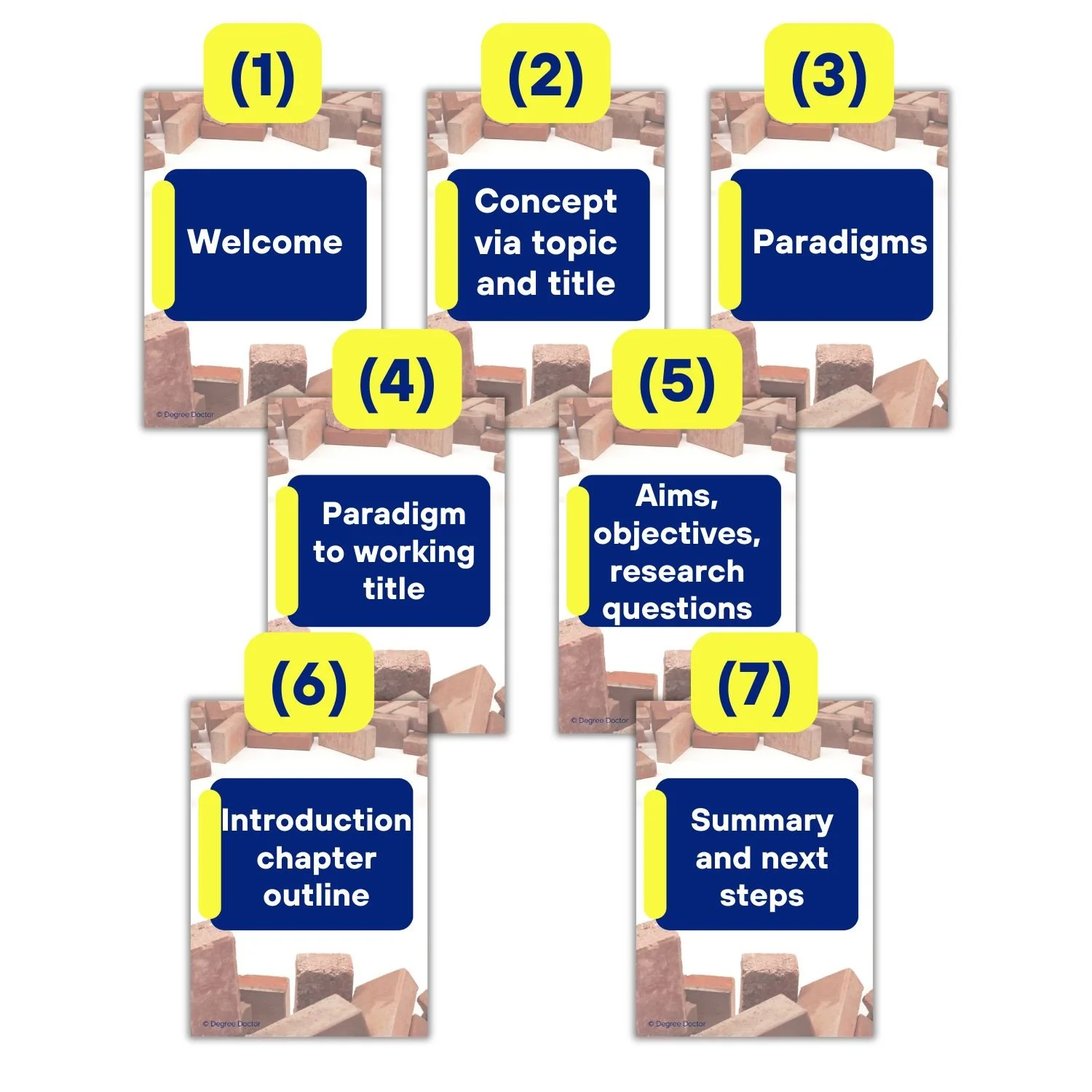
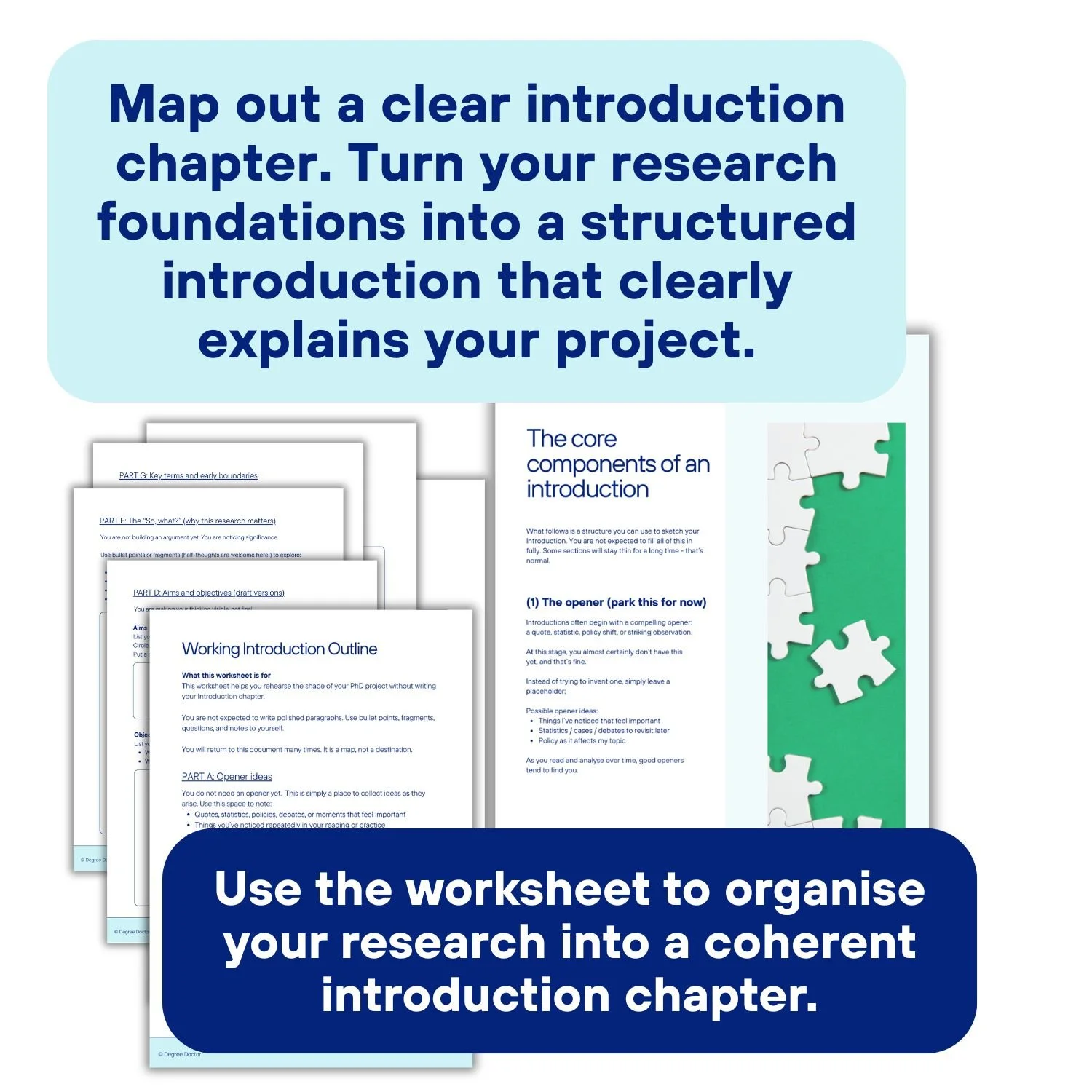
7 structured guides
Designed to help you clarify what your research is really about, connect your concepts, theory and research questions, and explain your thinking with confidence.
Work through them in order or begin where you’re stuck.
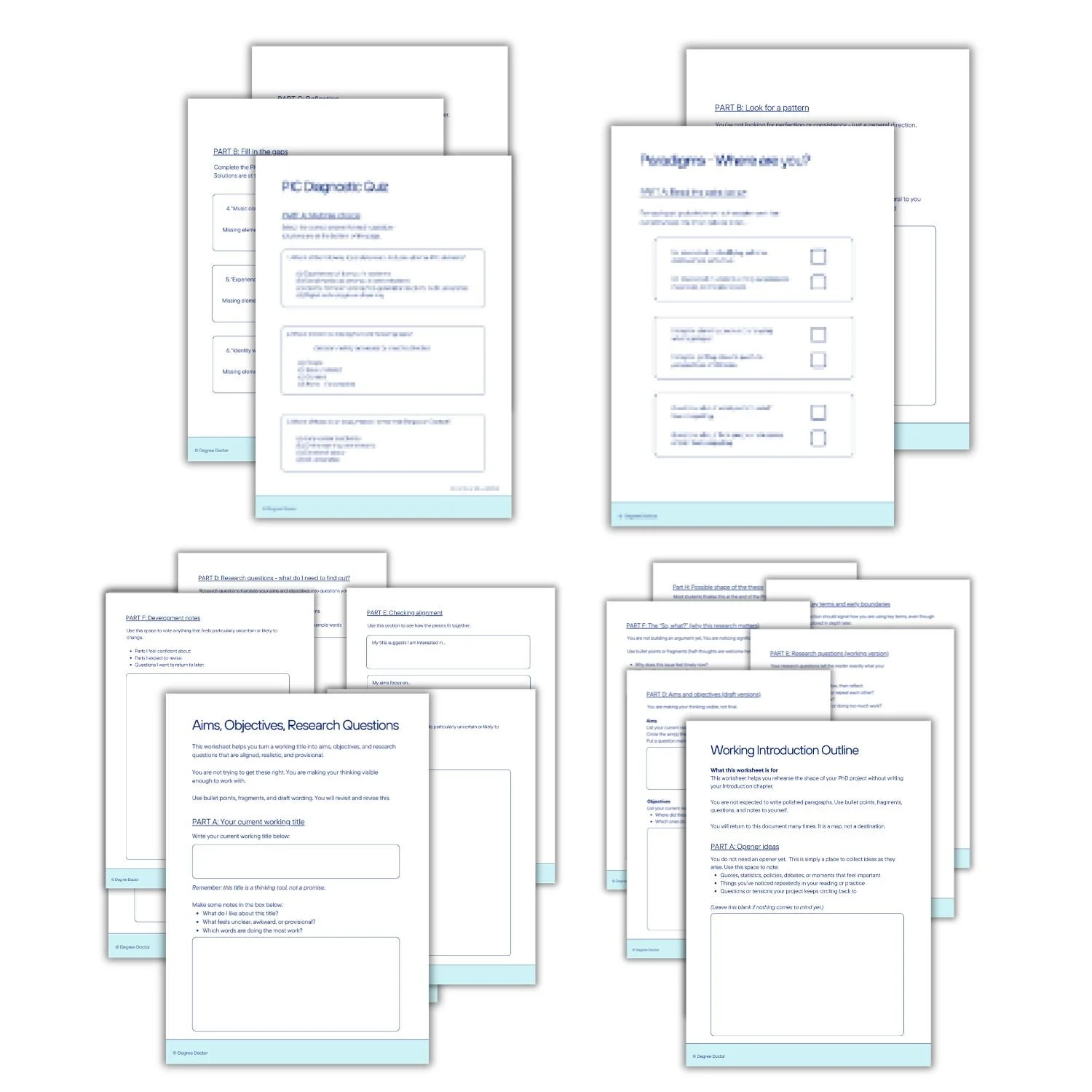
4 PDF printable and editable worksheets
Structured tools to clarify your research focus and positioning. Frameworks to align your aims, research questions and key concepts. Exercises to make your thinking visible, coherent and defensible.
Your research can become less clear as your PhD progresses
You might assume that the further you get into your PhD, the clearer you should become about exactly what your research is. That’s the hope, right?
In reality, the opposite can happen.
The longer you spend with your research, the more you know about it. You start to see nuances and details that you couldn’t see earlier, so what seemed relatively straightforward can start to feel annoyingly difficult to explain.
Someone asks, “So, what’s your PhD about?” and you hear yourself giving a five-minute answer that somehow makes your research sound less clear.
Or you look at your research questions and wonder whether they still quite capture what you're doing. Your key concepts seem to overlap. You’re not entirely sure where your theoretical framework fits. Your working title says one thing, while the research itself seems to have wandered somewhere else.
After more than 20 years working with qualitative researchers, I can tell you that this is an incredibly common point to reach.
Your thinking has developed faster than the language and structures you were using to describe it.
When the core of the research becomes unclear, the effects spread. It becomes harder to decide what belongs in your literature review, harder to justify methodological choices, harder to know what matters in your analysis, and much harder to write with confidence because you keep second-guessing what you're actually trying to say.
This guide helps you stop circling around those questions and make your thinking visible again.
You'll work through what your research is actually about, the concepts at its centre, the assumptions underpinning it, and the relationship between your aims, research questions and theoretical ideas. You'll start reconnecting pieces that may have gradually drifted apart.
Before
There are lots of pieces - research questions, concepts, theory, literature, data - but you’re not completely sure how they fit together anymore.
❌ “I keep changing my research questions because I’m not sure they’re quite right.”
❌ “The more I read about concepts and theory, the more confused I seem to get.”
❌ “I’ve got lots of ideas in my PhD, but I’m struggling to see the thread that connects them.”
❌ “When someone asks what my PhD is about, I end up rambling because I don’t know how to explain it clearly.”
After
Your research makes sense again - giving you a clearer foundation for the decisions, writing and analysis that come next.
✅ “I can explain what I’m actually studying without making it sound more complicated than it is.”
✅ “I can see how my research questions, concepts and theoretical ideas connect.”
✅ “I know which ideas are important to my study and what role they’re actually playing.”
✅ “I feel like I’ve got the thread of my PhD back.”
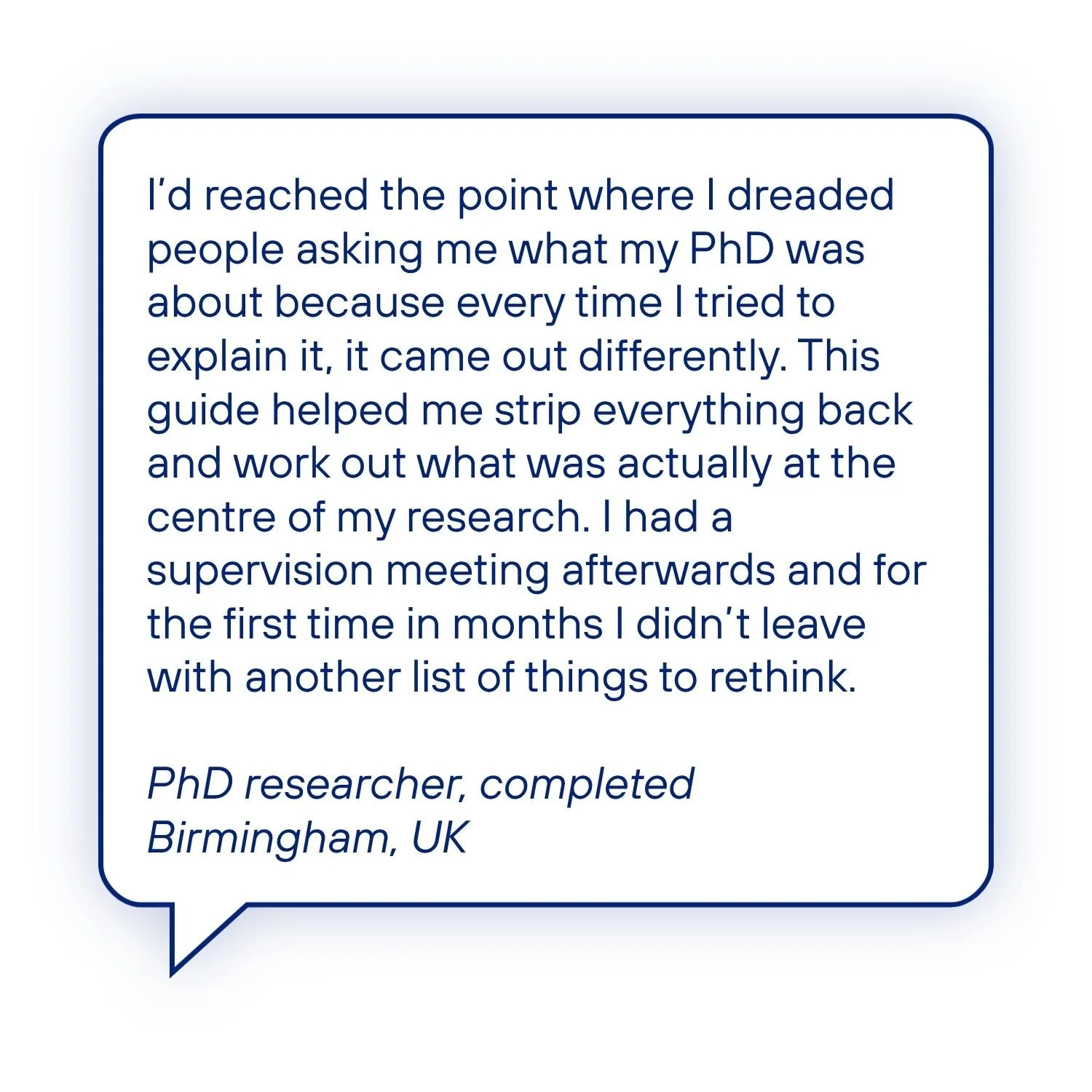
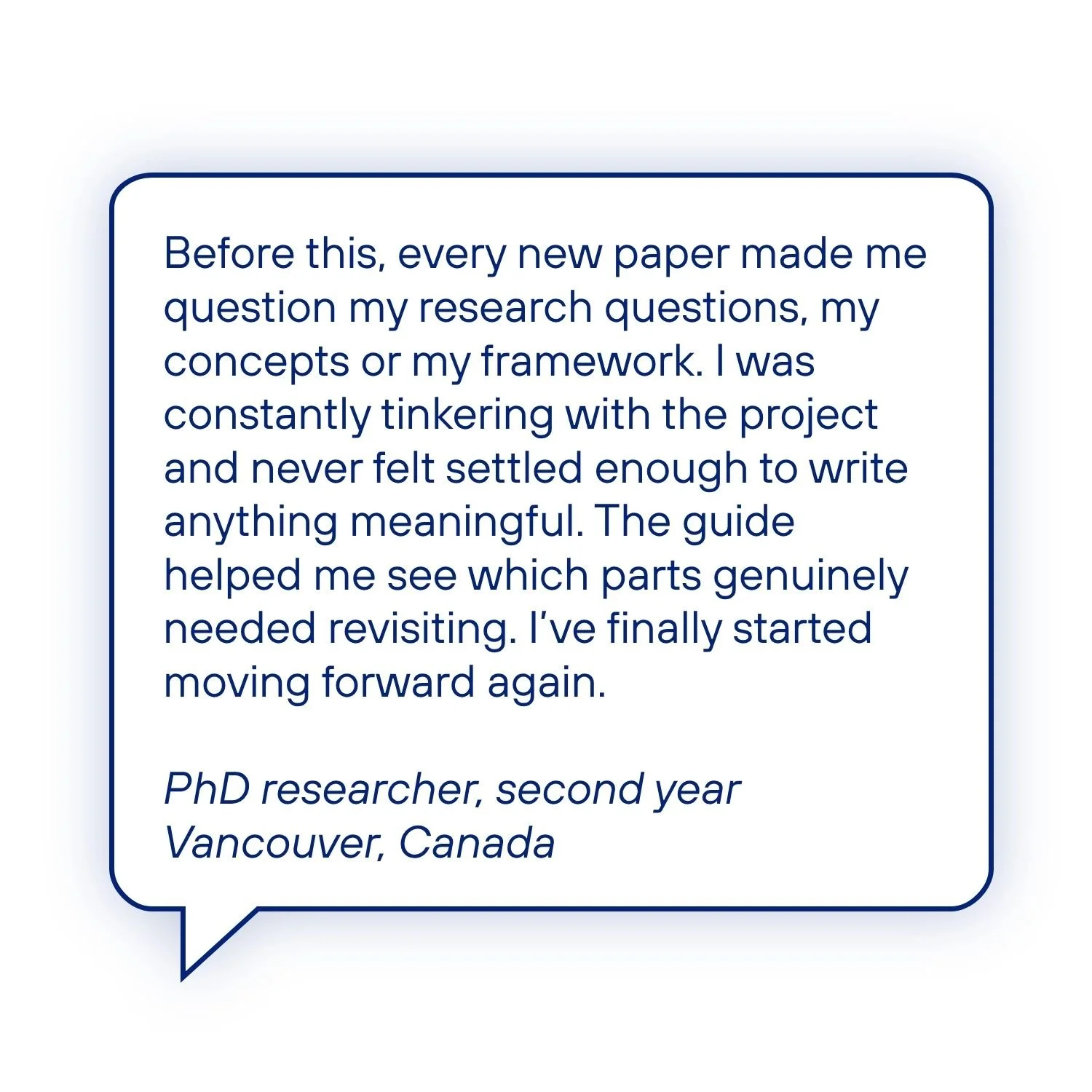
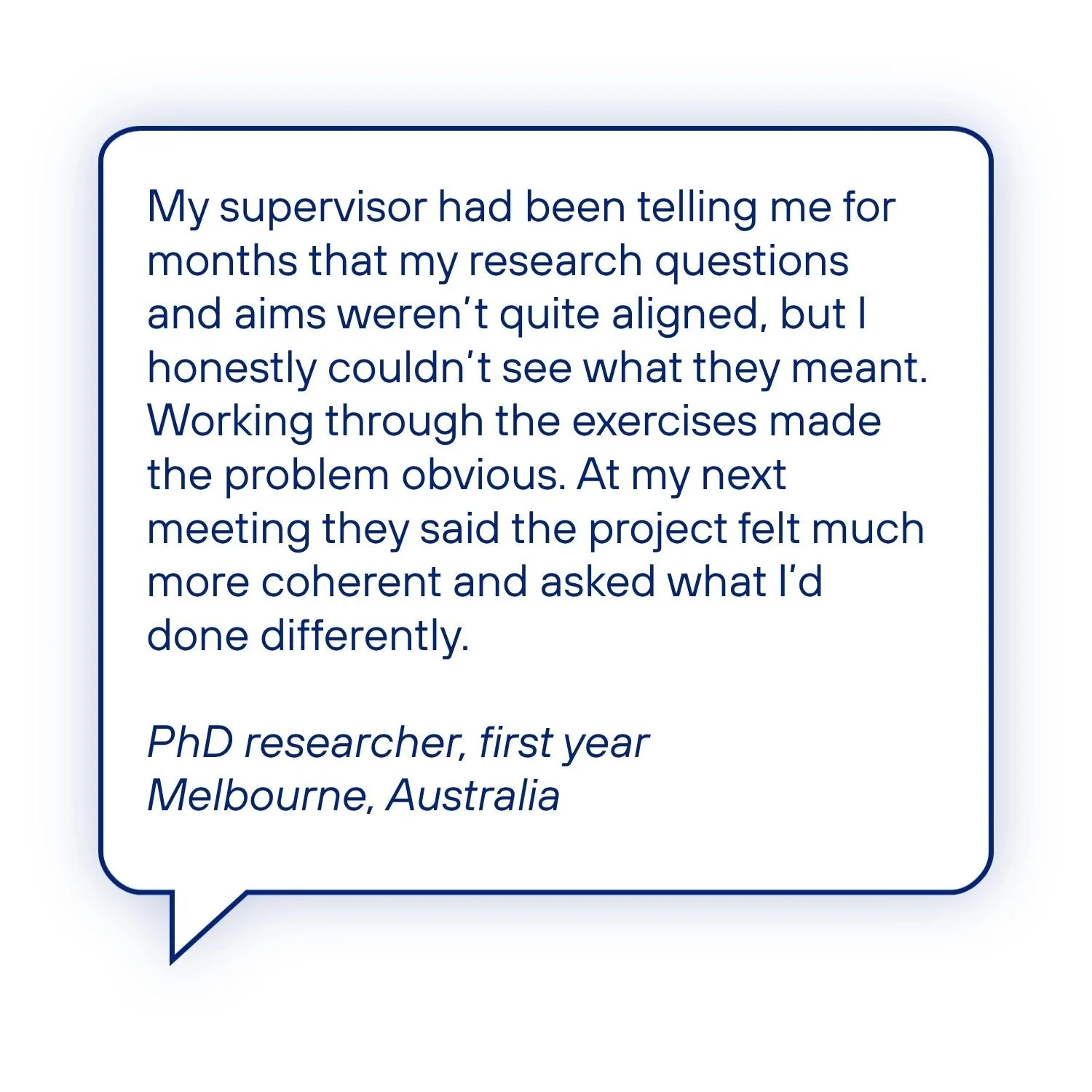
What changed after using the guide
Looking for support across your thesis?