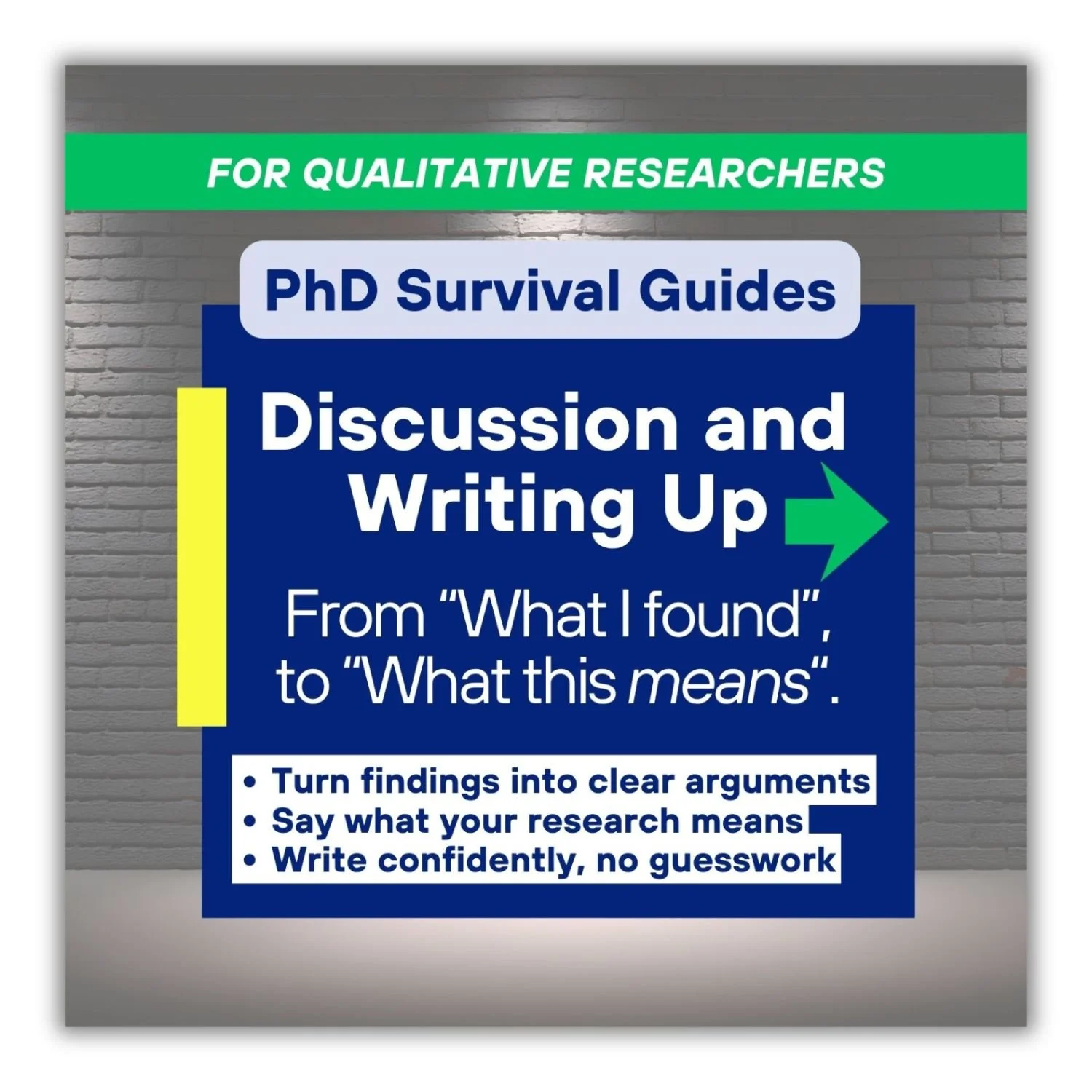
Discussion and
Writing Up
The discussion feels different because it asks you to do something different.
£75 GBP
International customers -your bank / card provider will convert the payment to your local currency.
You’re being asked to explain what your findings mean, connect them to existing knowledge, and show how your research contributes to the wider conversation. That can feel like an enormous leap. This guide helps you make it one step at a time.
Scroll down for more details of what’s included, previews of the guide, and reviews from our customers.
This is a digital download. As soon as you purchase, you’ll receive an email with a secure link to access the full guide and worksheets, so you can start making progress straight away.
By purchasing this product, you agree to our Terms & Conditions.
Here's what this guide helps you do
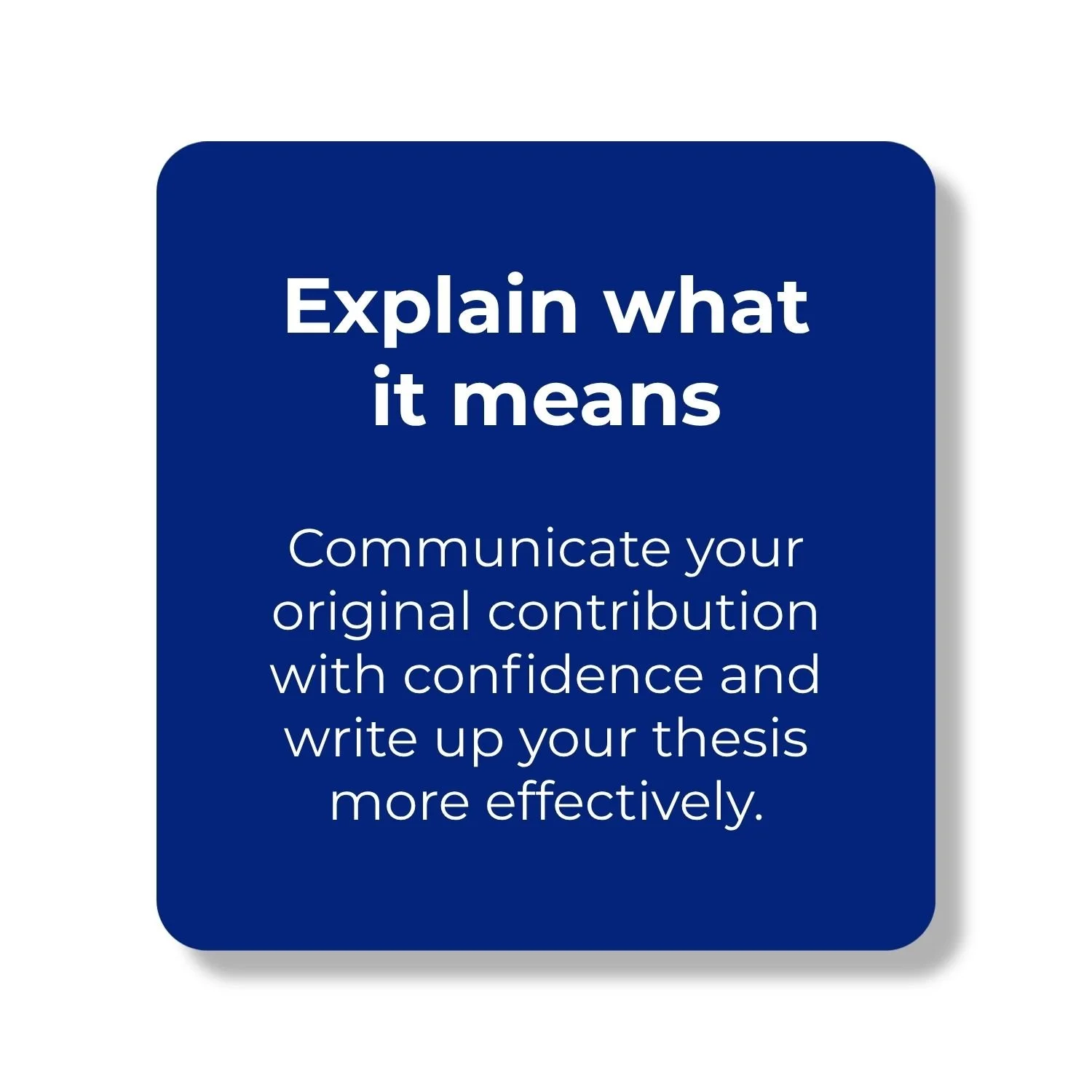
What’s included?
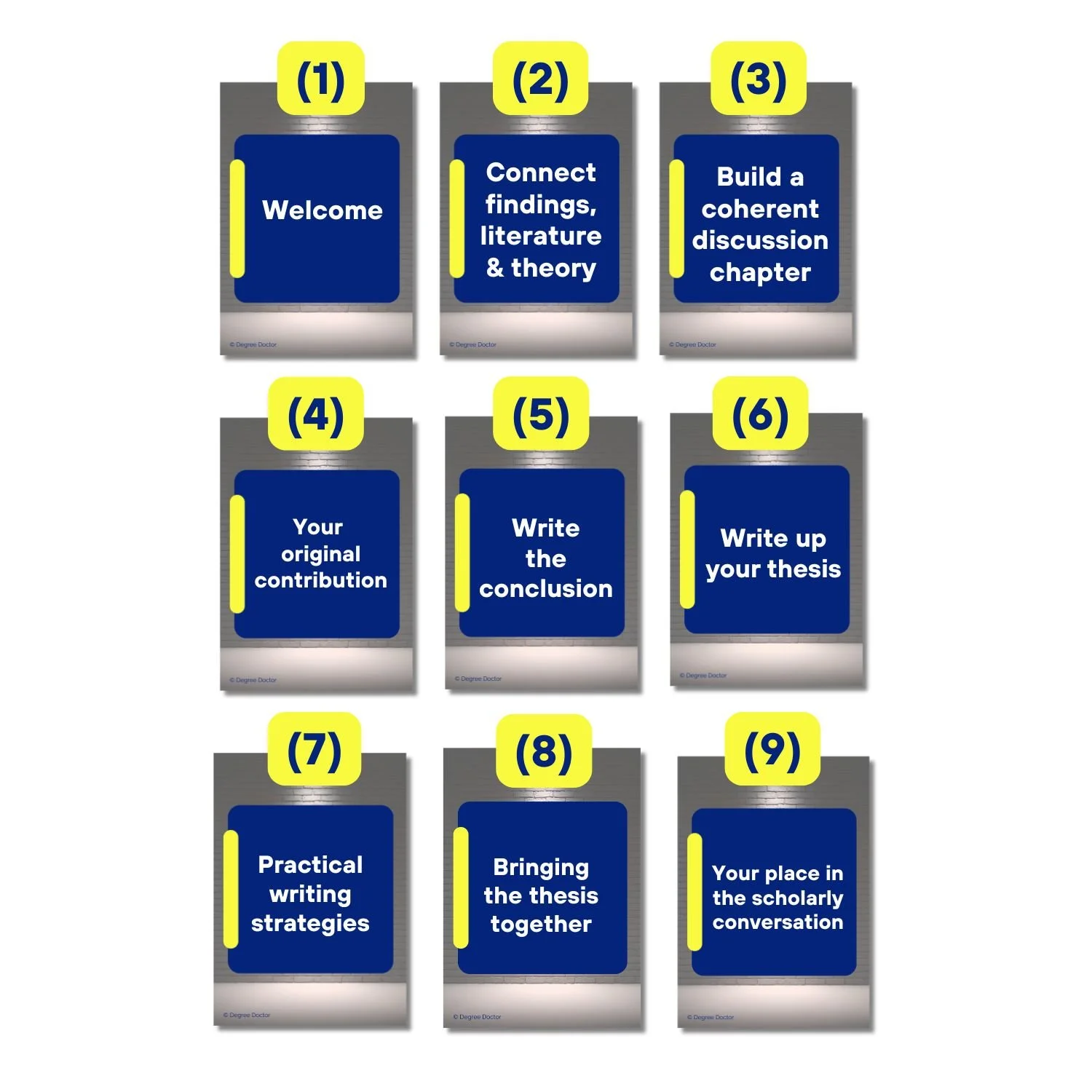
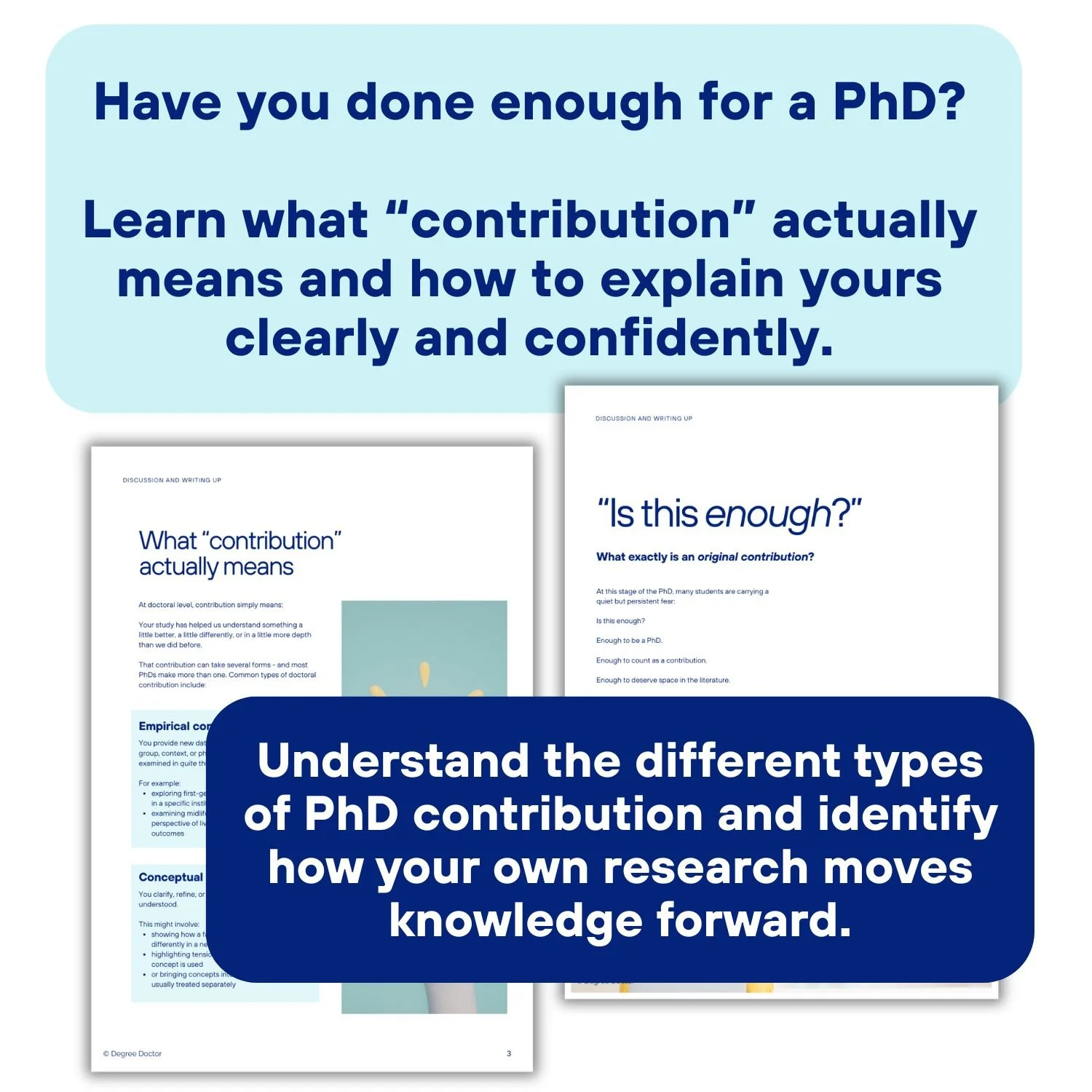
9 structured guides
Designed to help you connect your findings, explain what they mean, and communicate your contribution with confidence.
Work through them in order or begin where you're stuck.
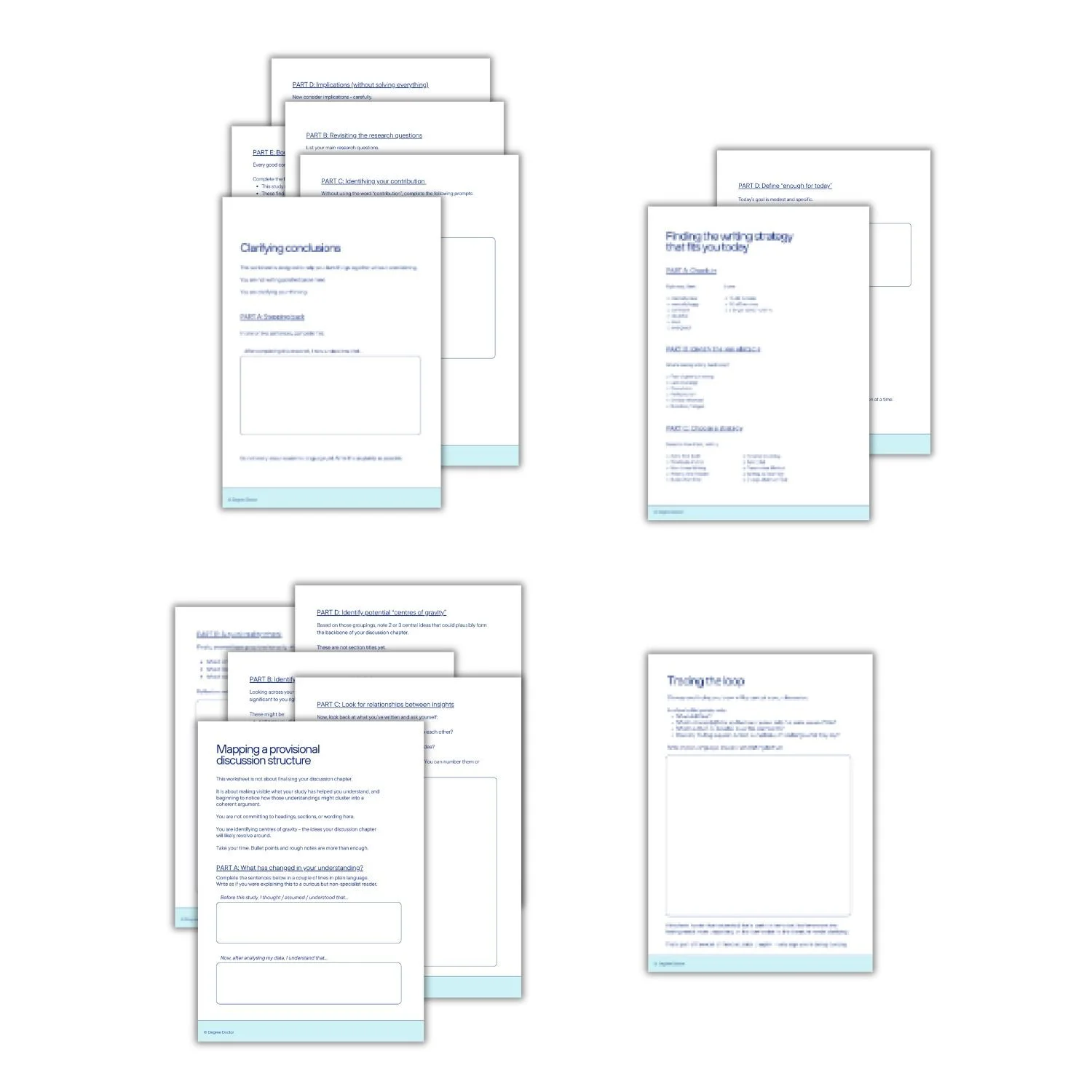
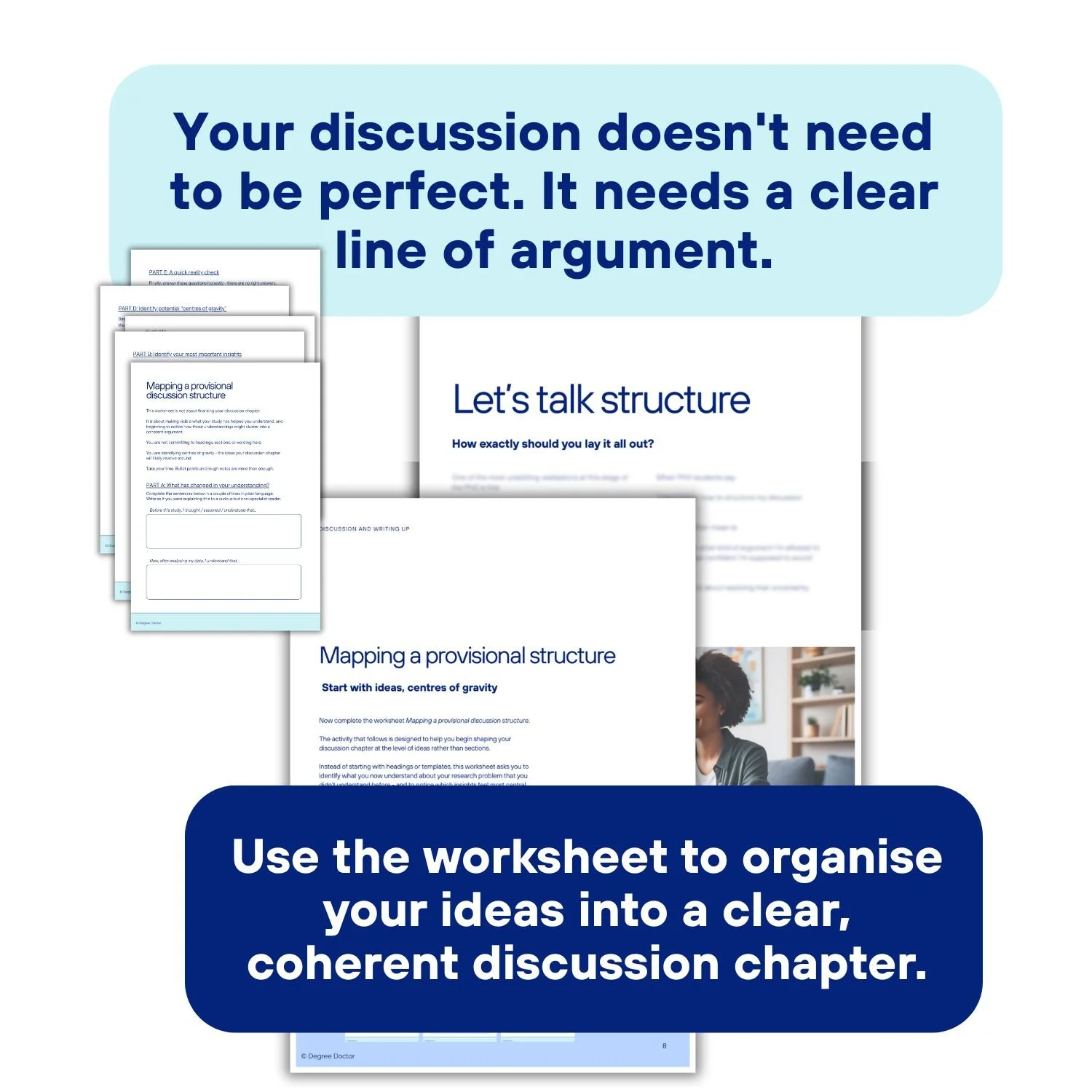
4 PDF printable and editable worksheets
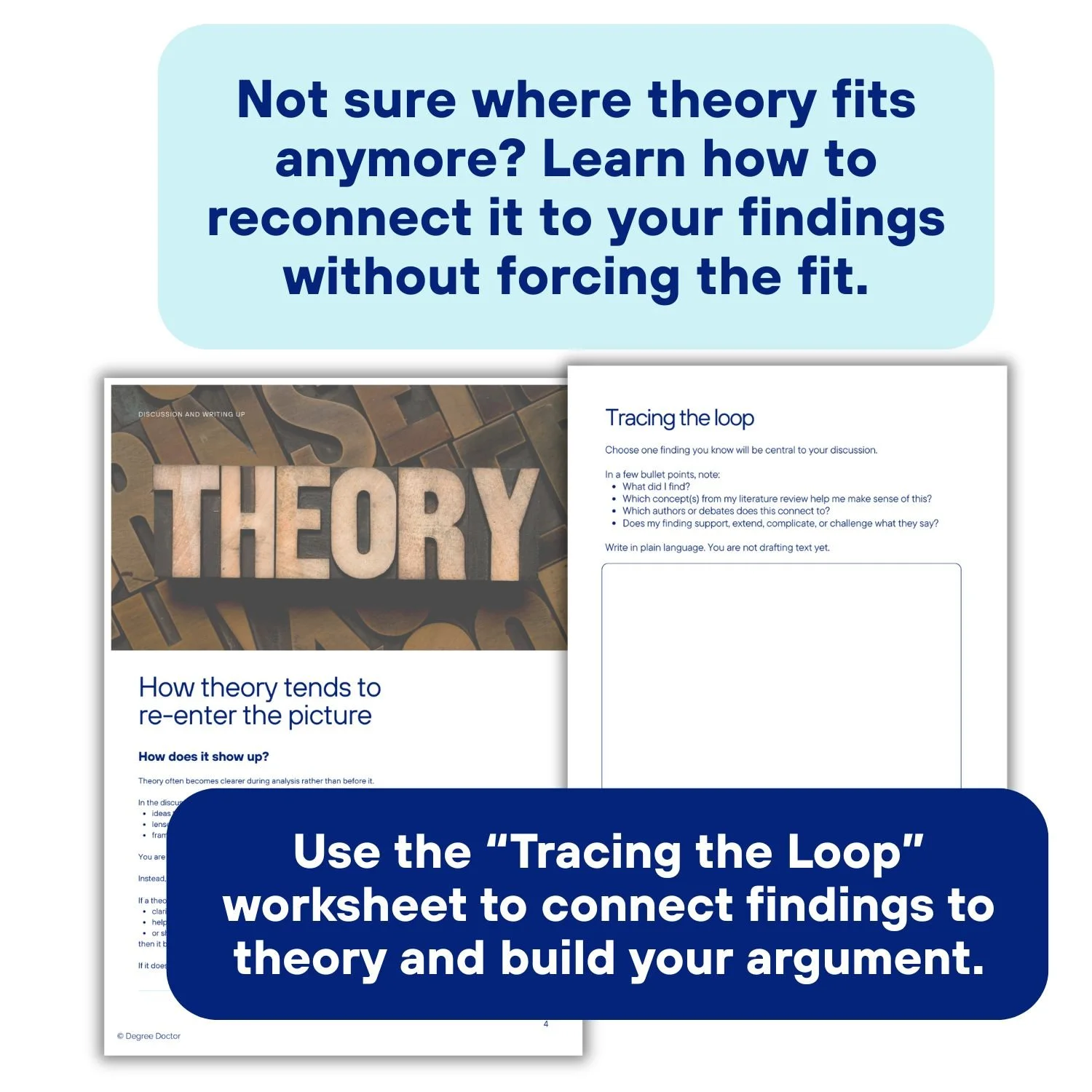
Structured exercises to untangle your thinking, strengthen your argument, and make writing feel more manageable.
Qualitative PhDs are assembled retrospectively.
A lot of PhD researchers feel a sense of relief once they've finished analysing their data - assuming that the most challenging thinking work of the doctorate is behind them.
This doesn’t last long once they meet their discussion chapter.
This is the part of the doctorate that asks you to look across your thesis - from the introduction to the analysis - and pull everything together.
That can feel awkward because when you’re writing your discussion chapter, things will feel blurry and you'll realise you need to revisit some of your earlier chapters. When this happens, a lot of PhD researchers imagine they’re doing something wrong, or a bit shady.
If this is you, you’re not. This is normal. During the 20+ years I’ve been working with qualitative researchers, I’ve seen that a great deal of doctoral writing involves retrofitting, reshaping, restructuring, reverse engineering, and gradually discovering what your thesis is actually trying to say.
You’ll need to revisit earlier chapters, rethink concepts halfway through writing, discover what matters most while drafting the discussion chapter, and realise - often very late in the process - that the real contribution of the thesis is rather different from what you originally thought it was.
Most discussion chapter resources aren't written with this reality in mind. They can leave you feeling as though you're doing something wrong when, in fact, you're doing exactly the kind of thinking this stage requires.
This guide is different. It walks you through the real process of creating your discussion so you can get to the neat, finished version that everyone else is eventually going to read.
Your discussion chapter is where much of the intellectual work happens. It's where patterns become explanations, findings become arguments and your research becomes a contribution. It’s the hardest chapter of your thesis to write, but when you follow the process in my guide, you’ll stop feeling like your thesis is a collection of mismatched chapters and start seeing the argument that runs through it.
Before
You know what you found, you just don't know what it means.
Your discussion chapter feels unclear, disconnected and much harder than you expected.
❌ "I'm worried I'm just repeating my findings instead of discussing them."
❌ "I keep questioning whether my interpretations are good enough."
❌ "Everything still feels like separate chapters instead of one coherent PhD."
After
You trust your interpretation and understand what your research contributes.
Your discussion chapter becomes a clear explanation of what your findings mean and why they matter.
✅ "I know how to move beyond describing my findings to explaining them."
✅ "I can connect my findings to the literature with confidence."
✅ "My discussion chapter has a clear argument rather than a collection of observations."
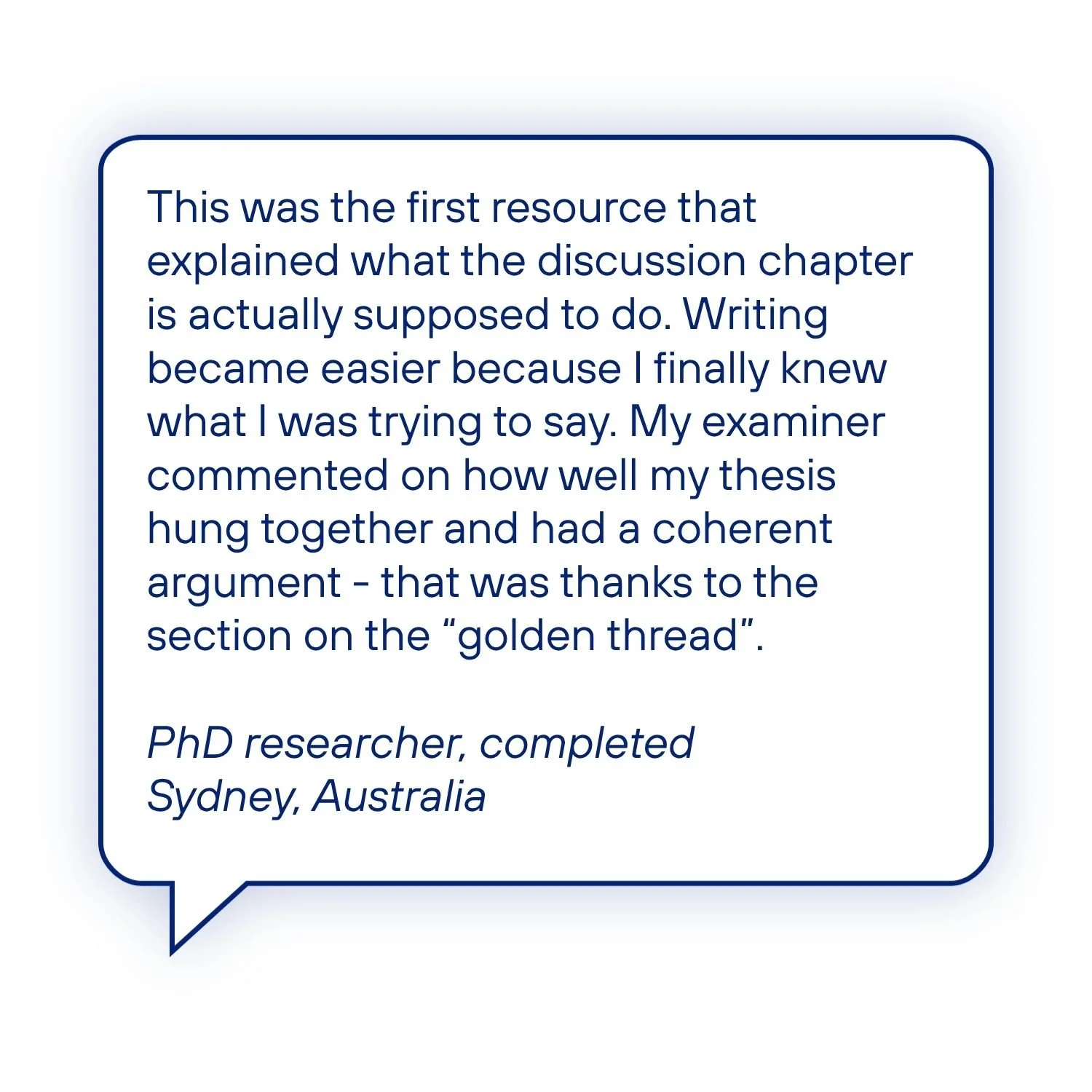
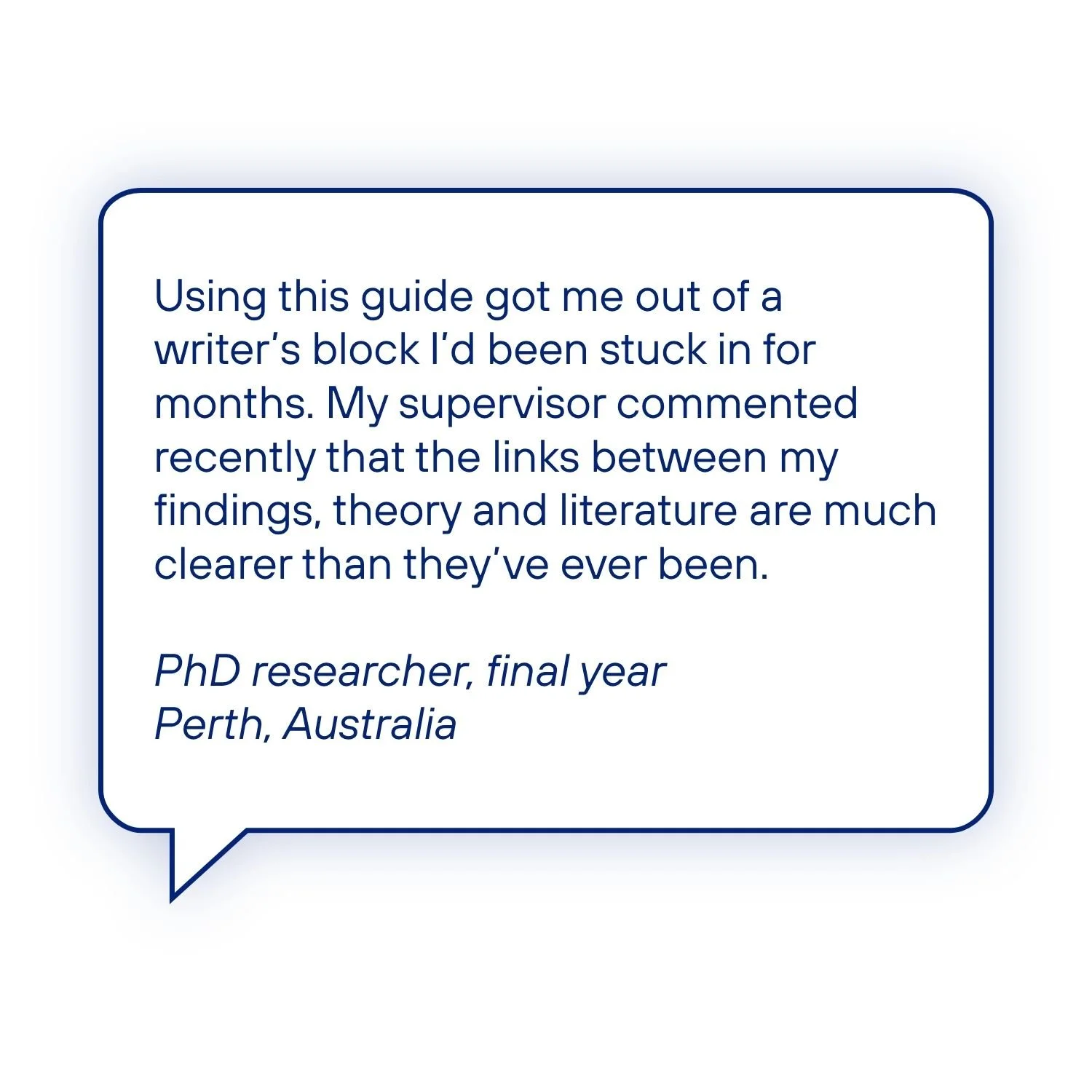
What changed after using the guide

Looking for support beyond your discussion?