Welcome to the Degree Doctor blog - structured, practical guidance for qualitative PhD researchers.
If you’ve ever looked at your work and thought, “This isn’t quite coming together…”
If you’ve done the reading, but still feel unsure how to translate it into clear, confident writing.
If you’re making progress, but not in a way that feels coherent or fully convincing.
There’s a reason for this - you’re working within a process that is rarely made visible, and that’s not your fault.
This blog focuses on the points where qualitative PhDs most often slow down - literature reviews that lose shape, discussion chapters that feel difficult to articulate, methodology decisions that are hard to justify, and the ongoing pressure of working at doctoral level without clear structure.
Each blogpost is designed to help you think more clearly, work more deliberately, and move your research forward with greater confidence.
You’ll find guidance on:
Structuring and writing your thesis with clarity
Developing stronger critical analysis and contribution
Refining your conceptual and theoretical foundations
Making sense of qualitative methodology and interpretation
Managing the intellectual and psychological demands of doctoral research
You can explore by category below, or start with the latest posts.
The aim is not to do more - it is to work with greater clarity, stronger reasoning, and a more structured approach - so your PhD becomes something you can explain, defend, and complete with confidence.
7 Key Tips for Presenting Qualitative Data in Your Findings Chapter
Presenting qualitative data in your findings chapter can be a challenging yet essential part of your research journey. Whether you're a seasoned researcher or just starting out …

PhD Habits
My most successful PhD students aren’t the smartest or the most naturally talented students, they’re the most consistent students.
How to structure a methodology chapter for a qualitative PhD
Your methodology chapter is not just a description of what you did. For qualitative PhD researchers, it is where you show the logic of your study and justify the decisions that shaped it.

How to Recruit Research Participants: Top tips for social science PhD students
If you need to recruit more participants for your research study, read this before you design another leaflet or post anything else on social media!

PhD Career Paths - What’s next after your doctorate?
Finishing your social sciences postgrad journey? Want to explore some options outside of academia? Read on …

Navigating Ethics in Projects with No Participants: A guide for social science postgraduate students
Just because you don’t have any participants, doesn’t mean you can skip ethics!

How to Structure a Literature-Based Dissertation: A Comprehensive Guide
Struggling on what to write in your literature based dissertation? Well, here are some ideas …
Writing a Qualitative PhD Discussion Chapter: A clear structure that actually works
The qualitative PhD discussion chapter is where many researchers freeze - not because they lack ability, but because it’s unclear how to turn findings into a coherent argument. This post gives a calm structure for connecting findings to literature and theory, making your contribution visible, and avoiding repetition or overclaiming.

PhD Literature Review - How to be more critical
Critical analysis, and how good or bad yours is, can make or break your dissertation literature review …
PhD Literature Review: Why you shouldn’t write it in full (yet)
Most qualitative PhD researchers assume they need to write their literature review in full as early as possible. It feels productive - but it often creates more rewriting later. In this post, I explain why keeping your literature review in a structured provisional outline can save time, reduce overwhelm, and strengthen your final synthesis. If your review currently feels bulky or rigid, this approach might quietly transform how manageable it becomes.

PhD Literature Review - Stop chasing a wordcount!
Dissertation students often become obsessed with word counts, especially when it comes to their literature reviews. They constantly compare their progress to that of their peers and feel the need to write as many words as possible. However, this habit of trying to write as much as possible can seriously damage your literature review and put your entire dissertation at risk …

PhD Literature Review Writing - Take back control!
You’ve written up some of your literature review. However, it’s a mess. The structure is all over the place and the more you try to fix it, the messier it gets. Fear not! I have a 5-step process to get you out of trouble!
Struggling to write your dissertation?
Struggling to make progress on your qualitative PhD? It may not be a motivation problem - it may be a cognitive overload problem. This post explains the difference between deep work and surface work, how batching protects your energy, and how to reduce context switching so you can move forward steadily without burning out.
Using AI Ethically in a Qualitative PhD: What’s okay - and what isn’t - in your dissertation?
Can you use AI ethically in a qualitative PhD dissertation? Clear guidance on what’s appropriate, what isn’t, and how to protect your academic voice.
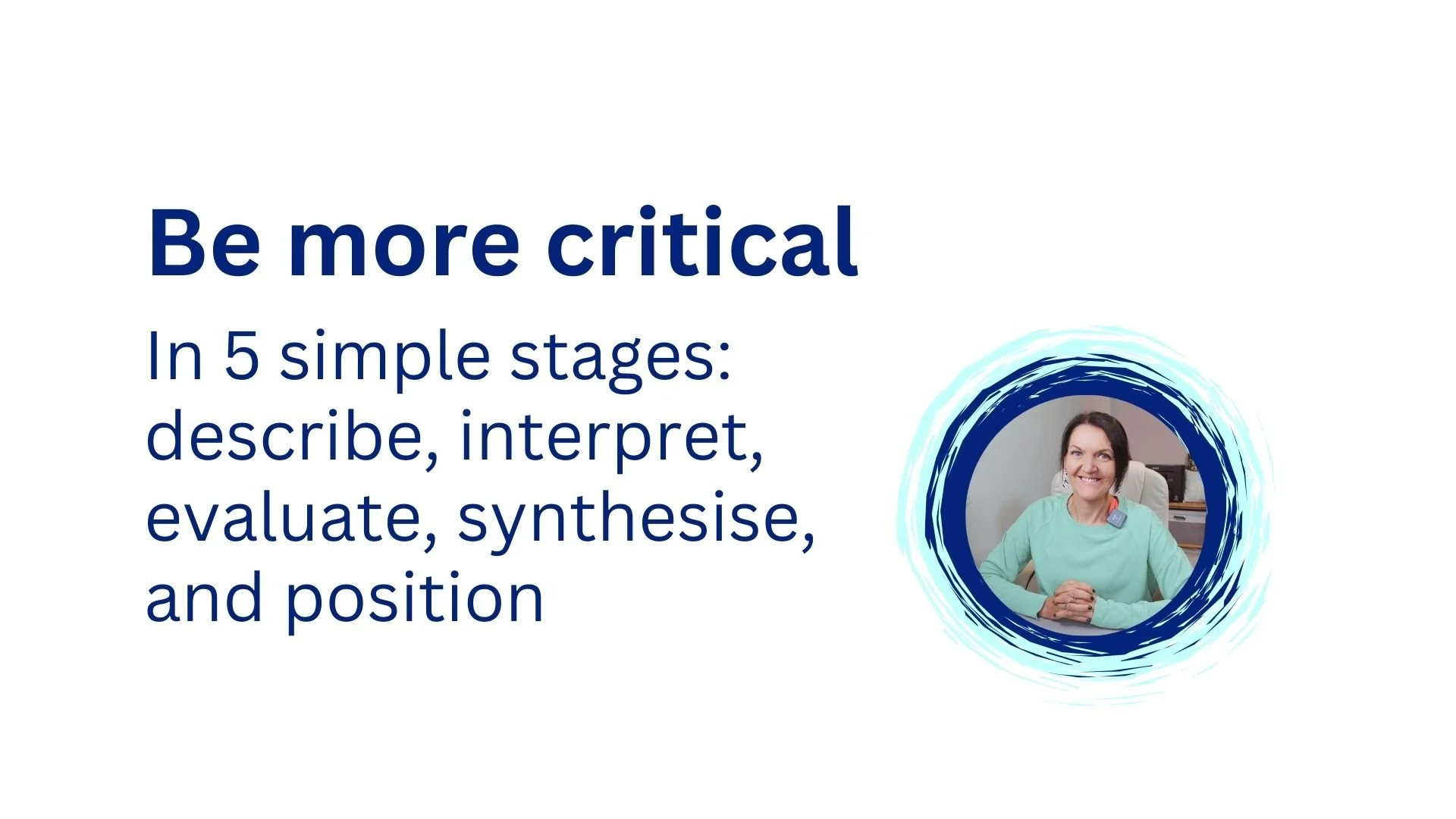
Critical analysis for qualitative PhD students - moving beyond description
Struggling with “be more critical” feedback in your qualitative PhD? This post explains the five stages of doctoral-level critical analysis - from description to positioning - and how to move your literature review beyond summary into confident scholarly argument.
Critical Analysis for Qualitative PhD Students: Moving beyond description
Writing a qualitative PhD literature review? Learn how to move from description to synthesis and positioning with this 5-step critical analysis framework.