Navigating Ethics in Projects with No Participants: A guide for social science postgraduate students
Just because you’re not researching with actual people doesn’t mean you can skip the ethical approval process!
Research projects that do not involve direct human participants STILL have ethical things you need to consider.
In this blog post, I’ll explore the ethical issues in these projects and provide guidance on how to approach them responsibly.
Respecting Privacy and Confidentiality
The Principle
Research projects without direct participants must prioritise privacy and confidentiality. Even though the data may not have been obtained through traditional means, it is crucial to honour the intended purpose of the information and anonymise it to avoid sharing identifiable details without explicit consent. You must handle the information with sensitivity and refrain from using personally identifiable information.
Example
Let's say you're examining online news articles about a specific community. While the information in the articles is publicly available, individuals within that community might not have anticipated their words or experiences being used in a research context. To uphold ethical standards, you should anonymise the data and avoid sharing identifiable details. Instead, focus on the broader patterns and themes that emerge from the articles, ensuring the privacy of unintended participants.
Respecting Informed Consent
The Principle
Informed consent takes a different form in projects without direct participants. You’ll need to navigate the ethical implications of using data or materials created by others by acknowledging permissions, copyright restrictions, and intentions associated with the content. Proper attribution and citation practices are essential to demonstrate academic integrity and recognise the contributions of others.
Example
For example, let's say you're conducting a study analysing historical documents related to a sensitive topic. Although you can't seek consent from the original authors, it's crucial to attribute the materials appropriately and cite the sources accurately. By respecting the permissions, copyright restrictions, and intentions tied to the documents, you uphold the ethical integrity of your research.
Mitigating Potential Harm
The Principle
Researchers in projects without human participants must recognise the potential for harm and take proactive measures to mitigate risks. Even seemingly innocuous findings or interpretations can have far-reaching consequences. Therefore, you must conduct thorough and thoughtful analyses, critically assess your biases, and ensure clear and accurate communication of research findings to avoid misinterpretation.
Example
Consider a study analysing media representations, which might seem harmless. However, the ways in which media portrays certain groups or individuals can perpetuate stereotypes or reinforce biases. To mitigate potential harm, you should conduct thorough analyses, critically assess your own biases, and be cautious when disseminating findings. By presenting research with clarity, transparency, and accurate contextualisation, the risk of harm stemming from misinterpretation is reduced.
Embracing Transparency and Accountability
The Principle
Transparency and accountability are crucial in research projects without human participants. You must be transparent about your methodologies, sources, and potential biases, enabling others to evaluate your work. Open data practices, when feasible and within ethical boundaries, contribute to the integrity and credibility of research findings.
Example
For instance, if you conducted a study analysing a specific set of media representations, consider sharing those materials, redacted if necessary, with other researchers. By embracing transparency and accountability, researchers foster collaboration, diverse perspectives, and contribute to the advancement of knowledge.
Caring for Your Wellbeing and Welfare
The Principle
Researchers must prioritise their wellbeing when engaging with sensitive or traumatic topics. Emotional responses, personal experiences, and vicarious trauma can take a toll on researchers. Establishing personal boundaries, seeking support from mentors or colleagues, practicing self-care techniques, and conducting risk assessments are essential steps to maintain wellbeing throughout the research process.
Example
For example, if you're engaging with potentially distressing materials, set limits on the amount of time spent and utilise self-care strategies during and after research activities. Building a support system with mentors, supervisors, or colleagues who create a safe space for reflection is essential. Practicing self-care techniques such as exercise, mindfulness, or talking through any difficult feeings with a friend or counsellor will help you maintain your wellbeing and approach your work with empathy and sensitivity.
Conclusion
In research projects without direct human participants, ethical considerations play a crucial role. By respecting privacy and confidentiality, honoring informed consent, mitigating potential harm, embracing transparency and accountability, and safeguarding the wellbeing of researchers, ethical principles guide responsible and impactful research. By navigating the ethical landscape with care, empathy, and self-awareness, researchers contribute to a research community that values integrity, respects rights and wellbeing, and strives for a better understanding of the world.
Next steps
When your methodology chapter feels like a list of decisions rather than a clear research story, the Methodology, Data Collection and Analysis Pack helps you articulate the ‘why’ behind your choices and turn them into a convincing academic narrative. See below for details.
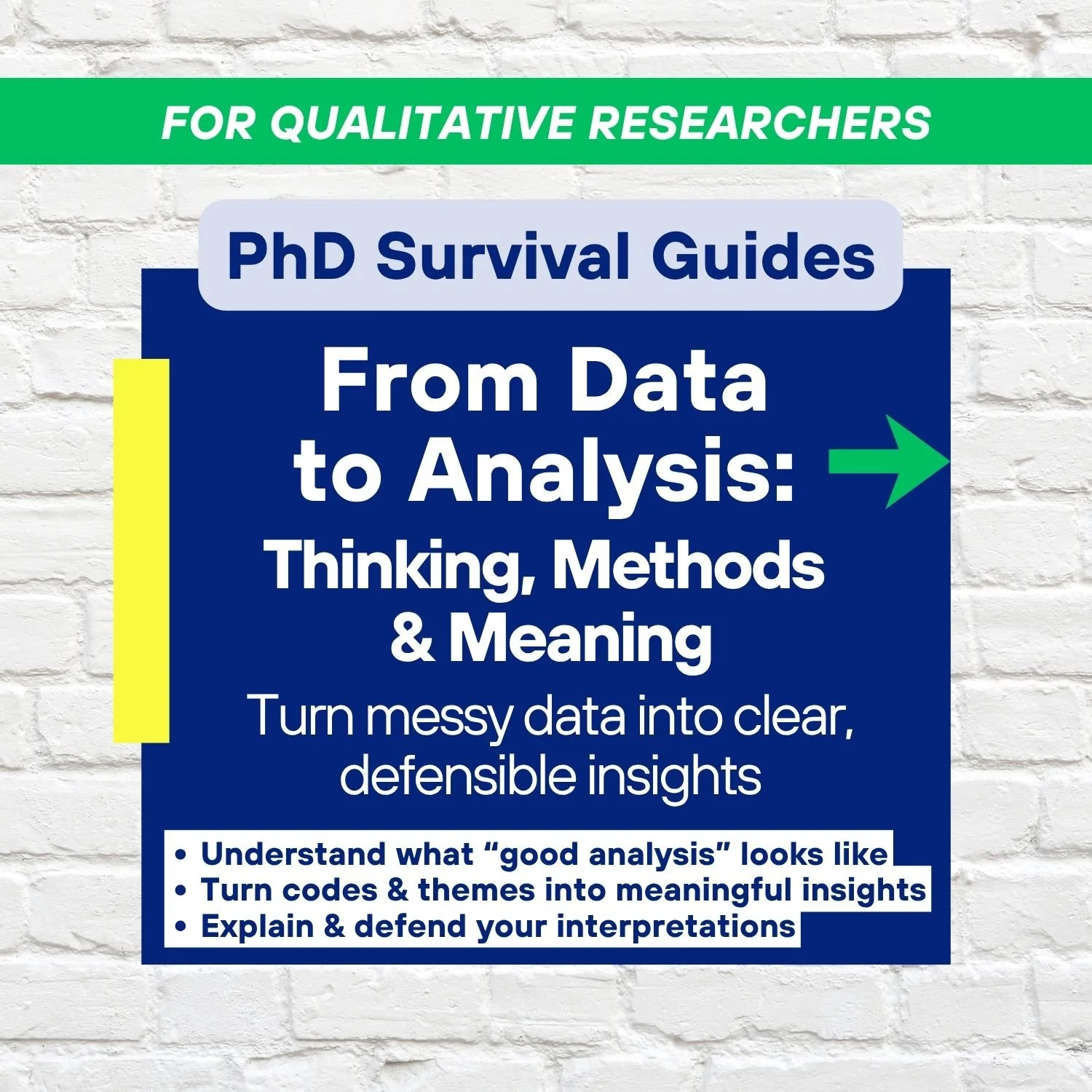
“I can describe what I did. I just don’t know if I trust my own judgement.”
This is the point in the PhD where your research starts demanding something different: interpretation, judgement, coherence, and confidence in your reasoning. This guide was written for that stage.
Swipe through the images above to see what’s inside.
Get the full Survival Guide set here.
If you have any questions, feel free to contact me. I’ll be happy to help.
By purchasing this product, you agree to our Terms & Conditions.