Welcome to the Degree Doctor blog - structured, practical guidance for qualitative PhD researchers.
If you’ve ever looked at your work and thought, “This isn’t quite coming together…”
If you’ve done the reading, but still feel unsure how to translate it into clear, confident writing.
If you’re making progress, but not in a way that feels coherent or fully convincing.
There’s a reason for this - you’re working within a process that is rarely made visible, and that’s not your fault.
This blog focuses on the points where qualitative PhDs most often slow down - literature reviews that lose shape, discussion chapters that feel difficult to articulate, methodology decisions that are hard to justify, and the ongoing pressure of working at doctoral level without clear structure.
Each blogpost is designed to help you think more clearly, work more deliberately, and move your research forward with greater confidence.
You’ll find guidance on:
Structuring and writing your thesis with clarity
Developing stronger critical analysis and contribution
Refining your conceptual and theoretical foundations
Making sense of qualitative methodology and interpretation
Managing the intellectual and psychological demands of doctoral research
You can explore by category below, or start with the latest posts.
The aim is not to do more - it is to work with greater clarity, stronger reasoning, and a more structured approach - so your PhD becomes something you can explain, defend, and complete with confidence.
Conceptual vs theoretical frameworks in a qualitative PhD: what’s the difference? And why students get stuck
Conceptual and theoretical frameworks are often treated as interchangeable in PhD advice - but they do very different jobs. This post explains the distinction, why qualitative PhD students get stuck, and how frameworks evolve as your thinking deepens.

When to stop reading for your thematic literature review (and start writing)
If you’re writing a thematic or narrative literature review, endless reading can feel productive - but it often delays real progress. This post explains how to recognise when you’ve read enough and how to shift into structured, critical synthesis.

How to structure your thematic PhD literature review in three clear steps
If your PhD literature review feels overwhelming, it’s usually not a motivation problem - it’s a structure problem. This post explains how to organise a thematic or narrative literature review in three clear steps that move you from summary to synthesis.

How to write an annotated bibliography for a PhD (and turn it into a literature review)
Learn how an annotated bibliography can help qualitative PhD researchers organise sources and transition into writing a thematic or narrative literature review.

What to do when there is little or no literature on your qualitative research topic (thematic literature review guide)
Can’t find literature for your qualitative research topic? This post shows you how to work with limited or scattered sources and begin building a thematic literature review that actually holds together. For PhD researchers who want more than quick fixes.

Thematic literature reviews and chronological literature reviews. What’s the difference? Which one should you choose for your PhD literature review?
Thematic or chronological? Are you considering one of these structures for your literature review? Learn a bit more about them in this blogpost ..

How to start your literature review - a guide for PhD students who are STUCK!
Struggling to get your PhD literature review off the ground? Here are some simple steps to get you started and generate some momentum!
How to do a PhD literature review properly? Be intentional and critical! Steal my strategy and templates!
Up-level your literature review with my 5 top tips!

Crafting a Focused PhD or Masters Degree Literature Review: How many headings?
How many headings should you have in your literature review? Keep reading to find out!

Why your PhD literature review feels like a mess (and what to do about it)
Before you do anything else on your PhD literature review, read this!
PhD Literature Review: Why you shouldn’t write it in full (yet)
Most qualitative PhD researchers assume they need to write their literature review in full as early as possible. It feels productive - but it often creates more rewriting later. In this post, I explain why keeping your literature review in a structured provisional outline can save time, reduce overwhelm, and strengthen your final synthesis. If your review currently feels bulky or rigid, this approach might quietly transform how manageable it becomes.
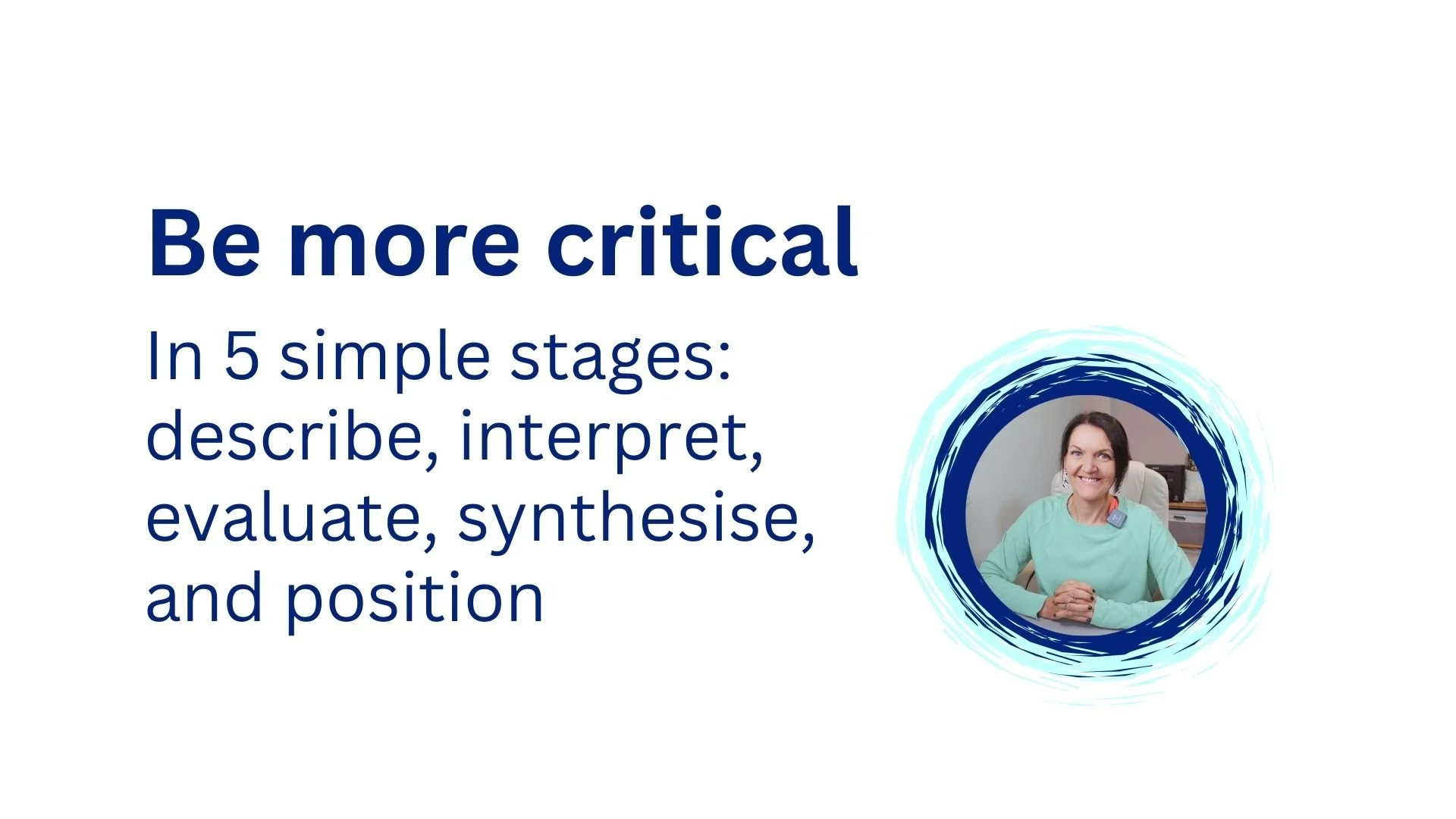
Critical analysis for qualitative PhD students - moving beyond description
Struggling with “be more critical” feedback in your qualitative PhD? This post explains the five stages of doctoral-level critical analysis - from description to positioning - and how to move your literature review beyond summary into confident scholarly argument.