How much theory do you need in a theoretical framework? A guide for qualitative PhD researchers
Theory can be a strange thing when you’re doing a qualitative study for your PhD, it can really boggle your brain. Trying to come up with a theoretical framework will send you down all kinds of rabbit holes and you’ll lose hours and days of your life that you’ll never get back.
Here’s how it happens.
You’ll begin by innocently researching a theory that feels appropriate for your research, but before long, you’ll be saying things like, “I’ve started reading about my theory and now I think I know nothing”,
The more you learn about theory, the less certain you feel. One of things that will make this worse will be reading about how other people have used the theory you’re interested in.
Their application of it feels really, well… fancy pants. They’re using the theory in a super sophisticated, complicated way that involves considerable mental gymnastics to read, let alone understand. Urgh.
The next thing you know, you’re wondering, “Have I massively oversimplified this?”.
So you read a bit more, which makes you even more confused.
The trouble is, you’ve unwittingly set off on a quest here to understand all the different ways in which other scholars have used this theory and develop some kind of mastery of an entire theoretical tradition.
STOP right there.
Because that’s not what you’re trying to do here. That’s great if you’re planning an appearance on BBC Mastermind and “Theory X” is your specialist topic, but what you need to do is simpler: write a theoretical framework for your study.
Looking at how other people have used theory can be helpful, but you need really strong boundaries around this exercise to stop it descending into an Imposter Syndrome meltdown.
Different researchers use different parts of the same theory because they're asking different questions. Someone using a theory to examine politics and power may need completely different concepts from someone using it to understand things like relationships, identity, professional practice, etc. Don't use someone else’s theoretical framework as a benchmark for how complicated yours should be.
So, let’s start over.
What is the purpose of a theoretical framework in qualitative research?
We should begin by reacquainting ourselves with the purpose of a theoretical framework - this is a useful way to reorient yourself after you’ve gone off on a mini (or not so mini) intellectual adventure.
A theoretical framework gives you a set of ideas that help you make sense of your research focus and interpret your data. Its purpose is to make the theoretical thinking behind your research visible: what ideas are you drawing on, why are they useful for your study, and how do they shape the way you understand what you find?
Next, we need to look at the theory we’ve been considering and ask a very important question.
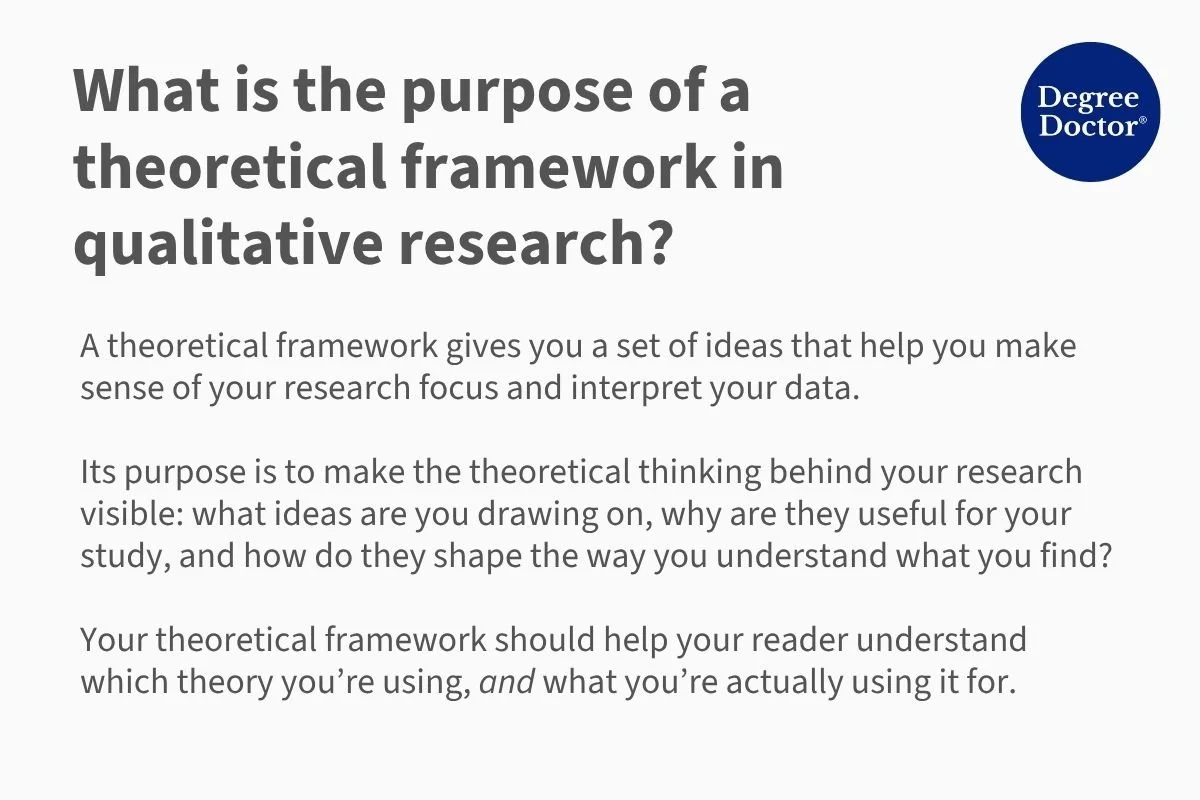
What work is this theory doing in my study?
By focusing on the function of particular theories for your research, you force yourself to focus.
Which parts of this theory are relevant to what you’re trying to understand?
Look carefully at that theory and identify the parts of it that genuinely matter for your research. Think of the theory as a sieve that you’ll eventually use to put your data through. You want the sieve to be useful for your study.
Your theoretical framework doesn't need to contain everything a theory has ever said. It needs to contain the theoretical ideas that are doing useful work in your study.
Now, I know what you’re thinking here, “If I start picking bits out of theories and dismantling them, is it still the same theory?”.
Yes - provided you're clear about what you're doing.
Using a theoretical framework doesn't mean you have to adopt every concept, argument or application associated with a theory. You're selecting the parts that are relevant to the particular problem you're trying to understand.
The important thing is not to pretend you're using the whole theory if you're not. Be explicit about which concepts you're drawing on, explain why you've selected them, and show how you're using them in your study.
That's not “watering down” a theory. It's making a reasoned theoretical choice - which is exactly the kind of thing you should be doing at PhD level.
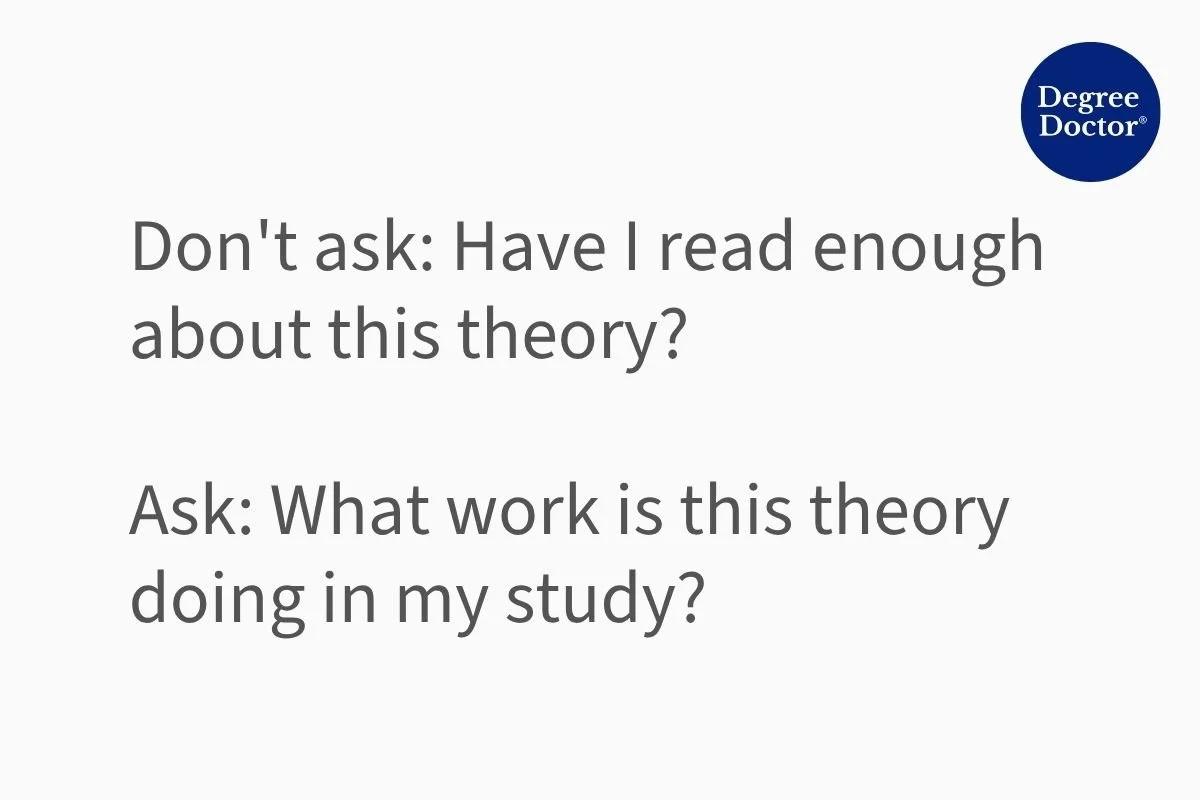
Stop asking “Have I read enough?” and ask better questions
This might sound like a strange thing to say - but I want you to stop reading about the theory for a while. Reading more - when you already know the fundamentals - can cause unnecessary confusion. Insread, focus on the reading you have done and answer these questions:
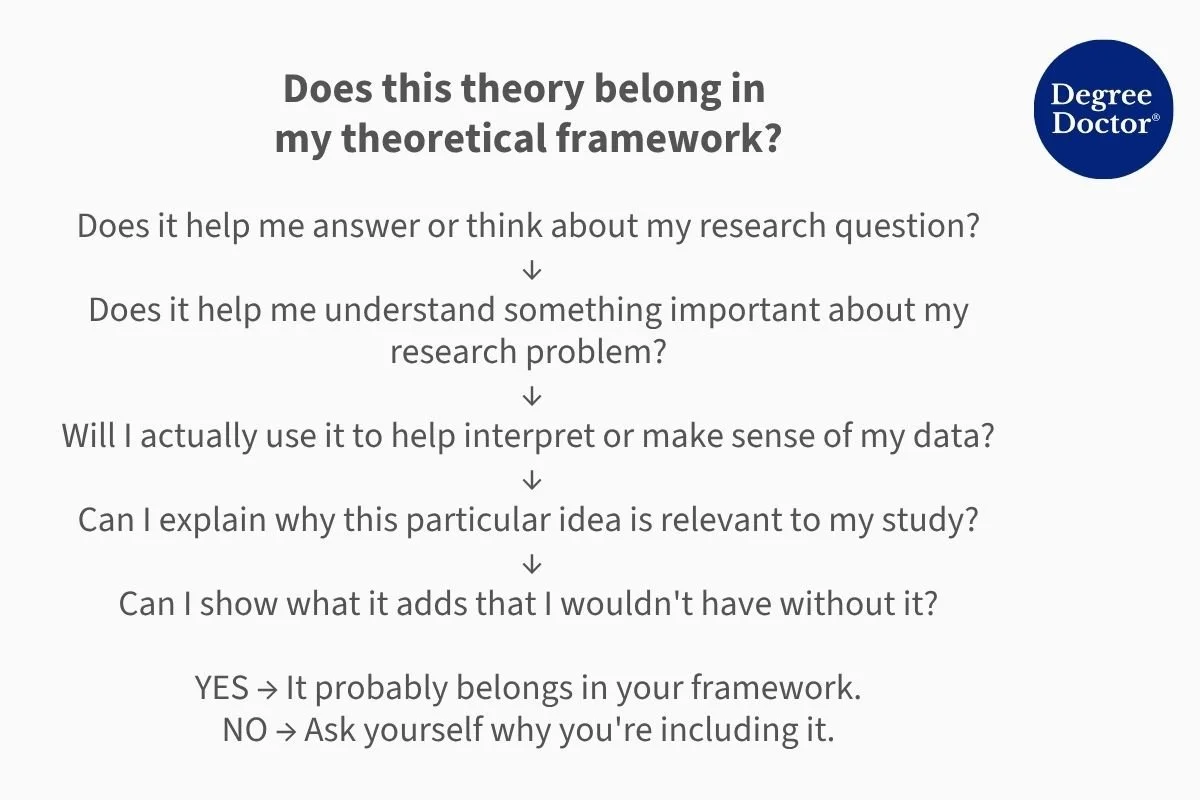
What am I using this theory to help me understand?
Which concepts help me do that?
Why are those concepts appropriate for my research question?
How will they influence the way I interpret my data?
What would be missing from my analysis if I didn't have them?
Doctoral-level theoretical work is about making thoughtful, defensible choices rather than cramming in complexity and “proving” that you’ve found 1,000 uses for this theory. You need enough depth for the reader to understand and evaluate your choices - not rehash every debate that has ever taken place around the theory. Your examiner will not be testing you on that. Seriously - they’re more interested in what you are doing with the theory.
Still trying to get the foundations of your PhD to click?
If you're scratching your head with your theoretical framework, there's a good chance it's connected to some of the other big decisions in your research too: your concepts, research questions, paradigm, aims and objectives, and the overall logic connecting them.
My Clarifying Your Research PhD Survival Guide helps you work through those foundations and understand how they fit together, so you can explain not just what you've chosen, but why it makes sense for your study.