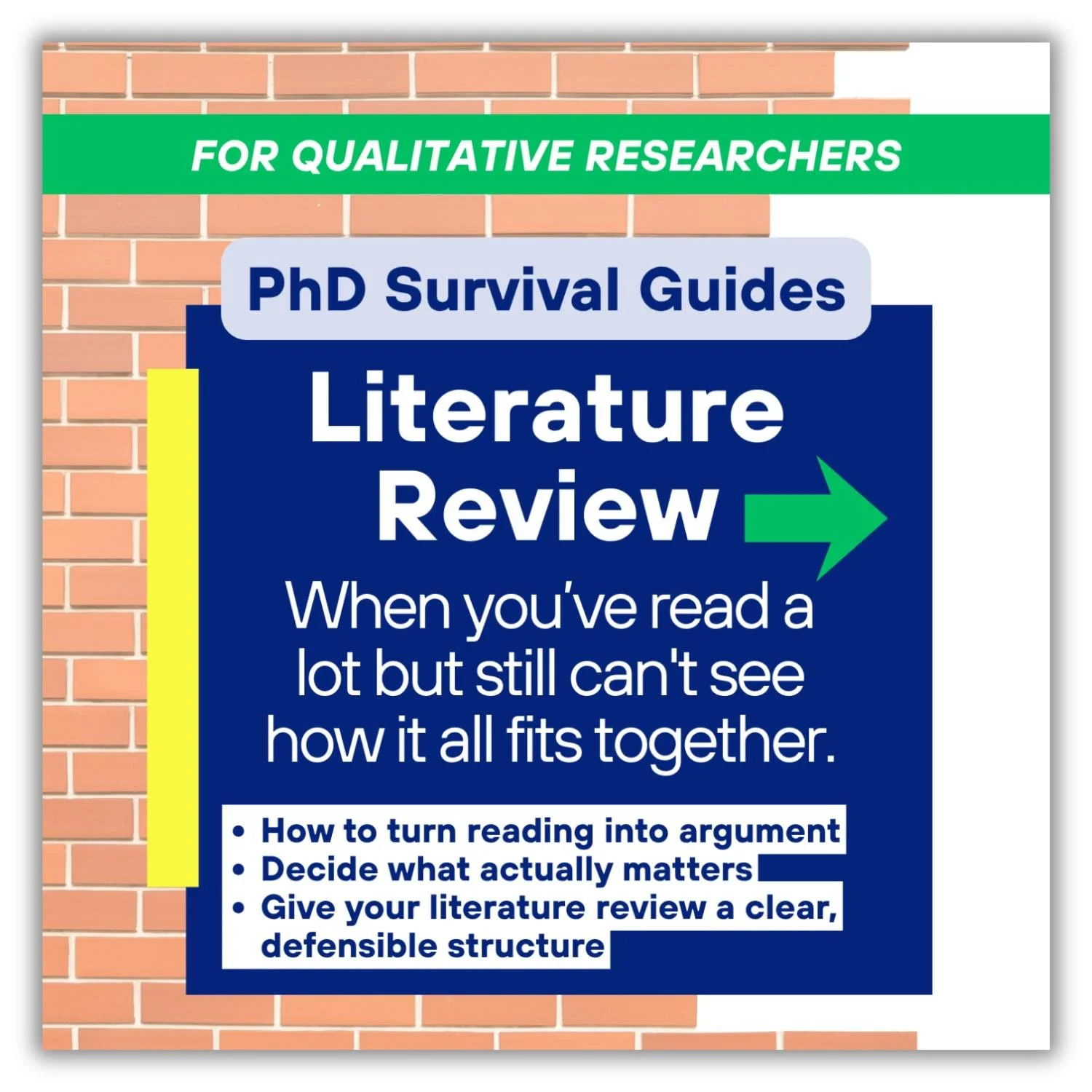
Literature Review
When you’ve read so much, but still don’t know how to turn it into a literature review.
£85 GBP
International customers -your bank / card provider will convert the payment to your local currency.
The Literature Review Guide helps you work out what actually belongs in your literature review, see how the literature connects, and turn all that reading into a clear, coherent argument. You’ll be able to read more strategically, write with focus, and build a chapter you feel good about sending to your supervisor.
Scroll down for more details of what’s included, previews of the guide, and reviews from our customers.
This is a digital download. As soon as you purchase, you’ll receive an email with a secure link to access the full guide and worksheets, so you can start making progress straight away.
By purchasing this product, you agree to our Terms & Conditions.
Here's what this guide helps you do
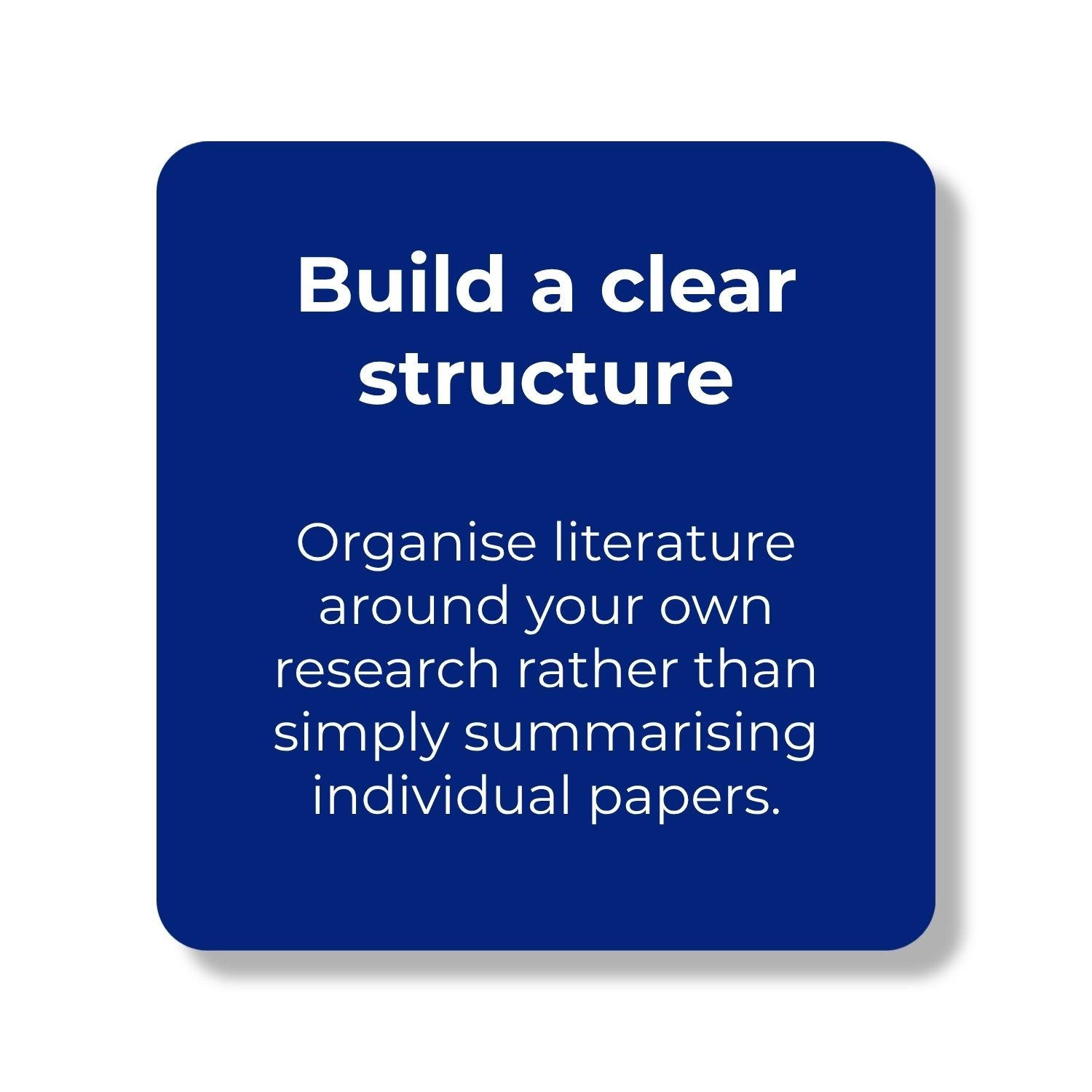
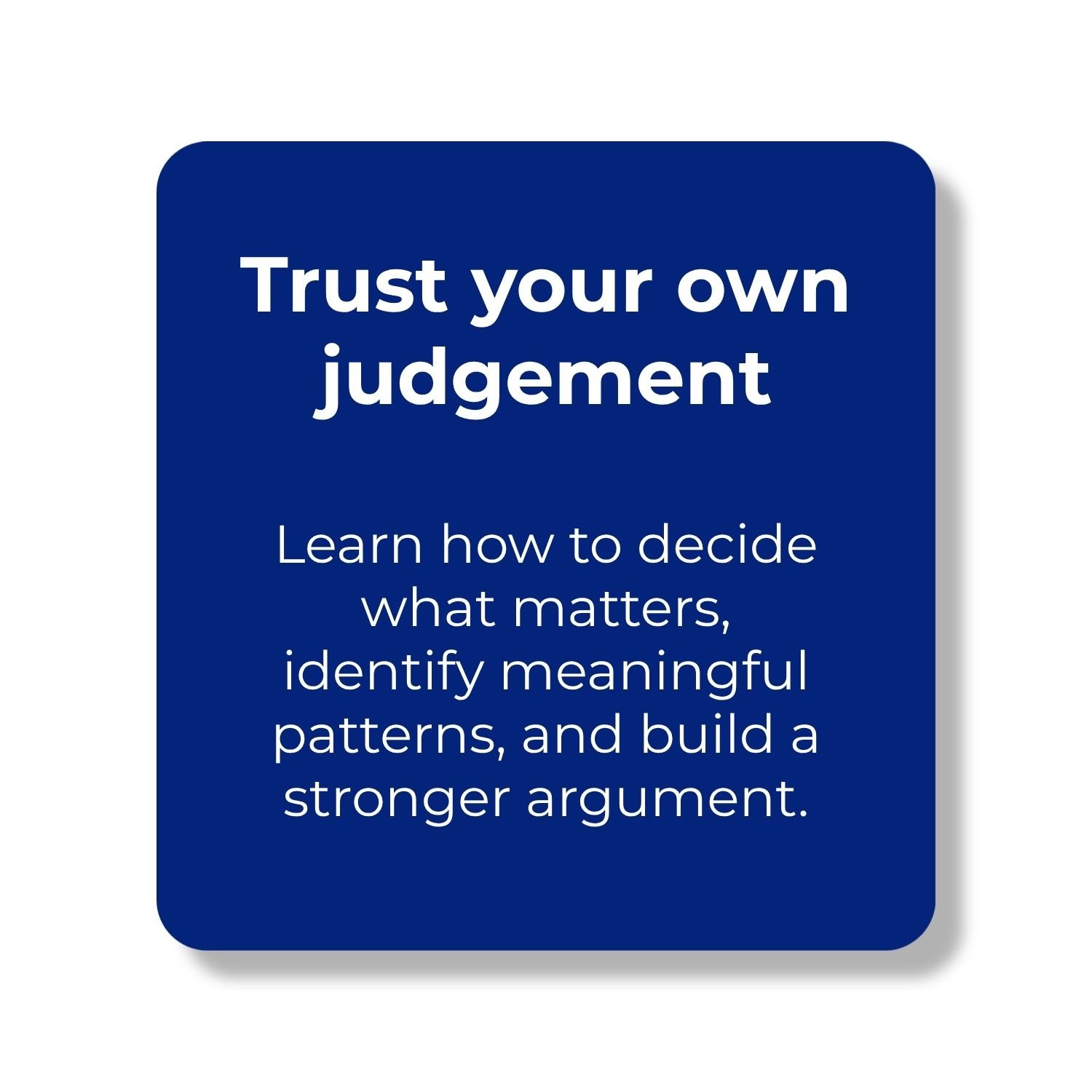
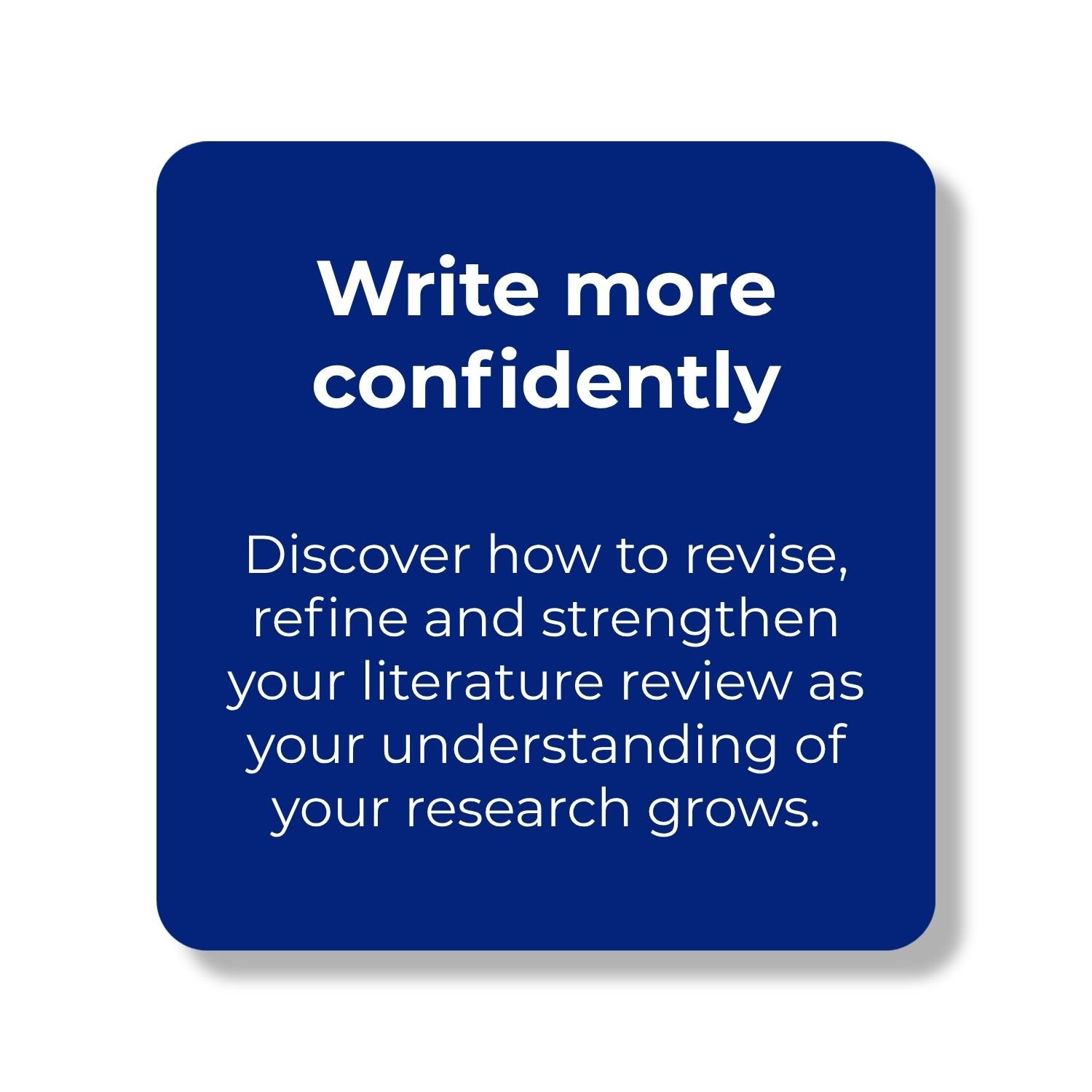
A practical, straightforward approach to your literature review.
12 structured guides
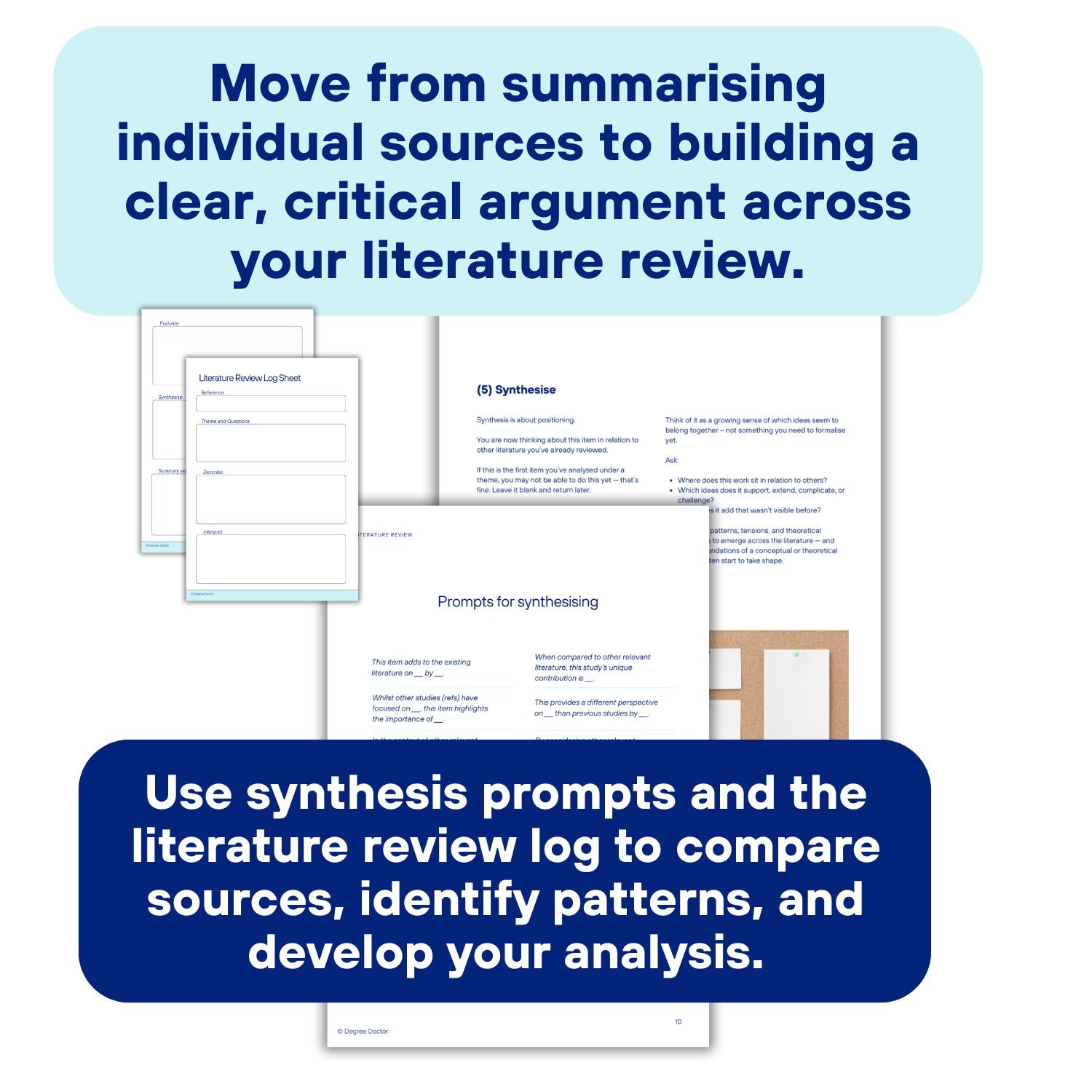
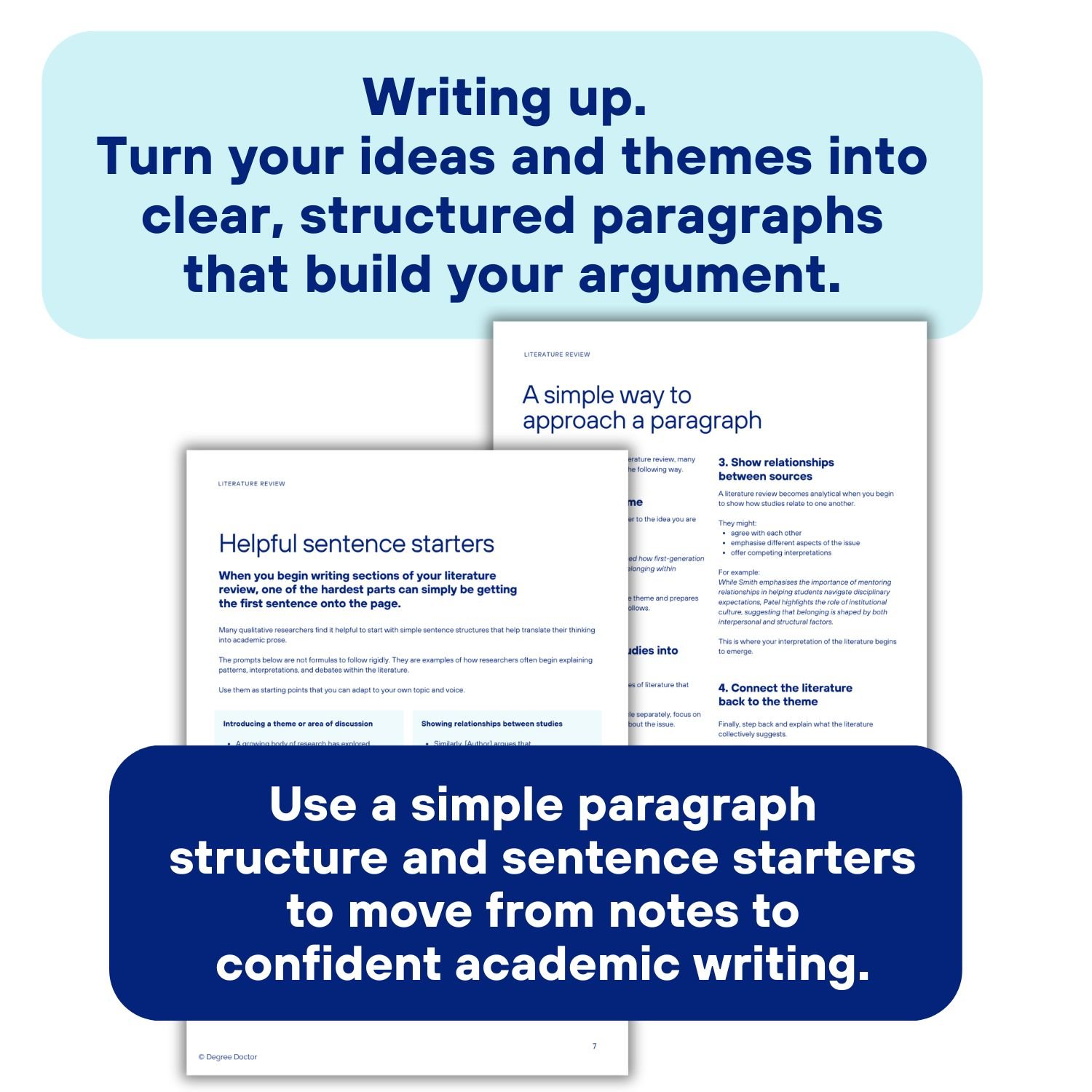
Each section tackles a specific element of the thematic literature review.
Work through them in order or begin where you’re stuck.

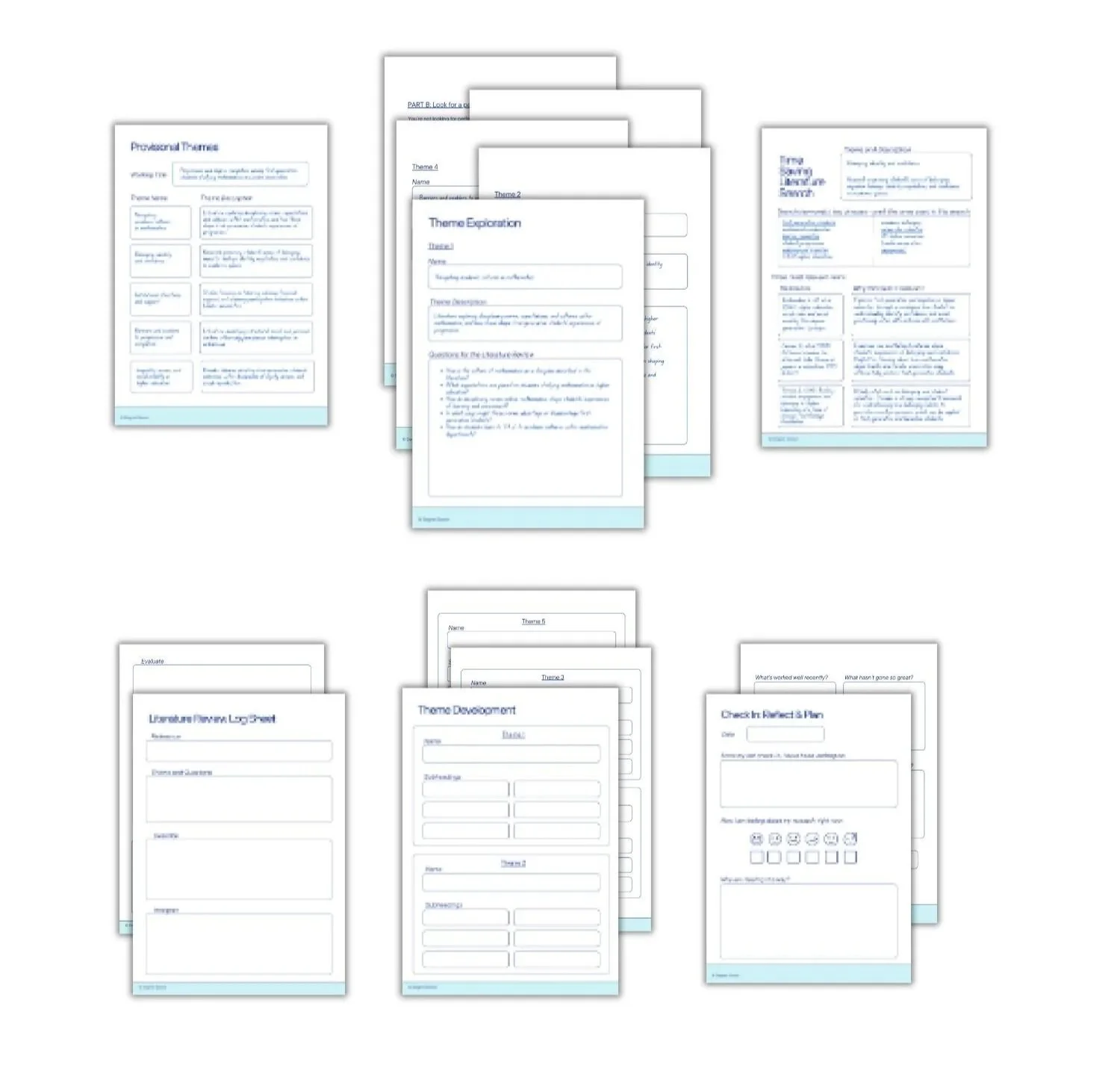
6 PDF printable and editable worksheets
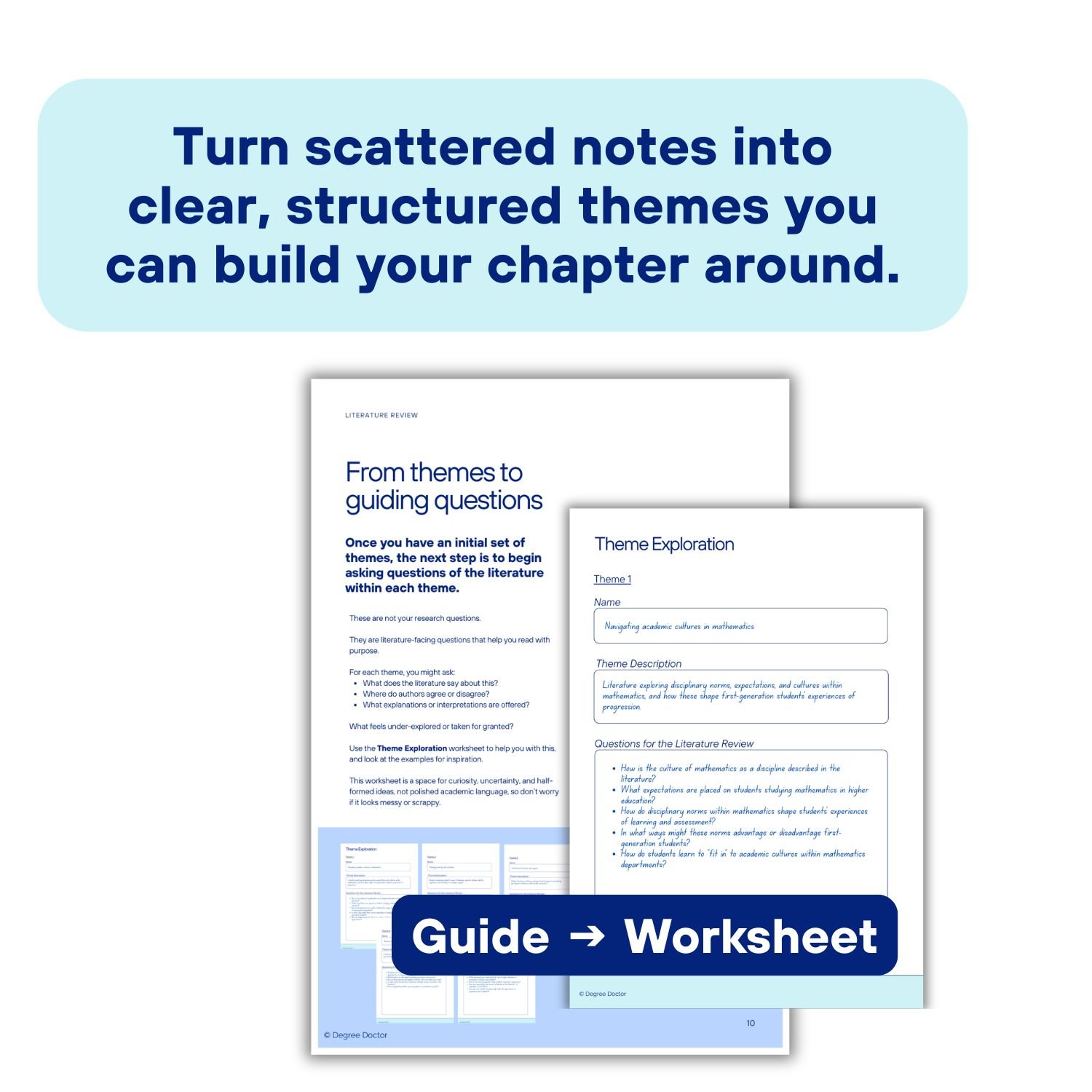
Structured exercises to turn your notes in clear themes.
These tools help you decide what to include, cut, prioritise and get words on the page.
How literature reviews really get written
Your literature review will evolve.
The literature review you write at the start of your doctorate is unlikely to be the same one that appears in your final thesis.
As your understanding of your research develops, your literature review will need to evolve alongside it.
Many resources teach thematic literature reviews as though you should write them from beginning to end in a single pass. After more than 20 years supporting qualitative researchers, I can tell you that's rarely how they develop.
As you immerse yourself in the academic literature, begin collecting data and analyse it, your understanding of your research will deepen. You'll rethink the structure of your literature review, remove papers that once felt essential, discover new angles on your research, and perhaps even bring back sections you deleted months earlier.
This is completely normal. Yet many PhD researchers worry that these changes mean they've done something wrong, simply because so much guidance isn't written with iteration in mind.
Let me reassure you: you haven't got something wrong. A literature review that shifts and changes is often a sign that your thinking is becoming more sophisticated.
That's why I've written this guide. You don't need another how-to resource that leaves you wondering whether you're doing it correctly. You need one that works with the iterative thinking involved in developing a thematic literature review - not against it.
Before
You’ve read and read, but you still don’t feel ready to write.
❌ “I keep reading because I still don’t feel like I’ve read enough.”
❌ “I’ve got so many papers and notes that I don’t know what actually belongs in my literature review.”
❌ “I can’t see how all these different ideas fit together.”
❌ “I don’t know how to turn everything I’ve read into something I can actually write.”
After
You know what belongs, how the literature connects, and what you want to say about it.
✅ “I know what I need to read - and when I’ve read enough.”
✅ “I can decide what belongs in my literature review and what I can leave out.”
✅ “I can see the connections between the literature and the argument I’m building.”
✅ “I know what I’m trying to say, so I can actually get the chapter written.”
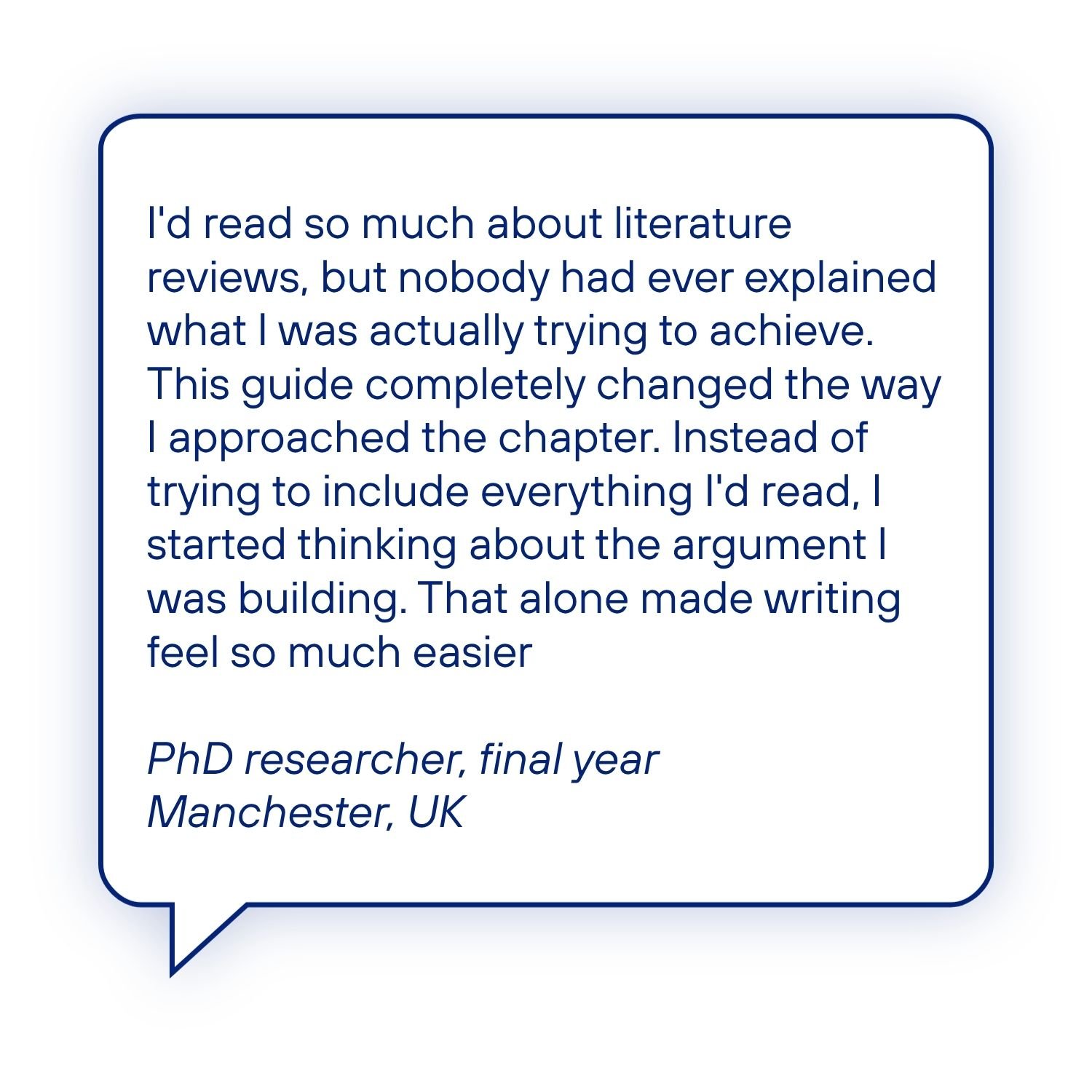
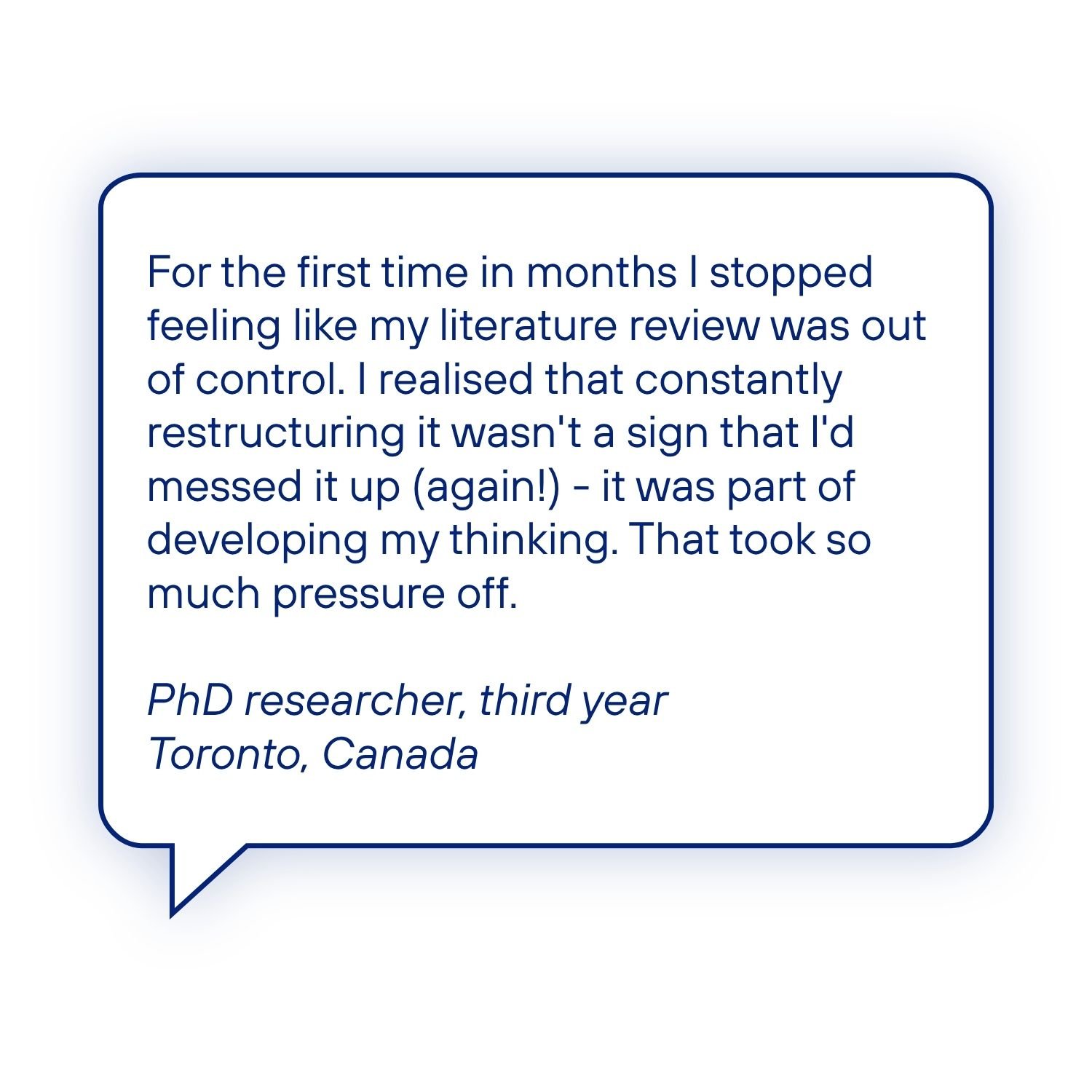
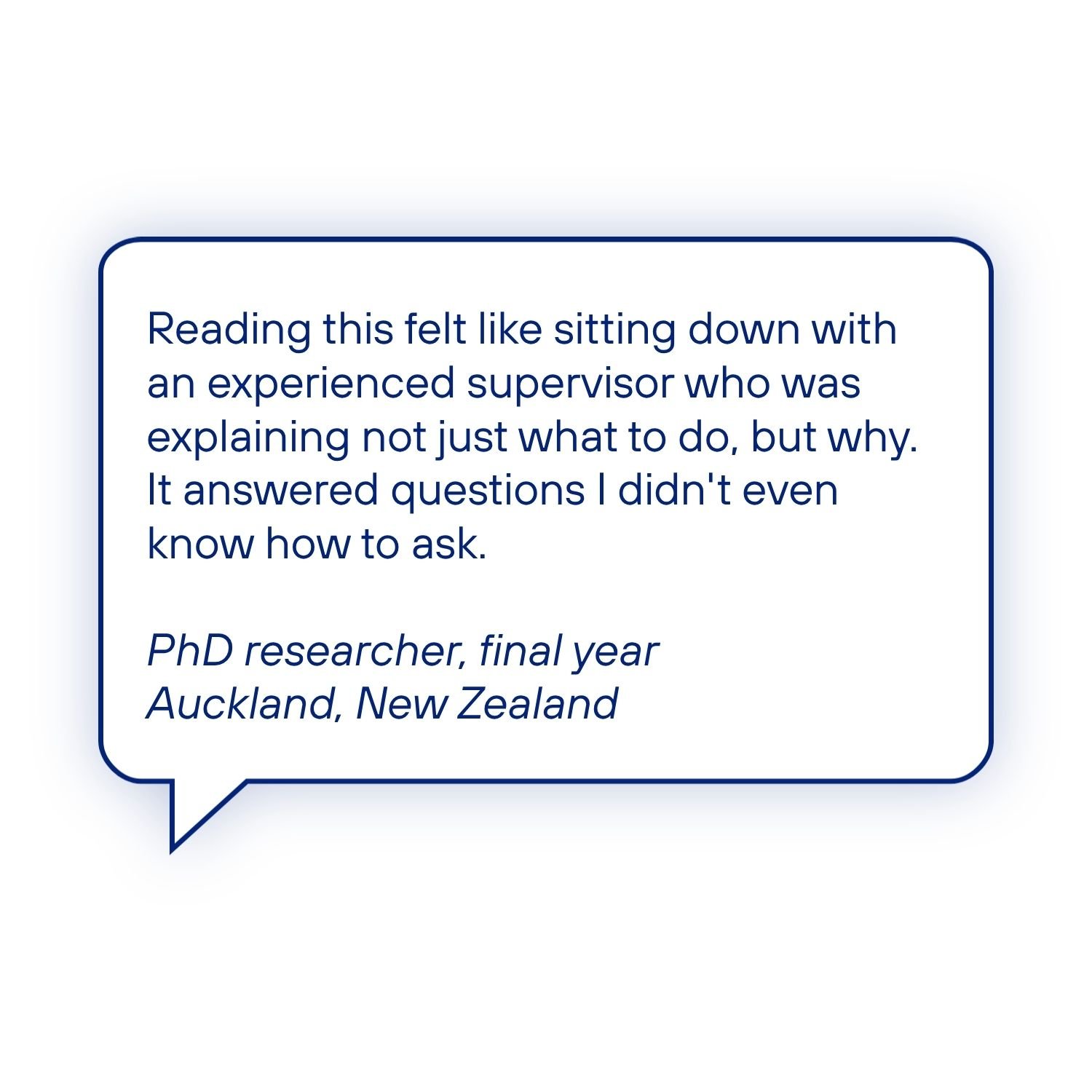
What changed after using the guide

Looking for support beyond your literature review?