If the phrase “planning 2026” makes you feel either wildly ambitious or quietly nauseous, you’re in excellent company.
Every year, clever people decide that this will be the year everything finally runs smoothly. The year they become organised. Focused. On top of things. And then reality turns up with emails, deadlines, supervision meetings, and a mysterious loss of motivation somewhere around February.
So before you start colour-coding your entire personality, here are a few genuinely important things to remember when planning 2026.
1. You are planning with an imperfect brain, not a robot
Future You is not a hyper-productive version of Present You who wakes at 5am, loves admin, and never gets tired.
Future You is still human.
Good planning accounts for low-energy days, slow weeks, messy months, and the fact that PhD work does not behave nicely on timelines. If your plan only works when everything goes perfectly, it’s not a plan. It’s a fantasy.
Plan for progress, not perfection.
2. Time is not the problem. Cognitive load is.
Most PhD students don’t need more time. They need fewer things competing for attention.
When everything lives in your head, every task feels heavier than it is. Planning is not about squeezing more in. It’s about deciding what actually matters, what can wait, and what deserves your best thinking energy.
A good plan creates mental breathing room. A bad one just becomes another thing to feel guilty about.
3. Your year needs structure, but your weeks need flexibility
Big-picture clarity helps you feel grounded. Overly rigid daily plans do not.
Think anchors, not cages.
You want to know what this year is broadly for, what progress would look like, and where your non-negotiables are. Then you want the freedom to adapt when life, data, supervisors, or your brain inevitably change the plan.
Planning works best when it guides you rather than scolds you.
4. Consistency beats intensity every single time
You do not need heroic bursts of productivity followed by burnout and recovery.
You need steady, repeatable systems that make it easier to show up even on ordinary days. Planning should support that rhythm, not demand a personality transplant.
If your planner only works when you’re highly motivated, it won’t work for long.
5. The right tools reduce friction. The wrong ones add it.
A planner should make decisions easier, not louder.
If you constantly have to reinterpret how to use it, redesign the system, or ignore half the pages, it’s not serving you. The best planning tools quietly support your thinking without asking to be the main character.
Which brings me to something practical.
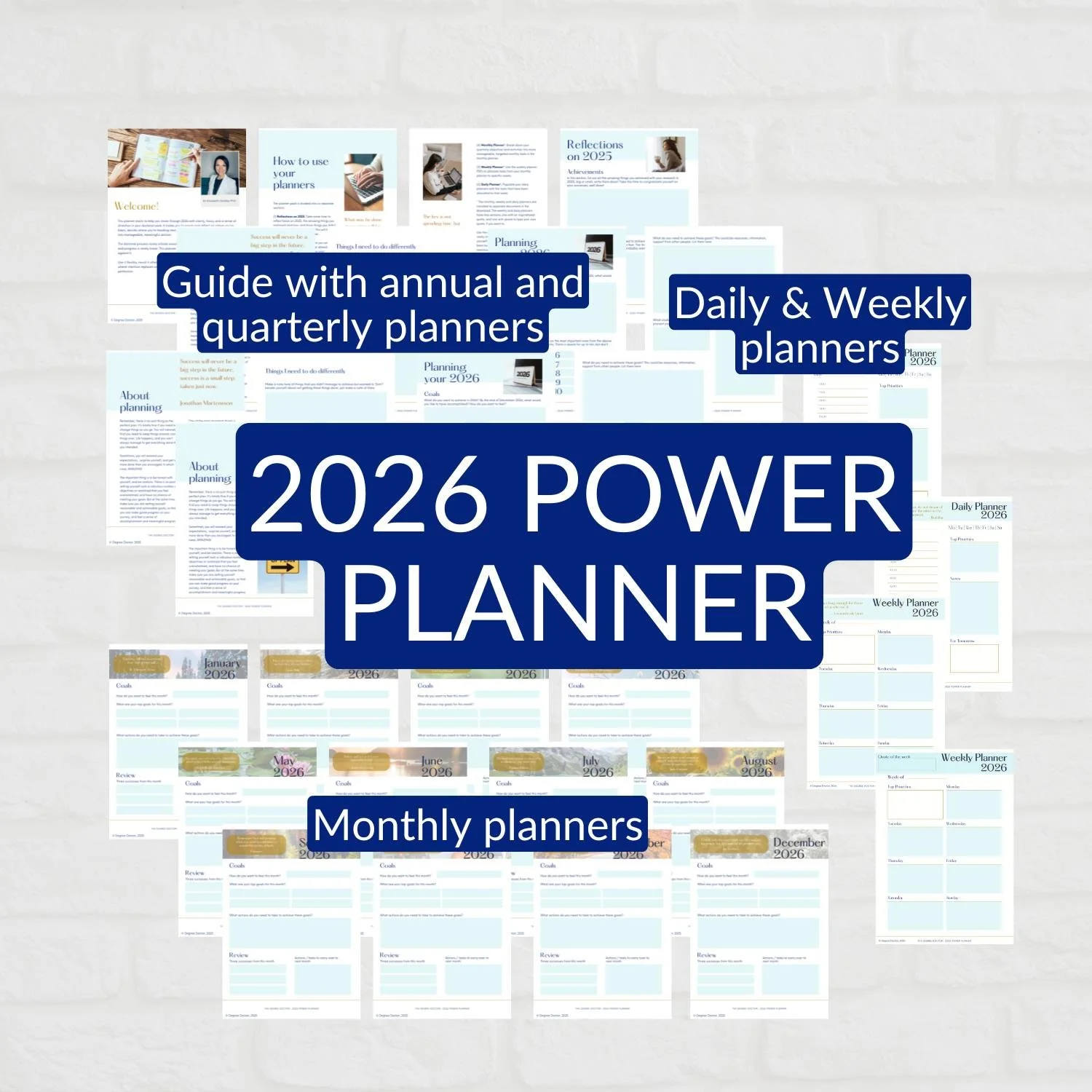
If you want a calm, realistic way to plan 2026 that actually works with a PhD brain, the 2026 Power Planner was designed for exactly this. It helps you zoom out without losing momentum, plan sustainably, and make progress without burning yourself out or pretending you’re someone you’re not.
No hustle culture. No toxic positivity. Just thoughtful structure, space to think, and plans you can actually keep.
You can find all the details and grab your copy here.
Your future self will be very glad you did.