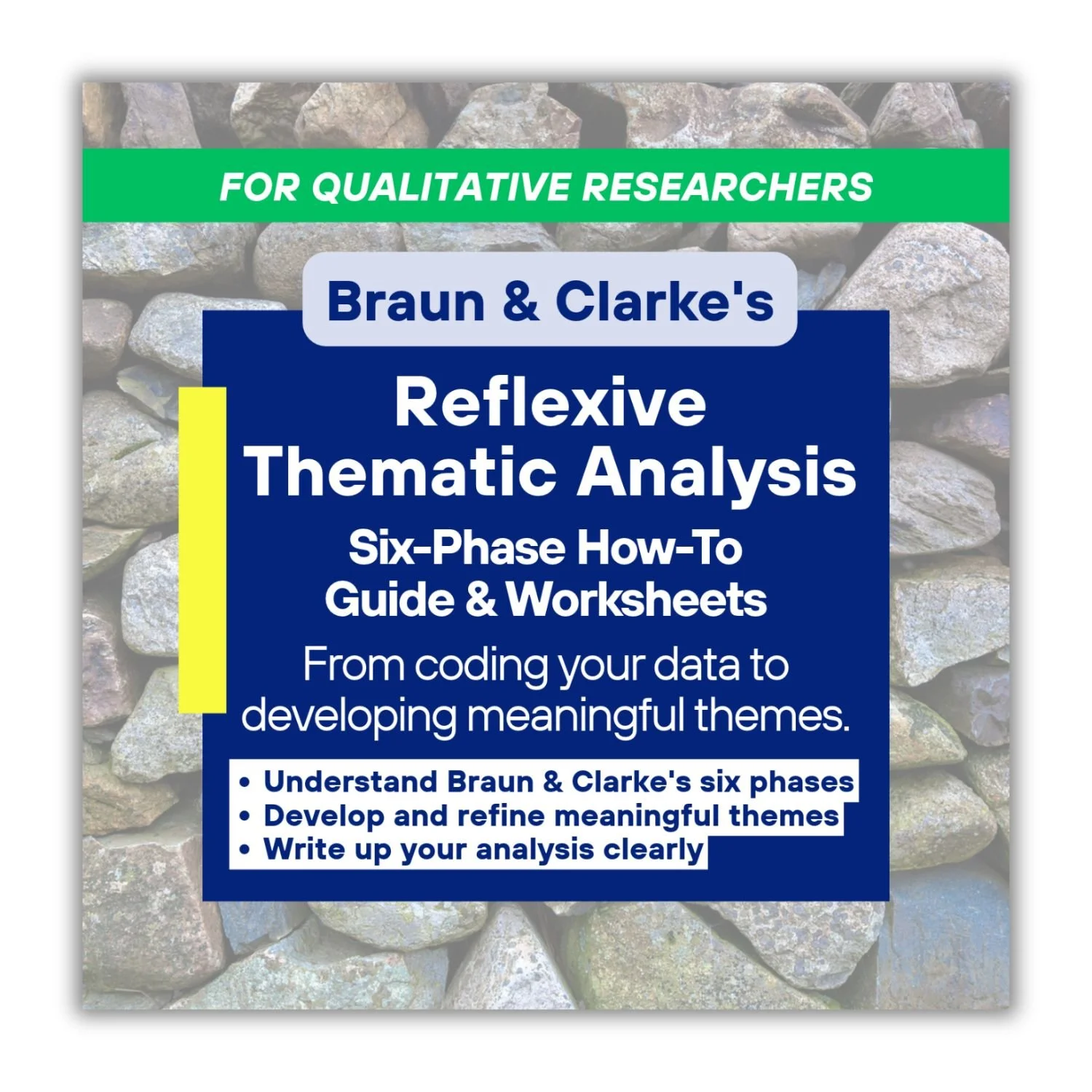
Braun & Clarke's Reflexive Thematic Analysis
A practical how-to guide
£75 GBP
International customers -your bank / card provider will convert the payment to your local currency.
A clear, practical guide to Braun and Clarke's six phases of reflexive thematic analysis, with worked examples and worksheets to help you understand the process and move forward with your own research.
This is a digital download. As soon as you purchase, you’ll receive an email with a secure link to access the full guide and worksheets, so you can start making progress straight away.
By purchasing this product, you agree to our Terms & Conditions.
Here's what this guide helps you do
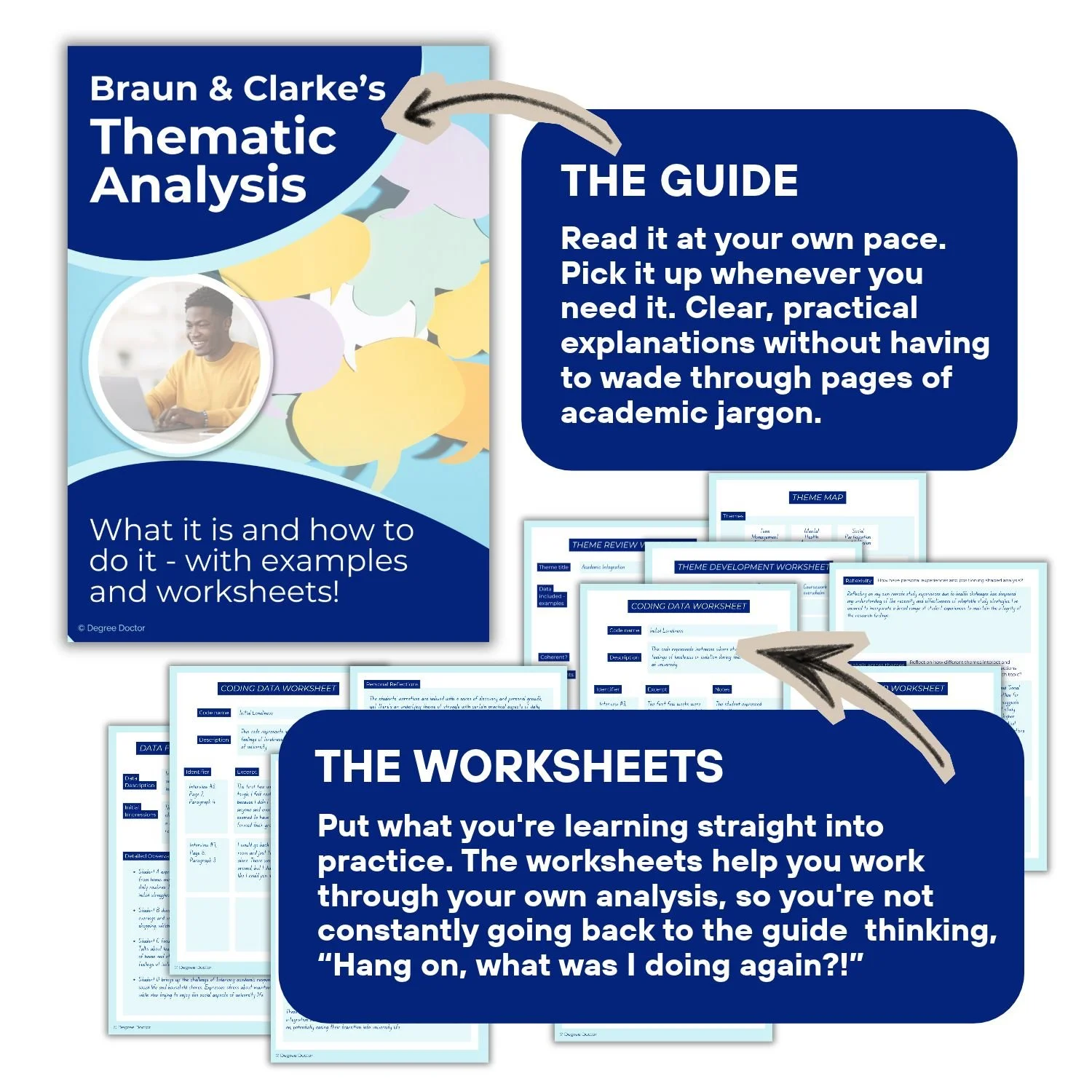
43-page guide and six worksheets
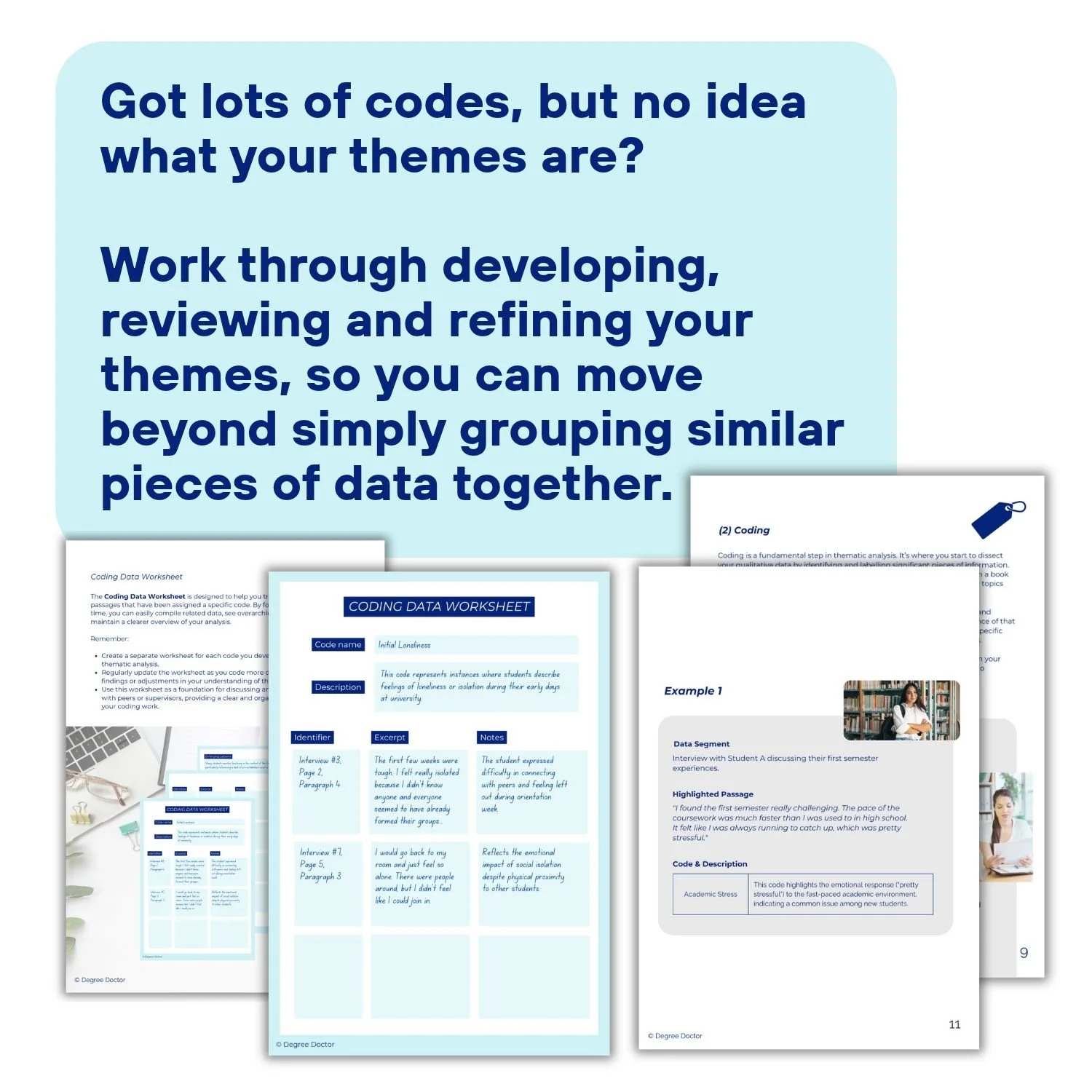
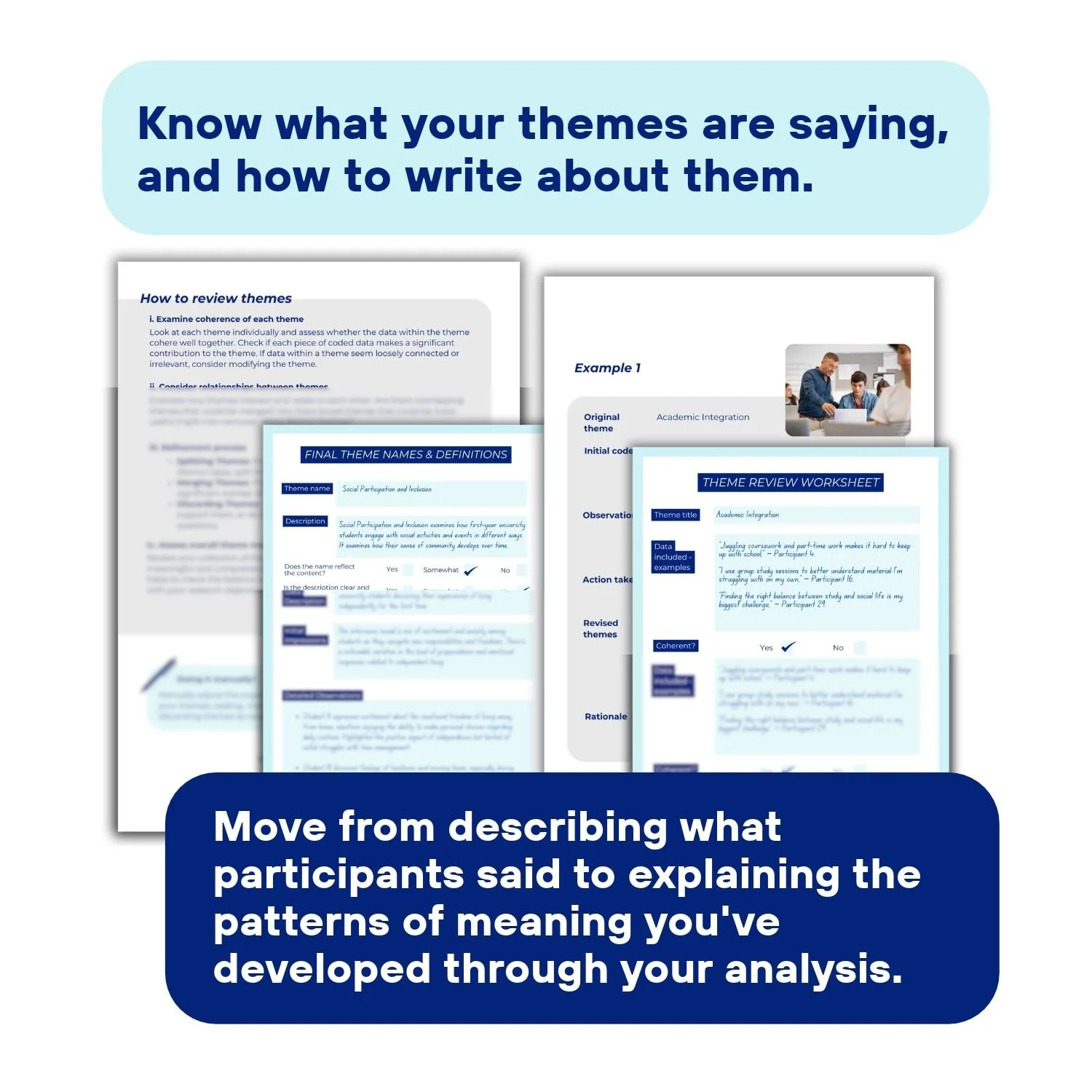
A guide you can work with, not just read, and worksheets that help you put what you're learning into practice as you code your data, develop your themes and work towards writing up your analysis.
What’s included?
Reflexive Thematic Analysis is rarely as straightforward as it might appear.
Braun and Clarke's reflexive thematic analysis isn't a case of “1-2-3-4-5-6-done!” I'm guessing you might have already figured that out. 😉
You've read about the six phases, and they seemed to make sense at first. So you had a good read through your data and started coding it, perhaps even thinking about possible themes.
Then it all got a bit slippery, didn't it?
Perhaps you've thrown all your codes in the bin and started over. More than once. Or developing your themes has felt like trying to plait fog. Just as you thought you'd got those pesky codes where they belonged, another thought popped into your head: “Oh, wait, what about…?”
You've probably changed your mind a lot, gone back to the drawing board and thought, “Okay, THIS time I'm going to do it properly!” Only to end up wondering, “Hang on, didn't I already do this in an earlier phase? Am I supposed to be going backwards?”
The thing is, reflexive thematic analysis isn't supposed to be a neat, linear process. It's iterative. You revisit your data, rethink your interpretations and refine your themes as your understanding develops.
That's part of the analytical work, rather than a sign that you've got it wrong, but knowing the process is iterative doesn't necessarily help when you're sitting in front of your laptop thinking, “Right, but what am I actually supposed to do now?”
That's where this guide comes in.
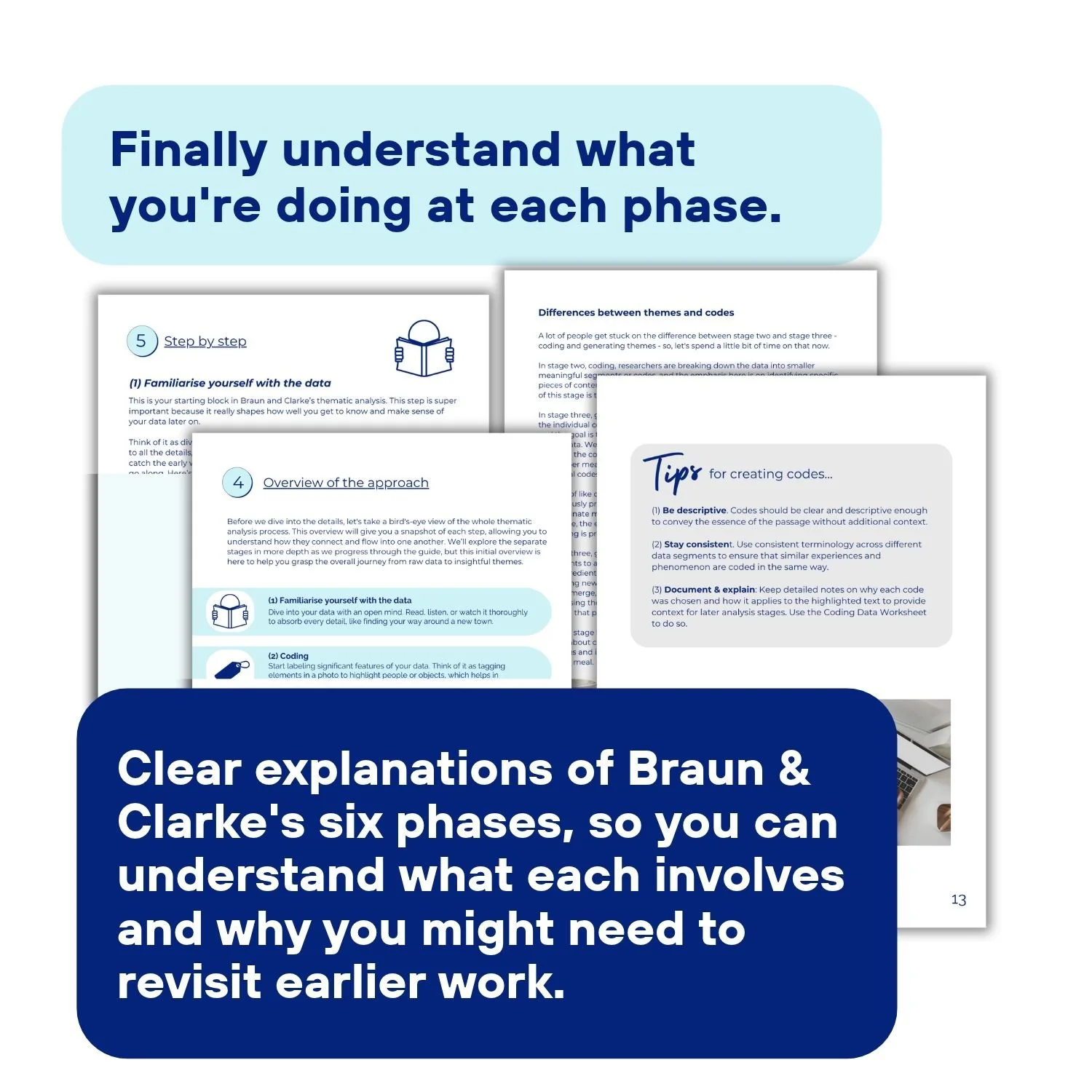
It walks you through Braun and Clarke's six phases in clear, practical language, helping you understand what you're trying to achieve at each point and how to work with your own data.
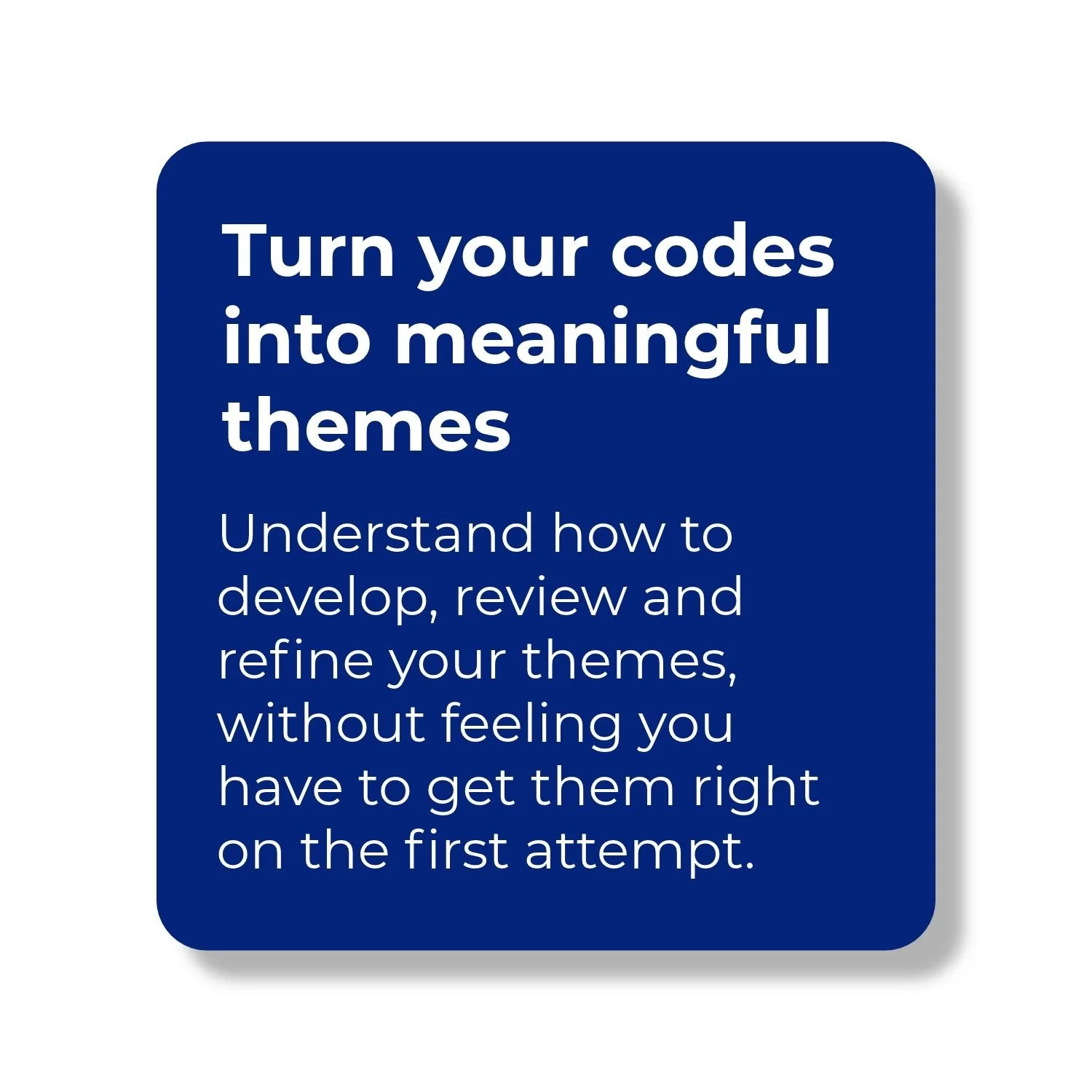
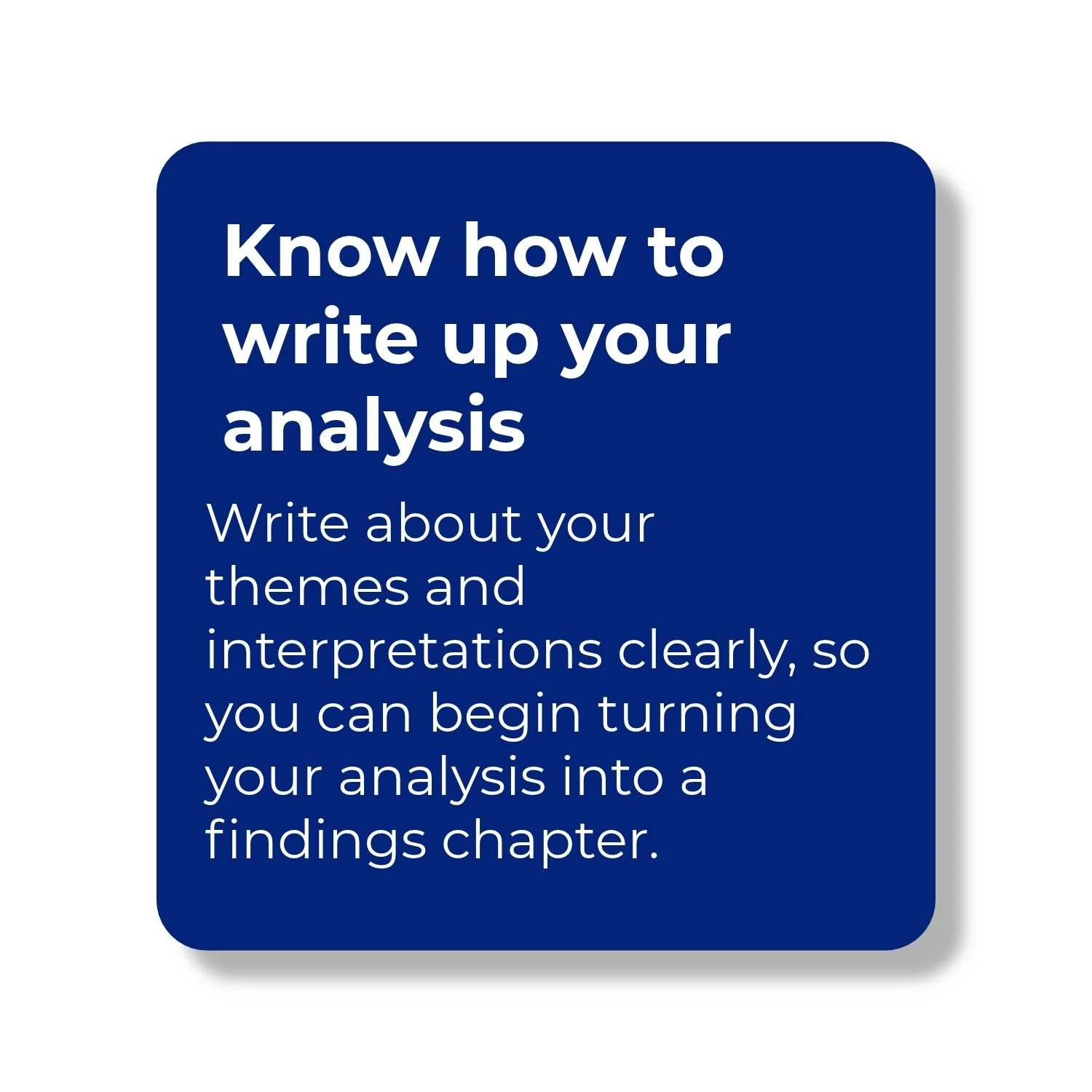
You'll learn how to approach coding, develop and refine themes, understand the difference between describing your data and interpreting its meaning, and begin writing up an analysis you can explain and justify.
With six accompanying worksheets, you can put that guidance into practice as you go, rather than repeatedly rereading academic explanations and trying to work out what they mean for your own research.
No more feeling like you have to chuck it all in the bin and start again. 😉
Before
You're going round in circles with your thematic analysis.
❌ "I've got loads of codes, but I don't know how to turn them into themes."
❌ "I can't tell whether these are actual themes or just topics."
❌ "I keep going back to earlier phases. Am I doing something wrong?"
❌ "I don't know how to move beyond describing my data."
After
You understand what you're doing, and why.
✅ "I understand what each phase involves and why I might need to revisit earlier work."
✅ "I know how to develop, review and refine themes that tell a meaningful story about my data."
✅ "I can make analytical decisions without constantly feeling I need to start again."
✅ "I understand how to write about my themes and explain what they mean."
What changed after using the guide