Three ethical (yes, really) ways ChatGPT can help you with your qualitative study
Over the past few years, AI tools like ChatGPT have become almost impossible to avoid in academic spaces. At this point, most of us have read something that was very obviously written by AI and I don’t know about you but it really puts me off, eww. It’s so predictable, “quietly”, “honestly”, “It’s not x, it’s not y, it’s not z, it’s abc”. Yawn.
Because of that, many PhD researchers are starting to feel tempted to reject AI entirely. But before we throw our little robot buddy in the bin, I don’t think the answer is necessarily to abandon it altogether. Used carefully, there are still ways it can genuinely support your research process.
*** Big red flashing light caveat *** Before using any AI tool, though, it’s essential to check your own university’s policies and guidance around acceptable use, okay? Good, read on.
Streamlining annual review processes
Ah, the annual review – a necessary evil in every PhD student's life. Reflecting on your progress over the past year and outlining future plans can be a time-consuming ordeal. Enter ChatGPT.
By providing specific details about your research topic, stage, and previous submissions, you can task ChatGPT with drafting responses to review questions. This will help you get off the mark and into review mode.
Here’s an example of the type of command you might use.
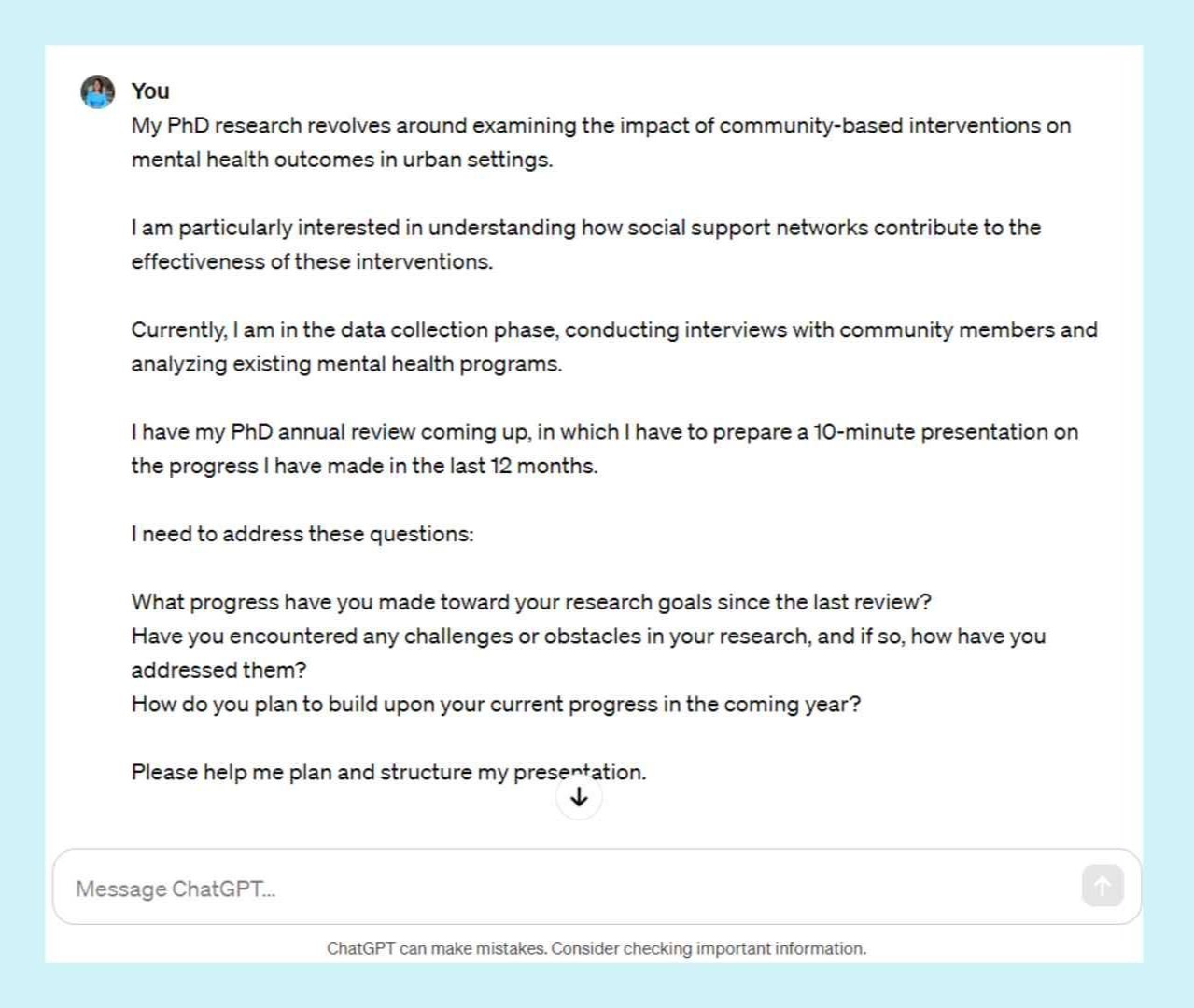
Example ChatGPT command - annual review
Enhancing data collection instruments
Whether you're designing surveys, interviews, or focus group protocols, ChatGPT can be your brainstorming companion. By feeding it key details about your research objectives and participant demographics, you can generate insightful questions and themes to guide your data collection efforts.
Also get it to help you refine your existing questions. Its knack for simplifying complex language can help your materials resonate with a broader audience. Because, let’s be honest here - as academics, we do sometimes speak a whole different language to people outside of the academy without even realising it and this can severely hamper out efforts when it comes to research.
Here’s an example of a command for help with developing an initial set of questions for an interview study.

Example ChatGPT re interview questions
Crafting content for non-academic audiences
Now, let's talk about impact. Your research deserves to be shared far and wide, but academic writing doesn't always translate well to external audiences. ChatGPT can help with dissemination.
Here’s an example:
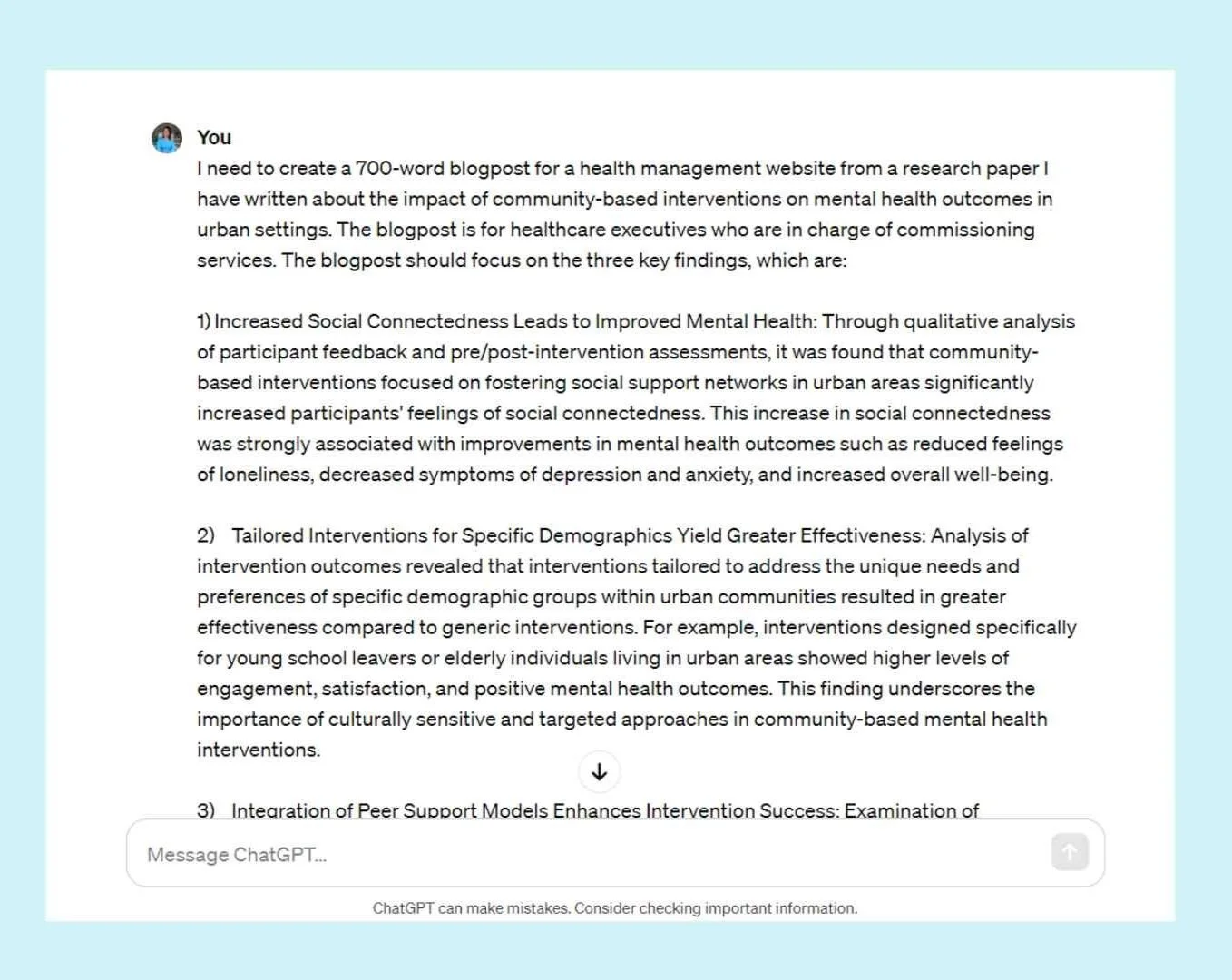
Example ChatGPT discussion re non-academic audiences
The problem with AI is how easily people hand over their thinking to it, and that’s become kind of scary, right?
Used ethically, though, tools like ChatGPT can still help with some parts of doctoral research, especially when the intellectual work, reamains firmly yours. Hopefully these examples have helped you think a little more clearly about where that line might sit for you.
If you’d like more grounded, practical support with the PhD process, you can join my email list below for weekly advice, resources, and honest conversations about doctoral research.
Sign up here.