Let’s be honest. When you start a qualitative PhD, everyone assumes you already understand semi-structured interviews.
No one really explains them properly. You are just expected to nod along confidently.
If you have ever Googled “what actually is a semi-structured interview?” after a supervision meeting, you are not alone.
So let’s go back to basics properly.
In this post, we will cover:
What semi-structured interviews are
How they compare to other interview types
How to design your own interview guide
Common challenges and how to handle them
And importantly, how they fit within serious qualitative research design.
What are semi-structured interviews?
Semi-structured interviews (SSIs) are one of the most widely used methods in qualitative research.
They sit between structured interviews (fixed questions, fixed order) and unstructured interviews (open conversation with minimal guidance).
With semi-structured interviews, you enter the conversation with:
A clear research focus
Pre-prepared open-ended questions
A flexible approach to sequencing
Permission to follow emerging threads
You are not testing hypotheses. You are exploring meaning.
This balance between structure and openness is what makes SSIs powerful. They allow depth while maintaining coherence.
If you are working within interpretative paradigms, semi-structured interviews often align particularly well because they prioritise participant experience and meaning-making.
If you are still clarifying your epistemological positioning, you may want to work through our guide on Conceptual and Theoretical Foundations before finalising your method.
Method should follow worldview.
Structured vs semi-structured vs unstructured interviews
As shown in Table 1, interviews exist on a continuum.
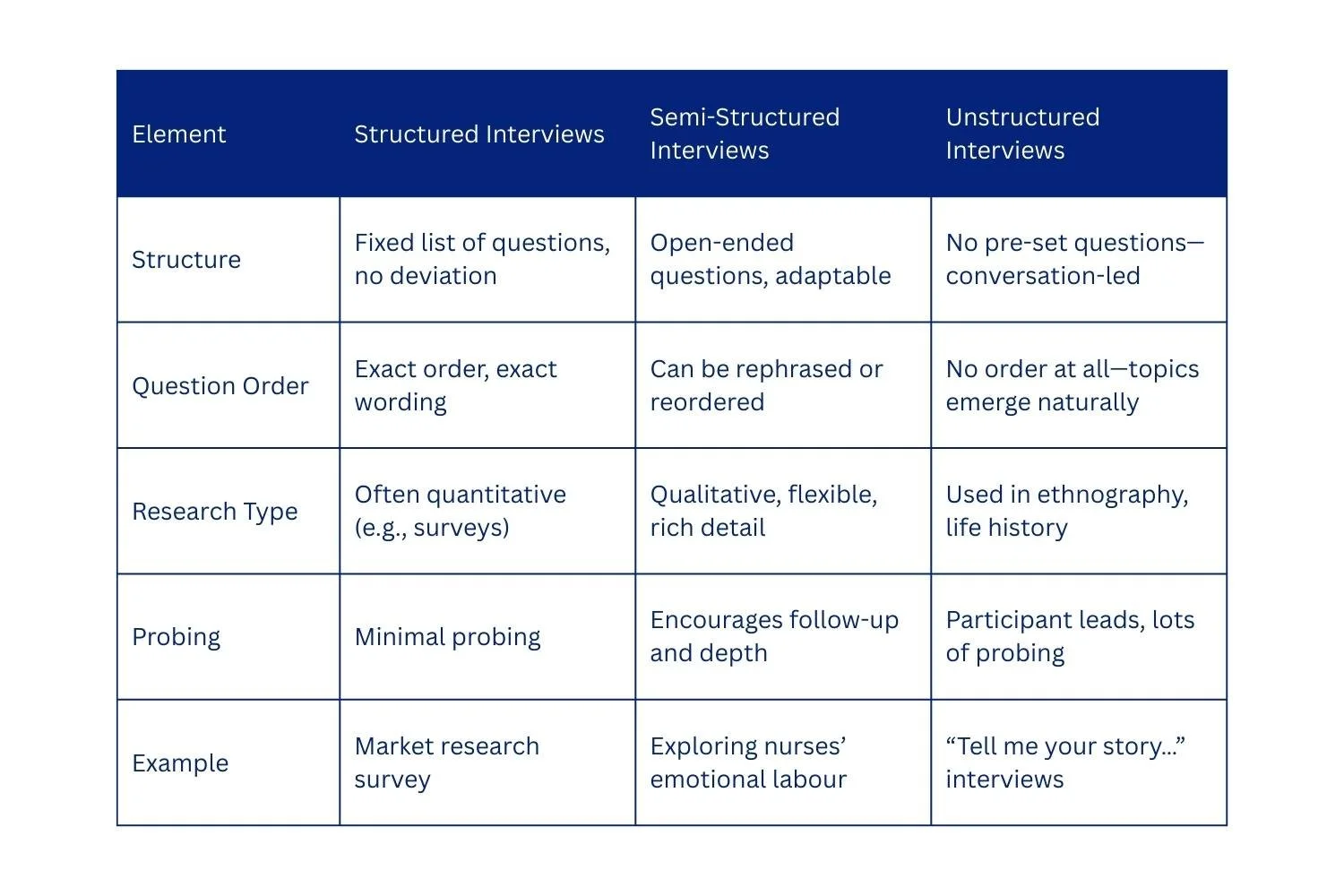
Table 1. Different interview types compared
Structured interviews prioritise standardisation and comparability.
Unstructured interviews prioritise openness and narrative depth.
Semi-structured interviews occupy the middle ground. They allow comparability across participants while preserving richness and flexibility.
For many qualitative PhD projects, this “Goldilocks zone” offers both rigour and responsiveness. This balance between structure and spontaneity is what makes SSIs so powerful.
Designing your interview guide
One of the biggest misconceptions is that your interview guide must be perfect before you begin.
It does not.
An interview guide is not a script. It is a scaffold.
You begin by identifying the key domains you need to explore based on your research questions. Under each domain, you develop open-ended prompts that invite participants to describe experiences, meanings, and interpretations.
For example:
Can you tell me about your experience of…
What was that like for you?
What do you think influenced that?
How did you make sense of it at the time?
You do not need to ask every question. You do not need to follow a strict order.
The purpose of the guide is to ensure conceptual coverage, not conversational rigidity. Strong questions produce strong data.
Kvale’s nine question types
Steinar Kvale identified nine types of interview questions that shape high-quality semi-structured interviews. These range from introducing questions and probing questions to structuring and interpreting questions.
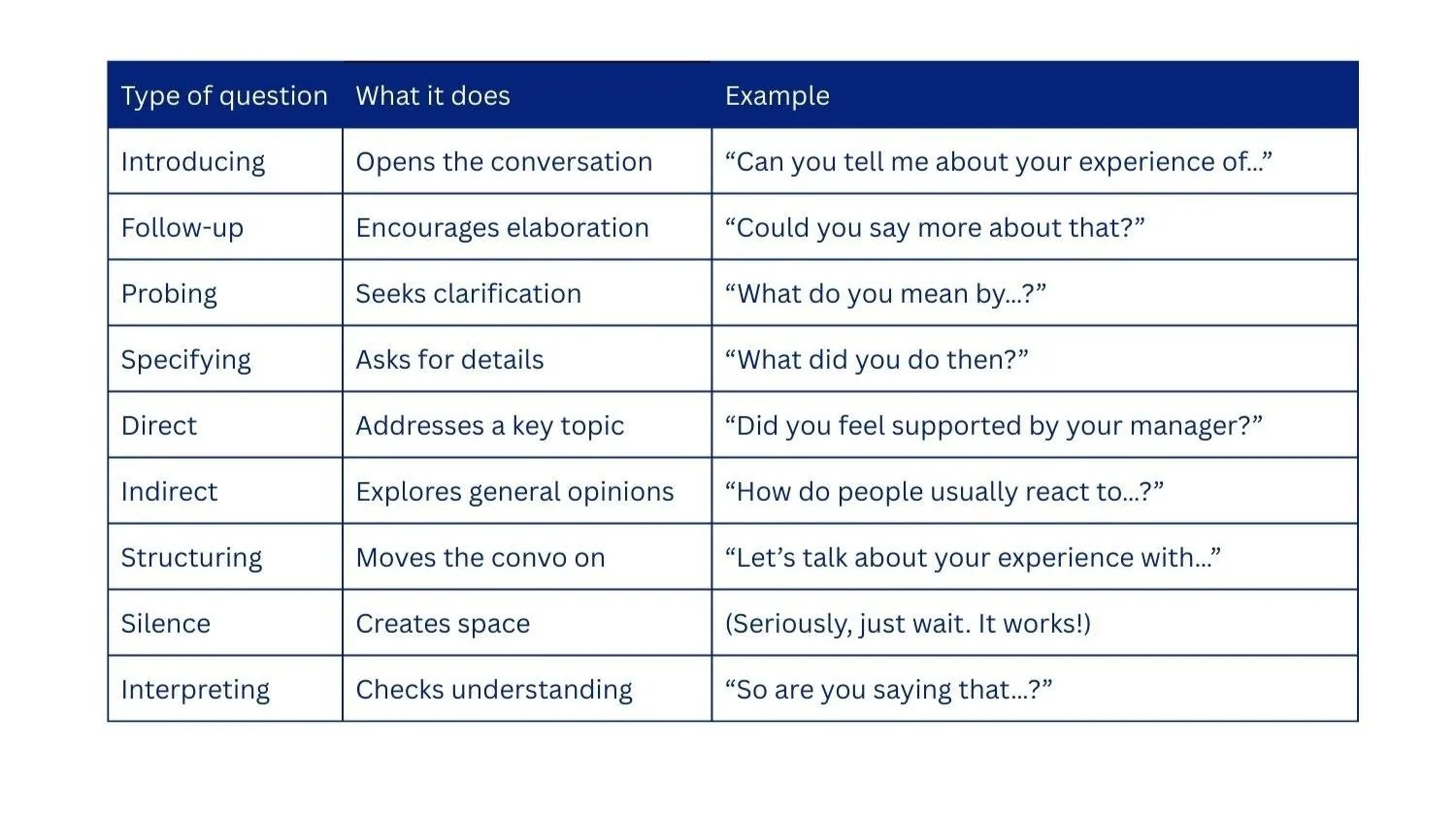
Table 2. Types of question in semi structured interviews
One of the most underestimated tools is silence.
Silence often produces depth.
If you can resist filling the gap, participants frequently continue speaking, moving beyond rehearsed narratives into more reflective territory.
Learning to sit with silence is part of becoming a confident qualitative researcher.
Common challenges (and how to manage them)
Semi-structured interviews are powerful, but they are not effortless.
Common challenges include:
Participants going off-topic
Over-talking by the researcher
Difficulty probing deeply
Emotional intensity in sensitive topics
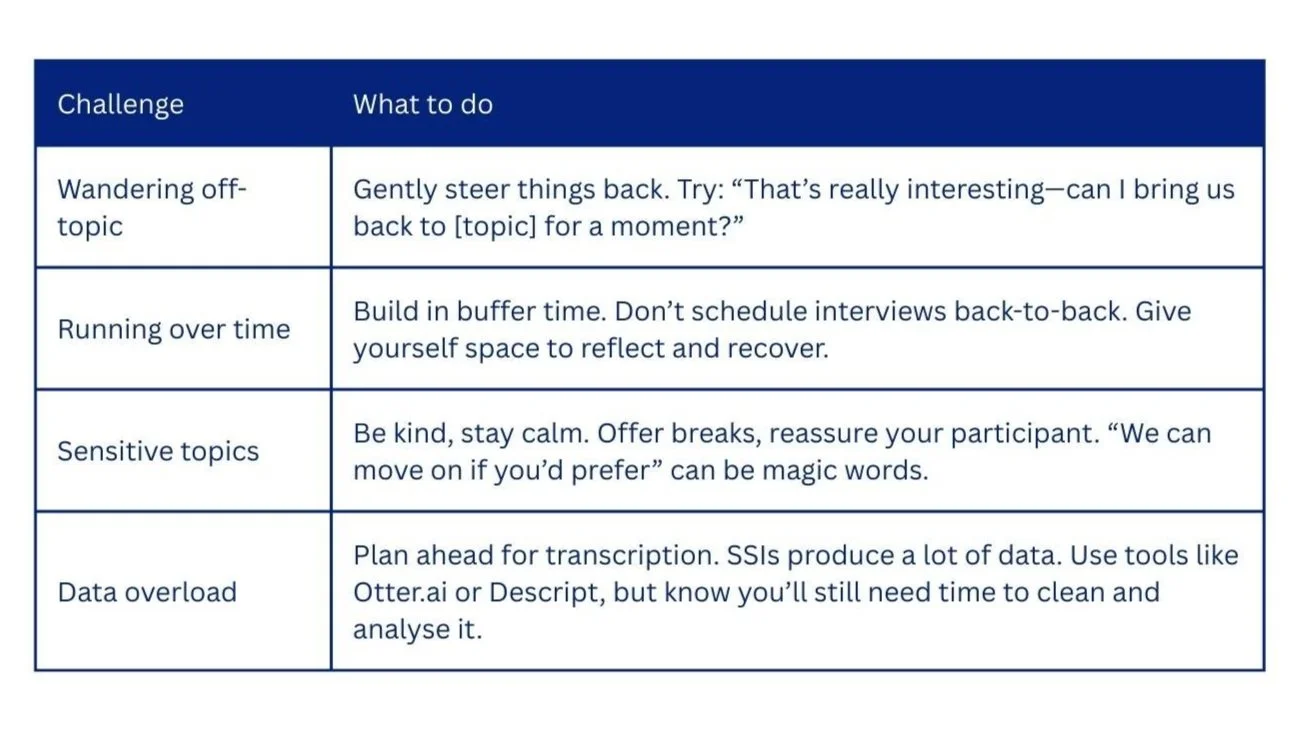
Table 3. Challenges of SSIs and how to deal with them
Preparation and reflexivity are key.
After interviews, especially emotionally charged ones, debrief yourself. Fieldwork is intellectual labour, but it is also emotional labour.
Build that into your research design.
Where semi-structured interviews fit in a strong PhD design
Semi-structured interviews are not just a data collection tool. They are part of a wider methodological architecture.
They must align with your epistemological stance, theoretical framework, analytic approach and research questions.
If those pieces do not fit together, examiners will notice.
If you are planning to use reflexive thematic analysis, interpretative phenomenological analysis, or narrative approaches, your interview design needs to reflect that analytic orientation from the start.
This is where many doctoral researchers struggle - not with conducting interviews, but with ensuring coherence across the whole project.
That coherence is what turns a collection of interviews into a defensible contribution.
Why researchers love semi-structured interviews
When done well, semi-structured interviews generate rich, contextualised data, build meaningful rapport, allow for nuance and complexity, and stay anchored to research aims without becoming rigid.
They are one of the most human methods in the qualitative toolkit.
What’s next?
Qualitative Interviews - A free guide for PhD researchers, by PhD researchers
There’s a surprising amount nobody tells you about qualitative interviewing until you’re sitting opposite an actual participant thinking, “Oh fiddlesticks, what do I do NOW?”
I asked qualitative researchers what they wish they’d known before doing their PhD interviews - and got an absolute TON of brilliant advice.
So I gathered the best of it into one free guide.
Tap to get the free Qualitative Interview Survival Guide
Data to Analysis PhD Survival Guide
If you’re ready to take the next step towards data and analysis, and you want a clear strategy to prevent you from going around in circles, my Data to Analysis PhD Survival Guide will save you a lot of time and energy. Simply work through my process (which I developed from 20 years working with qualitative researchers), and whilst it certainly won’t make things easy-peasy (this is a PhD after all!), you will always know what your next step is.
Click here for more details.