Choosing a PhD supervisor can feel overwhelming.
You might be wondering:
Will they actually support my research?
What if we clash?
What if I choose wrong and regret it for three years?
If you are a qualitative researcher, those questions often feel even sharper. You are not just choosing someone with expertise in your topic. You are choosing someone who understands interpretive work, reflexivity, theory, and the intellectual labour of meaning-making.
This is not a small decision. It shapes your PhD experience more than almost anything else.
Let’s talk honestly about what really matters.
Research fit matters – but not in the way you think
You do not need a supervisor who is obsessed with your exact research question.
You need someone who understands the terrain you are working in.
If you are conducting qualitative research, you need a supervisor who respects qualitative methods. Someone who understands reflexive thematic analysis, interpretative approaches, or critical theory. Not someone who treats interviews as “preliminary data” before the “real” quantitative work begins.
Ask yourself:
Do they understand the methodological approach I want to use?
Are they comfortable supervising qualitative research?
Are they open to my theoretical positioning?
You do not need identical interests. But you do need methodological alignment.
Personality is not a superficial concern
This is rarely discussed openly in academia, but it should be.
Your supervisor’s personality matters.
You will have difficult conversations. You will submit imperfect drafts. You will experience doubt. The question is not whether that will happen. It is how they respond when it does.
Some supervisors are highly structured. Others are hands-off. Some give detailed feedback. Others provide high-level direction.
None of these styles are inherently good or bad. What matters is fit.
Pay attention to how they communicate in early meetings. Do they listen carefully? Do they interrupt? Do they explain their thinking clearly? Do you leave the meeting feeling encouraged or diminished?
You are not just choosing intellectual guidance. You are choosing a working relationship.
Their supervision track record tells you something
Look beyond publication lists.
If possible, find out:
Do their students complete?
Do they publish with their students?
What do former students say about working with them?
You are not being intrusive by asking current or former students about their experience. Most will give you honest insight into what supervision is really like beyond the university website.
Patterns matter. If multiple students describe the same difficulty, pay attention.
The academic “big name” question
High-profile academics can be excellent supervisors. They can also be overstretched.
Before being swayed by prestige, consider:
How many PhD students are they supervising?
How available are they?
Will they realistically have time for your work?
Who will be your second supervisor, and how involved will they be?
Prestige can open doors. But support gets you finished.
You need both visibility and guidance. If you have to choose, prioritise guidance.
Capacity is not a minor detail
Even the most generous supervisor cannot supervise effectively if they are overloaded.
It is reasonable to ask about their supervision load. It is also reasonable to ask about upcoming sabbaticals or long research trips.
You are committing years to this project. Stability matters.
The second supervisor is not an afterthought
In many doctoral programmes, you will have at least two supervisors.
The second supervisor can be invaluable, especially if:
Your primary supervisor is frequently unavailable.
You need a complementary methodological perspective.
You need support navigating institutional processes.
Ask how responsibilities are usually divided. Some teams work collaboratively. Others operate with one lead and one distant co-signatory.
Understanding this dynamic in advance prevents surprises later.
Think about what you need
Before focusing entirely on their credentials, pause and consider yourself.
Do you thrive with structure and deadlines?
Do you prefer autonomy and occasional check-ins?
Do you need detailed feedback?
Do you value emotional encouragement alongside critique?
Being honest about your working style helps you evaluate potential supervisors more clearly.
Choosing a supervisor is not about impressing someone into taking you on. It is about matching working styles.
Trust your instinct – but interrogate it
If something feels off in your early interactions, do not dismiss it.
At the same time, ask yourself what specifically feels uncomfortable. Is it directness? Is it dismissiveness? Is it simply unfamiliarity?
There is a difference between being challenged and being undermined.
You should feel intellectually stretched, not belittled.
This is a professional partnership
You are not asking for a favour.
You are proposing a collaboration.
Strong supervisors want thoughtful, motivated doctoral researchers. You bring ideas, labour, and intellectual energy to the table. They bring experience, strategic guidance, and institutional knowledge.
Approach the decision as a partnership, not a hierarchy.
A final thought for qualitative researchers
If you are working in qualitative research, your supervisor’s epistemological stance matters.
Do they value reflexivity?
Do they understand interpretivism or critical realism?
Do they respect depth over scale?
Qualitative doctoral work requires intellectual trust. You need someone who recognises that rigour does not only look like numbers.
That alignment can make the difference between defending your work confidently and constantly justifying your methodological choices.
Choosing a PhD supervisor is one of the most consequential decisions in your doctoral journey. Take your time. Ask difficult questions. Seek clarity.
Supportive supervision does not guarantee an easy PhD. But poor supervision can make a hard process significantly harder.
Choose carefully.
If you want structured support beyond supervision
Even with an excellent supervisor, many qualitative PhD researchers want additional clarity around structure, methodology, and writing.
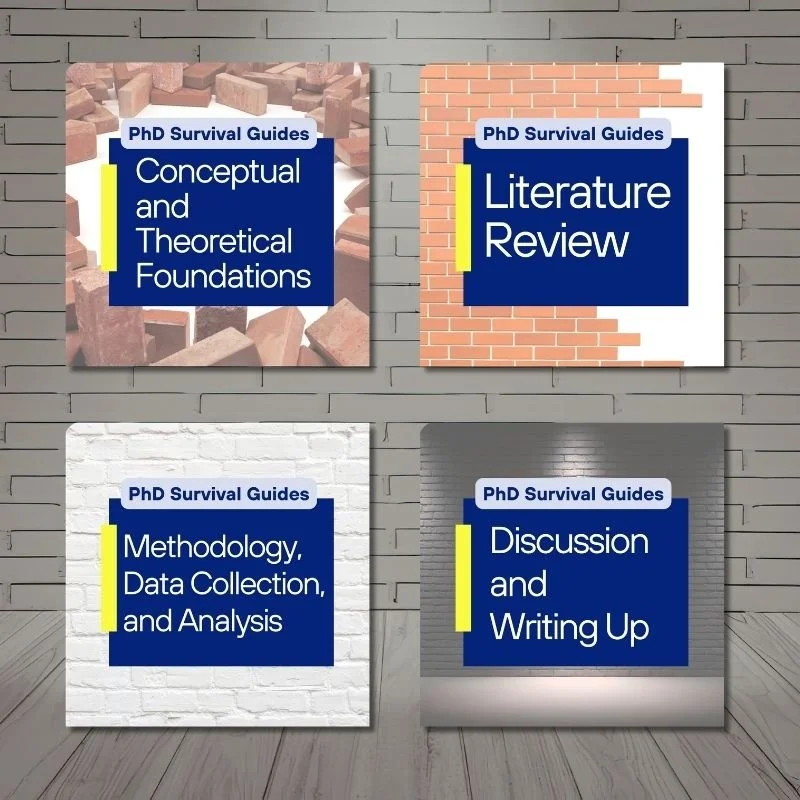
The PhD Survival Guides are designed to help you strengthen your foundations, refine your arguments, and navigate key stages of the doctorate with confidence.
If you are ready to go deeper into this properly, that support exists.
You can also join my email community if you want thoughtful, grounded guidance as you move through your PhD journey.